

Morocco welcomed 15.7 million tourist arrivals in the first nine months of 2026, according to tourism-ministry figures reported this month. That is a measure of movement across borders. It is not, on its own, a full account of what tourism contributes to local economies.
The distinction matters as international attention turns towards the 2030 World Cup. A growing arrivals total is a useful signal of demand, but it should begin the economic discussion rather than end it.
What the latest reported figure says
Morocco World News reported on 8 October, citing the ministry, that arrivals reached 15.7 million through September, up 5% from the same period in 2025. September alone exceeded 1.5 million, an increase of 8% year on year.
The figures are attributed here to that published account of the ministry’s statement. They are not Sada Journal’s own count, nor a full-year result. The period covered is part of the fact.
Keep three measures separate
Arrivals, tourism receipts and overnight stays answer different questions. Arrivals track entries; receipts measure money within a defined statistical framework; overnight stays describe accommodation activity within the establishments covered. None can simply be substituted for another.
The same report cites tourism revenues of MAD 97.92 billion for January-August and accommodation overnight stays through July. Those are different cut-off dates from the arrivals total. Dividing one by another would not produce a sound measure of spending per visitor for the first nine months.
Why national totals cannot describe every destination
A countrywide increase does not prove that every city, small business or worker benefits equally. To examine distribution, readers need evidence at the relevant scale: stays by destination, business activity, employment and how spending reaches local suppliers.
That is an analytical question, not an unsupported claim that particular communities are winning or losing. A busy airport and a longer stay in a smaller town may generate different patterns of demand. Counting both as arrivals cannot explain the difference by itself.
Read the 2030 ambition as a target
The reported official ambition of 26 million annual tourists by 2030 is a target, not a result already achieved. Hotel projects and transport investment should likewise be described according to their actual stage: proposed, under construction or operating.
For visitors, growing demand is a reason to check current availability rather than rely on an old price guide. For readers following the economy, the next useful evidence will show how visitor activity translates into stays, revenue and work across the country.
Morocco’s rising arrivals are a real headline within the reported period. The richer story starts when the counters are kept distinct.
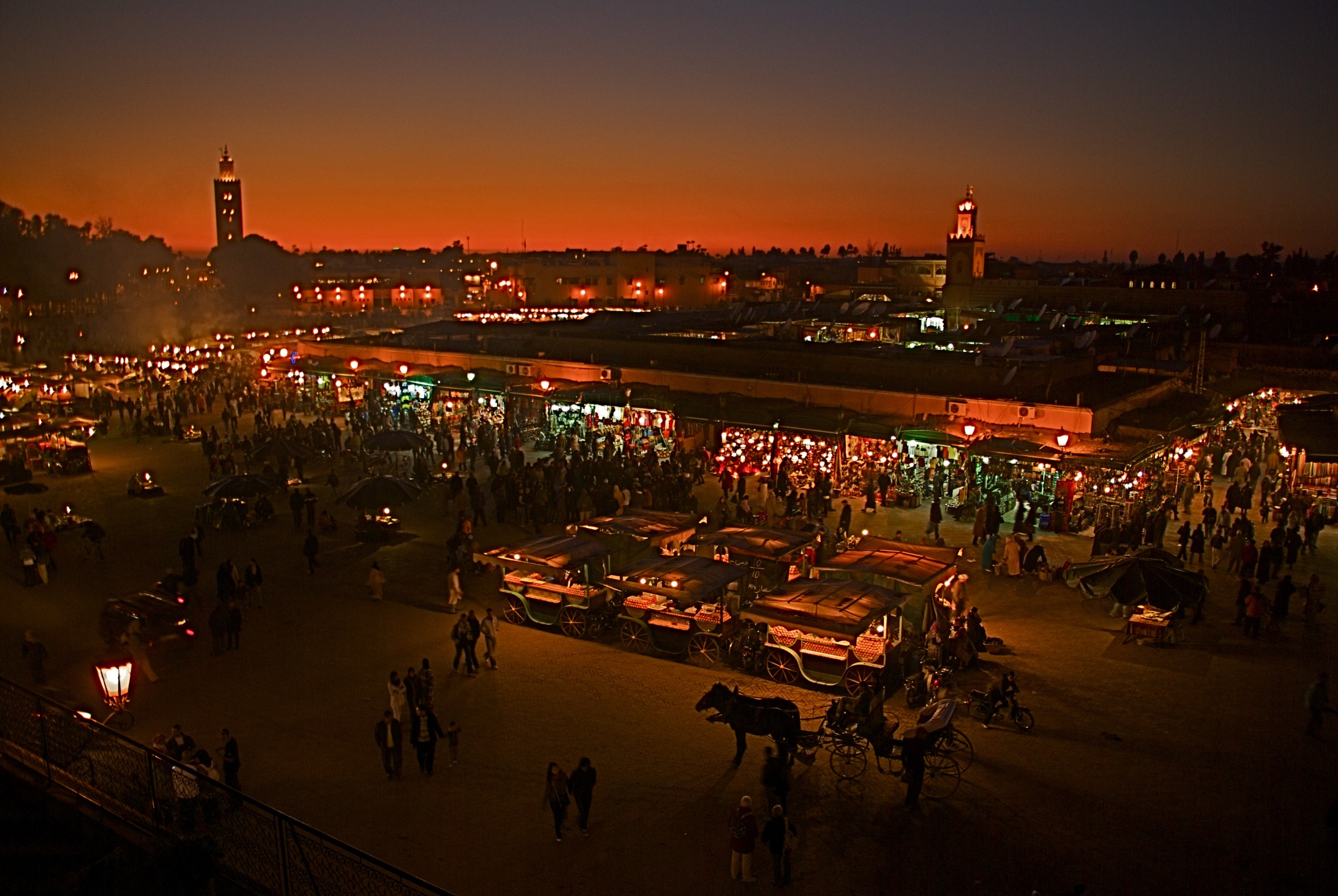
Reported and written from the linked published sources. Featured photograph: Jemaa el-Fnaa, Marrakech, 19 December 2008; this archive photograph does not document current visitor volumes. Photo: procsilas, via Wikimedia Commons. Photograph and display crops licensed CC BY 2.0. Archive photograph.
