

Arts, Cinema & Music | Heritage explainer | 7 November 2026
Safi’s pottery survives through more than the repetition of a familiar blue pattern. Clay has to be prepared, vessels shaped, surfaces finished and firing controlled. Just as important, someone has to learn those decisions. In this Moroccan Atlantic port, workshops, teachers and a national museum preserve different parts of that knowledge.
UNESCO’s Creative Cities profile describes a craft concentrated around the Potters’ Hill and Potters’ Village, producing everyday vessels, decorative objects and architectural elements. It identifies families, cooperatives and training institutions as channels of transmission. That is a useful starting point for understanding Safi as a place of production, rather than simply a shopping stop.
Start with the material, not the motif
The National Museums Foundation’s account of Safi’s ceramics museum connects local pottery to nearby clay deposits and a long history of making useful objects. It cites archaeological material found at Lalla Hniya Hamriya as evidence of production at least as far back as the Almoravid period in the eleventh century. That is an archaeological reference, not a claim that every present-day method has remained unchanged for a thousand years.
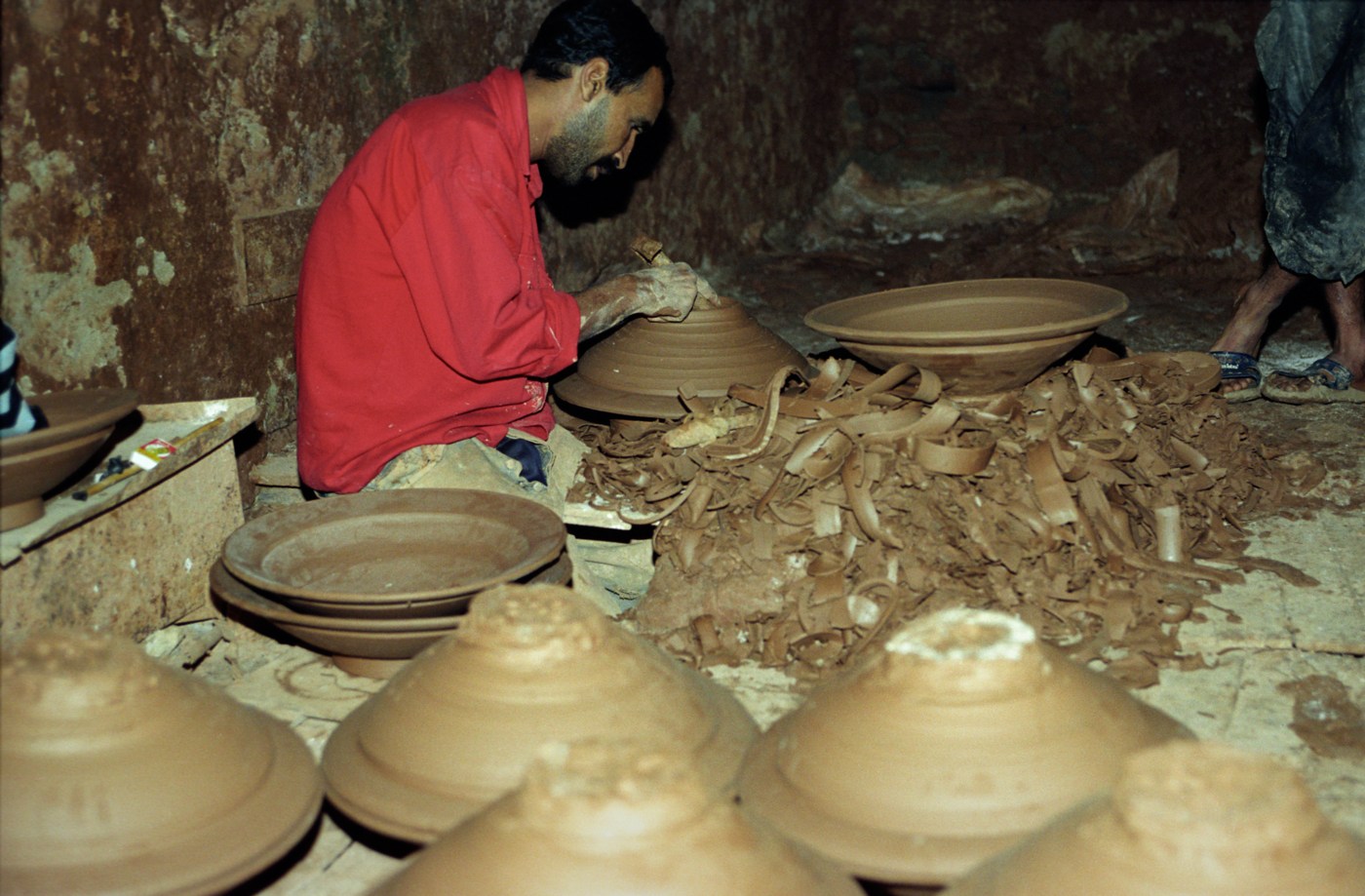
Africanews’ 2022 report with Associated Press material, later updated in 2024, describes soaking and kneading clay before shaping, decorating, glazing and firing. Its account follows particular working practices. The exact timings and kiln conditions reported there should not be turned into a universal recipe for all Safi ceramics.
The sequence explains an important distinction. The shape and the decorated surface are different achievements. A buyer can admire the painted design while missing the preparation and handling that gave the vessel its form.

A tradition can include deliberate change
The museum’s 2018 reopening dossier gives Boujemaa Lamali a central place in Safi’s twentieth-century ceramics. It describes a teacher and experimenter who worked with local potters, revisited established designs and developed a wider decorative repertoire, including metallic lustre.
The same dossier follows later generations introducing colours, decorative techniques and forms. Safi’s inherited craft is therefore not best understood as a fixed catalogue that makers must copy. Its history also includes experimentation and the teaching of new skills.
This does not make every change an improvement or every handmade object an exceptional work. It means that originality and continuity need not be opposites. A museum collection can help a visitor compare forms and decoration across generations rather than judge authenticity by whether an object looks old.
The museum holds more than a local souvenir collection
Founded in 1990, the National Ceramics Museum has archaeological and ethnographic collections. The foundation lists objects transferred from several Moroccan museums alongside local donations from ceramicists and collectors. Safi’s story sits within a wider Moroccan history of ceramic production, not apart from it.
That wider view helps distinguish a vessel from zellige mosaic work. Both involve ceramic skills, but a shaped pot and a panel assembled from cut tiles pose different practical problems. A shared material does not make the crafts interchangeable.
Recognition is a framework, not a sales result
Reporting on Safi’s 2025 entry into UNESCO’s Creative Cities Network describes opportunities for exchange and culture-led development. UNESCO’s current city profile sets out ambitions for training, collaboration and market access. Those commitments are not, by themselves, evidence of higher workshop incomes or successful exports.
The profile also provides employment and revenue estimates, but without a detailed survey method or reporting period on the page. They are not used here to calculate productivity, average wages or recent growth. Assessing whether recognition improves livelihoods would require evidence about orders, costs, earnings and who receives them.
For a visitor, the useful question is less whether Safi is a pottery capital than how a particular object was made, who made it and what can be learned about its form. As in nearby Essaouira’s working heritage, the setting makes more sense when the people and institutions doing the work remain visible.
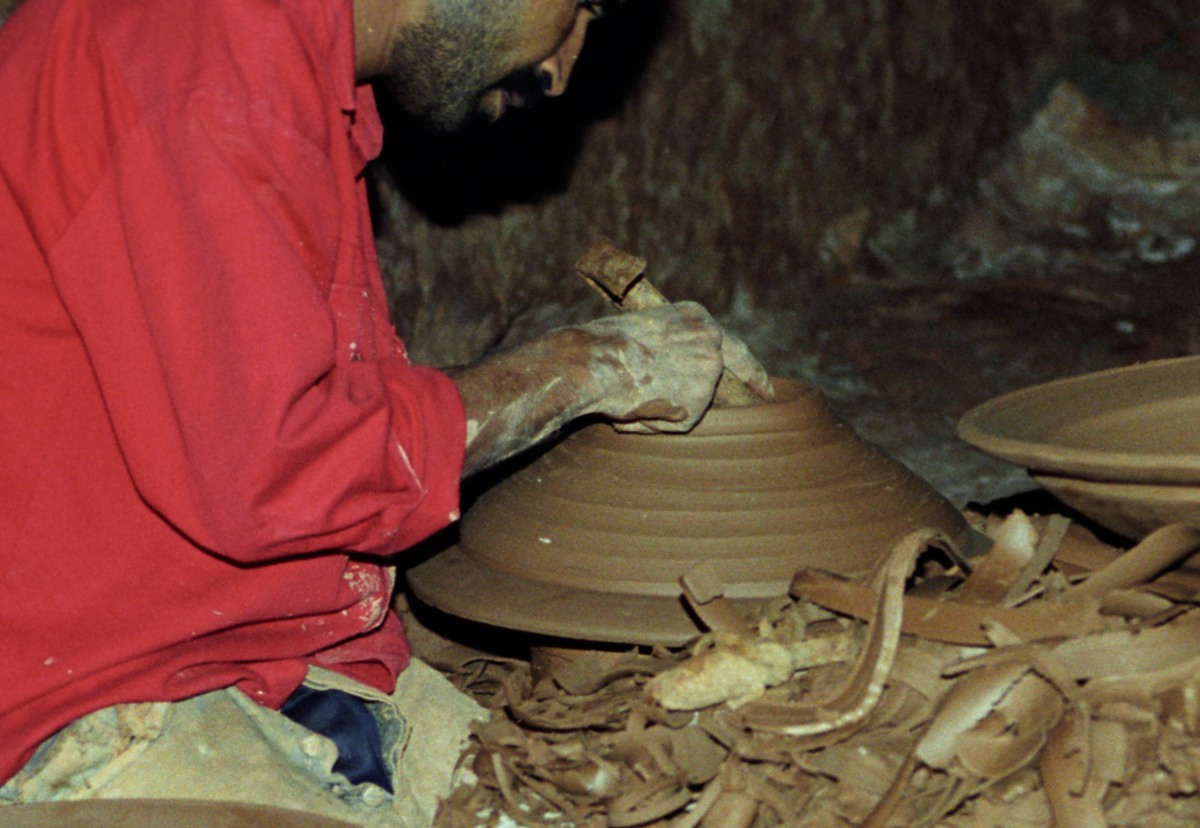
Featured archive photograph: pottery work in Safi’s Potters’ Quarter, by Jerzy Strzelecki. Undated exposure; first uploaded 31 October 2007, with a higher-resolution version uploaded in 2013. Wikimedia Commons, CC BY 3.0. Resized; header display may crop the frame. The inline image is a detail of this same photograph, not a second exposure.
Editorial method: AI assisted research and drafting. This article was checked against the linked published sources; it does not claim an on-site visit, new interviews or an independent survey of workshop earnings. Editorial responsibility remains with Sada Journal.