

A finished zellige wall can look like a picture drawn in ceramic: stars, interlacing lines and patches of colour repeating across a flat surface. The workshop view tells a different story. The pattern is built from separate pieces, and much of the work happens before its coloured face is visible.
Zellige, also written zellij or zilij, is glazed earthenware mosaic work associated with Morocco and the wider architectural traditions of North Africa and southern Spain. Reading it as an assembly rather than simply a decorative print makes the skill behind a courtyard wall easier to see.
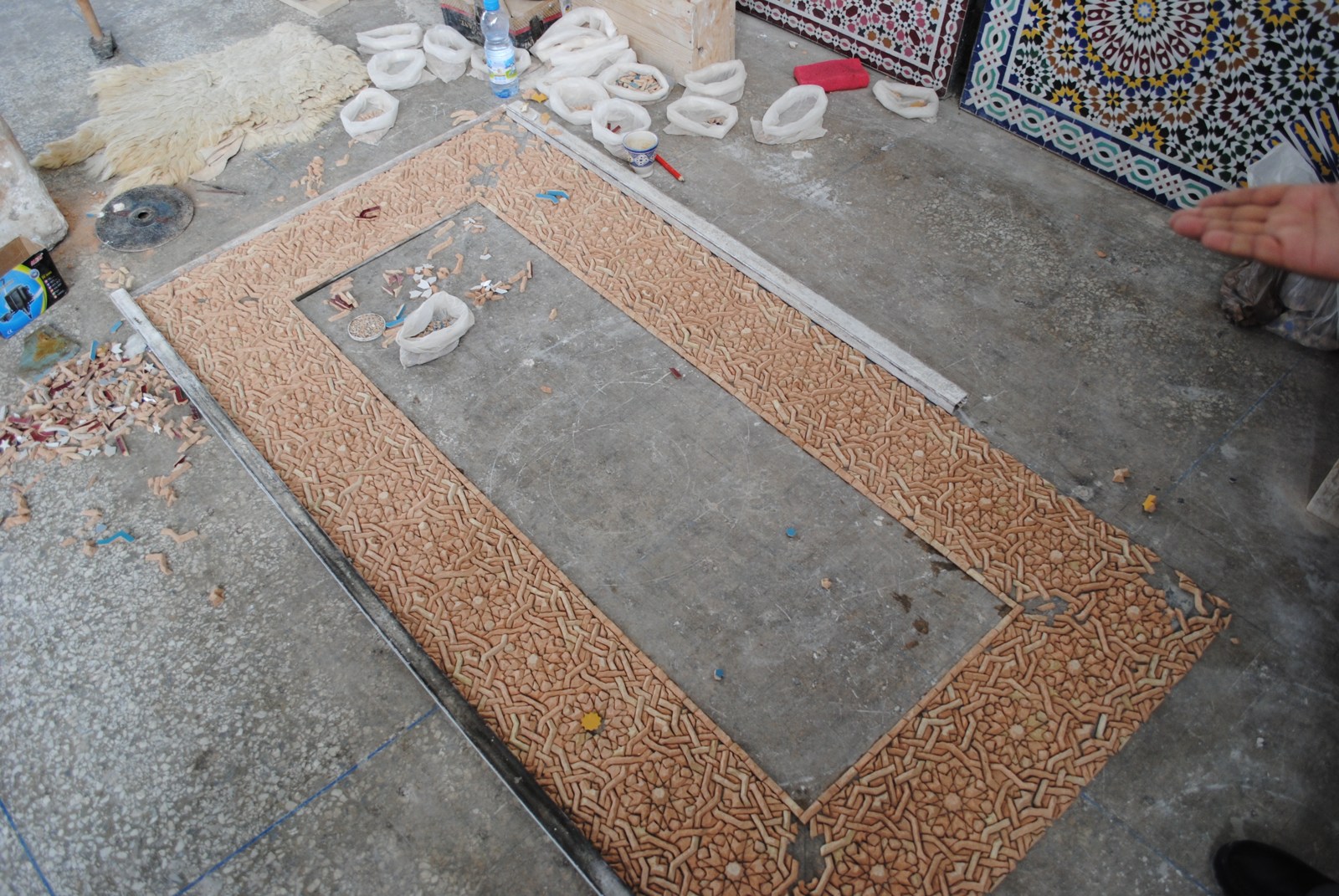
Featured archive photograph: zellige pieces arranged face down, 5 October 2015. Jadcooper / Wikimedia Commons, CC BY-SA 4.0. Resized. This is not a current workshop visit.
The small piece comes before the large pattern
The Batha Museum’s catalogue entry for a zellij panel from the Bouinaniya Madrasa in Fez gives a concrete example. It dates the panel to 1351-1356 and identifies its material as glazed earthenware tiles. The madrasa was a place of religious learning, not simply a decorative monument.
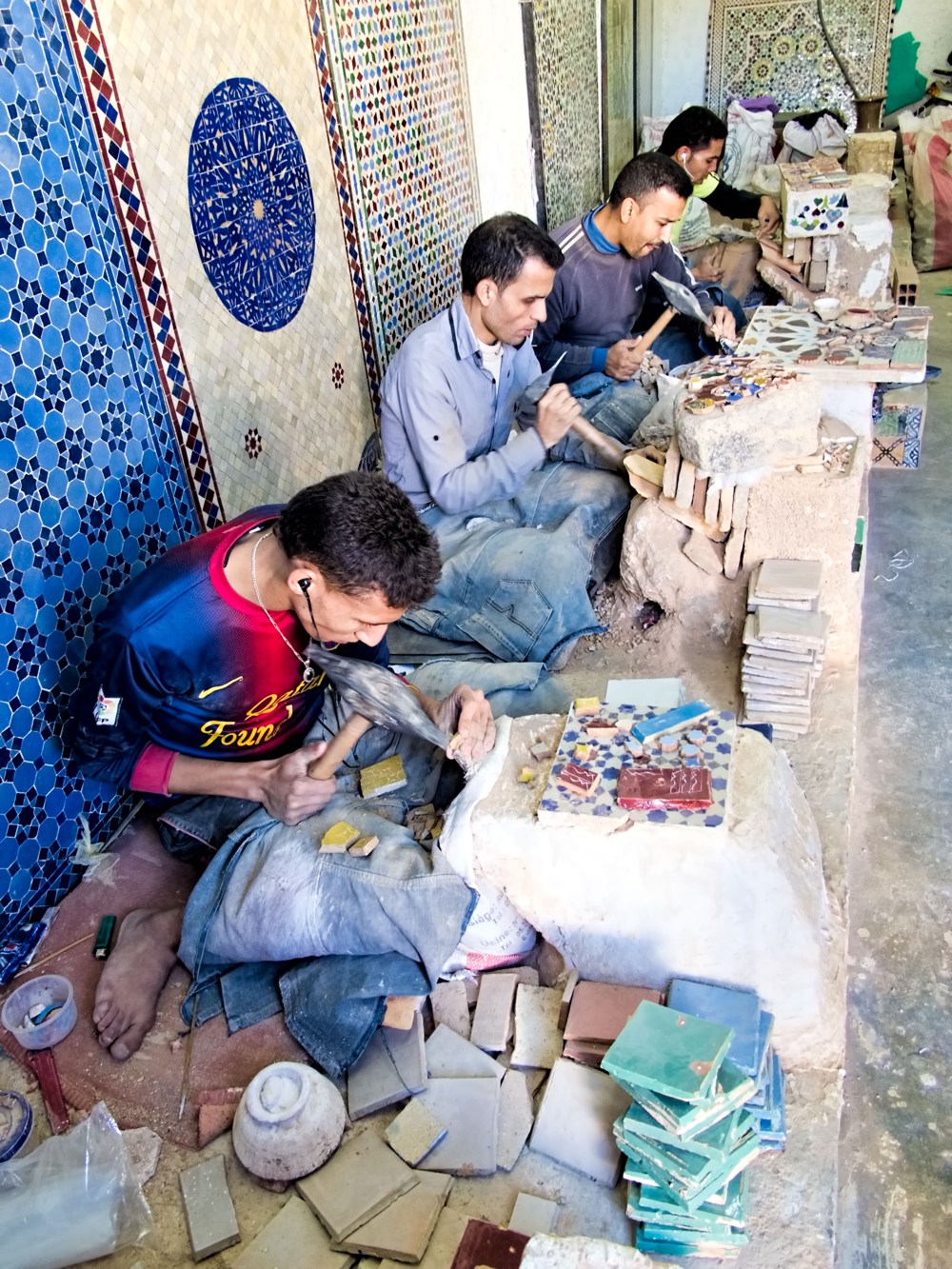
The entry describes motifs drawn on tiles and then cut with a mallet, working into the fired clay beneath the glaze. The shaped pieces fitted the spaces left by an interlacing design. Each part had to work with its neighbours: the coloured filling and the lines organising it were elements of the same construction.
This is evidence about a particular historical panel, not a recipe for every Moroccan workshop. It nevertheless shows why the small shape matters. The complete design depends on the fit between pieces as well as the drawing seen from a distance.
Why the coloured face can point down
A modern museum project offers a documented view of assembly. In 2011, the Metropolitan Museum of Art in New York opened a Moroccan court made by the Naji family and their company, Arabesque, from Fez. The museum’s educator guide identifies cut tilework, carved stucco, cedar and marble among its materials.
In reporting published in March 2011, The New York Times described pieces fitted together face down at the museum, before the assembled panel was lifted into place along a wall. That account concerns this specific project. It helps explain the apparently plain clay backs visible in the featured archive photograph: a patterned surface can take shape from its reverse side.
The Met court is a modern construction using historical references, not a medieval courtyard transported intact from Morocco. The museum’s film introduction makes that distinction useful: living craftspeople created a new architectural space through older techniques.
Look at the pattern, then its surroundings
The Met’s guide explains how stars and other shapes repeat beyond the apparent edge of a tile panel. A border frames part of a larger geometric system. Looking for repetition gives a visitor something more precise to notice than whether a wall is colourful.
It also helps to separate materials. In the museum court, tilework occupies the lower wall, with carved plaster above it and wood higher still. That arrangement is an example to compare, not a rule to impose on every building. A courtyard’s effect can come from several crafts working together, rather than from zellige alone.
Our guide to the Fes medina puts monuments and workshops within a working city. The same attention to production runs through our account of the skills behind the Moroccan caftan: a recognisable finished object is only one part of a longer process.
For a visitor, the useful shift is simple. First notice the whole wall. Then find one repeated unit, follow the line around it and look for the joins between pieces. The pattern remains beautiful, but it becomes evidence of work rather than decoration without a maker.