

Travel and heritage | 31 October 2026
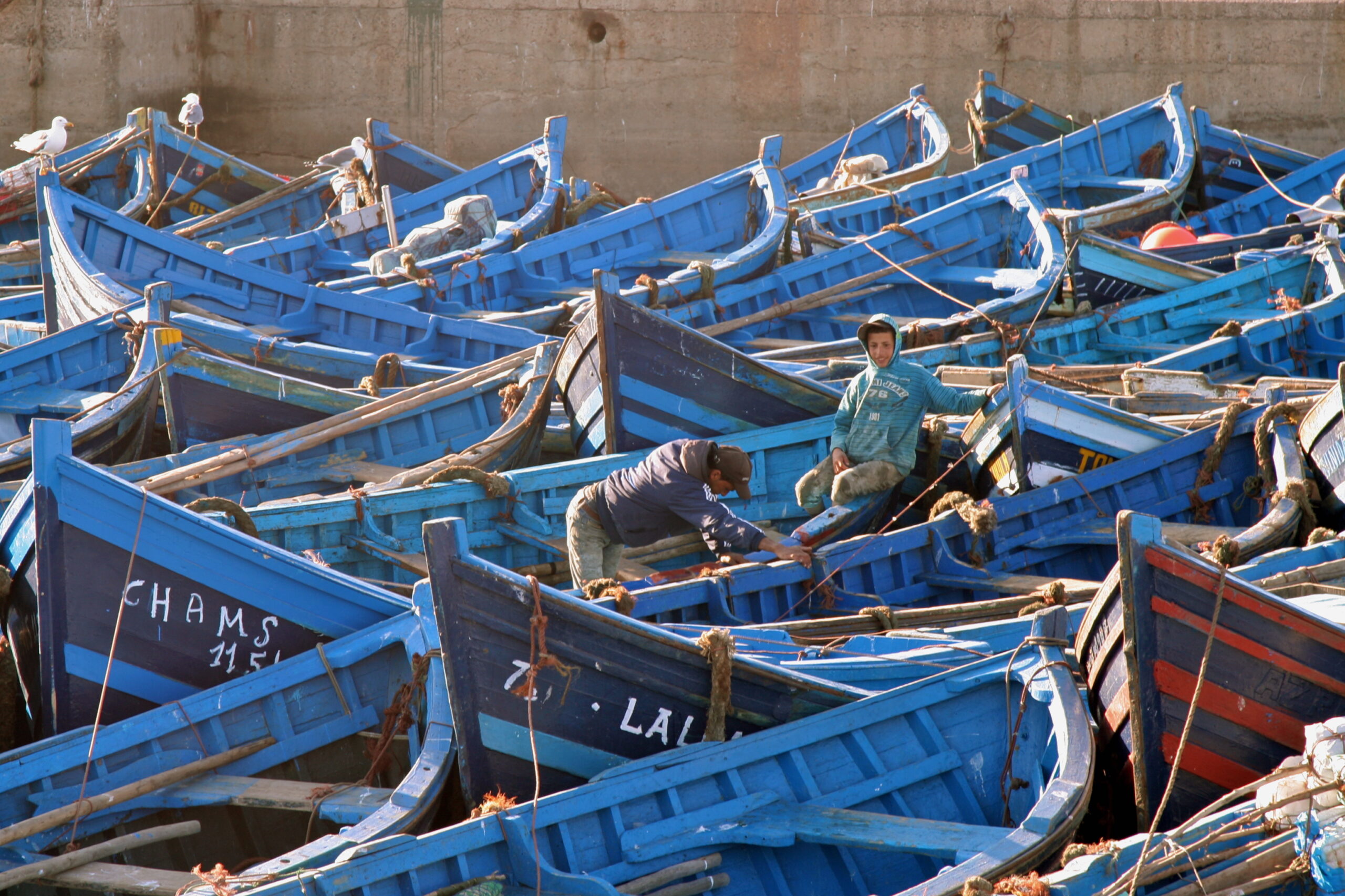
Essaouira is easy to reduce to a picture: blue fishing boats, pale walls and an Atlantic horizon. The more interesting visit begins when those elements stop being scenery. The port is a place of work. The medina is a planned urban settlement with a trading history. And its World Heritage status describes a responsibility to care for the town, not a promise that every building is in good condition.
Reading these layers together offers a more useful starting point than collecting a string of photogenic stops. It also helps explain why protecting Essaouira involves traffic, housing and ownership questions as much as repairing a wall.
A town shaped by trade
UNESCO’s account of the medina places its development within the eighteenth-century ambition of Sultan Sidi Mohamed Ben Abdallah to create a royal port open to international commerce. The fortified town brought European military planning into a North African setting, alongside Arabo-Muslim architectural and urban traditions.
That is a more specific story than the familiar description of an ancient maze. The sea, defences, gates and streets belong to the same project. Essaouira linked Morocco and its Saharan hinterland with Europe and the wider world. UNESCO also describes a multicultural town in which Amazigh, Arab, African and European communities, and Muslim, Jewish and Christian traditions, formed part of its identity.
The medina was inscribed on the World Heritage List in 2001. The recognition is not a ranking of Morocco’s most beautiful cities. It concerns the site’s particular historical and architectural value.
The harbour is not a stage set
The Moroccan National Tourist Office’s destination guide connects a walk through the city to its fishing port and market. That connection matters: the boats are part of an economy, not props arranged for visitors.
A considerate visit leaves people room to work, asks before making close photographs of individuals and avoids treating access to a working area as automatic. These are practical recommendations, not a claim about a particular harbour regulation. Conditions and permitted access can change, so follow signs and instructions on the day.
The same approach works inside the medina. The tourist office’s medina guide points to ramparts, gates, consular houses, galleries and the Sidi Mohamed Ben Abdallah Museum. Rather than racing between them, look for how commerce, defence, craft and domestic life fit into the same town.
What the heritage label does not tell you
There is a gap between a destination’s polished image and the work needed to preserve it. In its 2025 decision on Essaouira, the World Heritage Committee expressed concern about the serious deterioration of the Mellah quarter, an important part of the medina’s historical and cultural identity.
The committee asked Morocco to make progress on property-ownership issues and develop a rehabilitation strategy with stakeholders. It also sought fuller information about works affecting the historic town, its management and a traffic study around the port. An updated conservation report was requested by 1 December 2026.
Those are requests in an adopted 2025 decision, not evidence that the work has since been completed. The site’s public document register is the place to follow the conservation record. Nor should concern about one quarter be turned into a blanket claim that the entire medina is unsafe or inaccessible.
A better way to spend the visit
Give the port and medina enough time to make sense together. Leave space to notice a gateway’s relationship to the harbour, a street’s pattern or the difference between a public thoroughfare and someone’s doorway. Check current opening arrangements before relying on entry to any museum, rampart or other managed attraction; this article does not verify hours, tickets or access.
Essaouira’s appeal survives a more honest reading. It is neither an untouched relic nor simply a backdrop for a holiday photograph. It is a town whose working life and inherited fabric have to share space, and whose future depends on more than keeping the postcard view intact.
Written from the linked published sources; no on-the-ground reporting is claimed. Featured photograph: blue fishing boats in Essaouira, 29 December 2011, by Olivier Flambeau, via Wikimedia Commons. Photograph and display crops licensed CC BY-SA 4.0. Archive image, not a current harbour-condition report.
