

A bottle of argan oil can tell several different stories. It may be a food, a cosmetic ingredient or a souvenir. In south-western Morocco, however, the oil also belongs to a system of knowledge that connects trees, household work, tools and meals. Understanding those connections is more useful than treating every bottle as the same product.
Two distinctions help: UNESCO recognition of a cultural practice is not a quality certificate for an individual oil, and culinary oil is not simply a cosmetic product in different packaging.
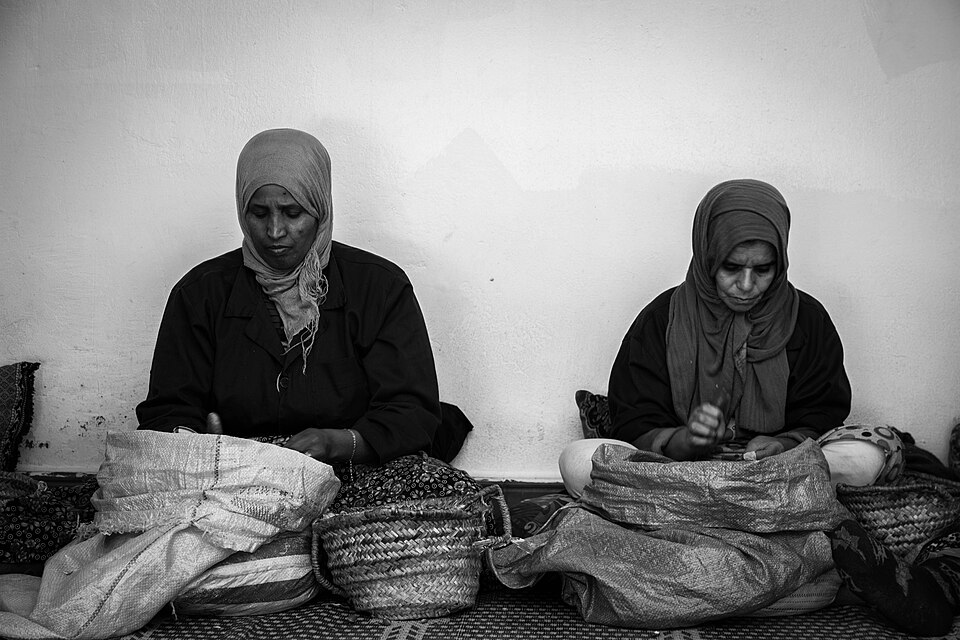
Featured archive photo: two women breaking argan nuts in Morocco, 7 October 2017. Photo: Catalin Dordea / Wikimedia Commons, CC BY-SA 4.0. Original monochrome photograph, resized.

What UNESCO recognised
In 2014, UNESCO inscribed Argan, practices and know-how concerning the argan tree on its Representative List of the Intangible Cultural Heritage of Humanity. Intangible heritage means living knowledge and practice, rather than a monument or an object alone.
The entry describes rural women, and to a lesser extent men, using traditional methods to extract oil. It includes gathering and processing fruit, making and using tools, preparing recipes and passing knowledge between generations through imitation and informal teaching. UNESCO also records oil’s place in festive dishes and wedding gifts.
That is a wider subject than the liquid on a shop shelf. Our guide to the caftan’s chain of skills makes a related distinction: the finished product is visible, but the knowledge behind it is part of what needs to survive.
The fruit is the beginning, not the oil
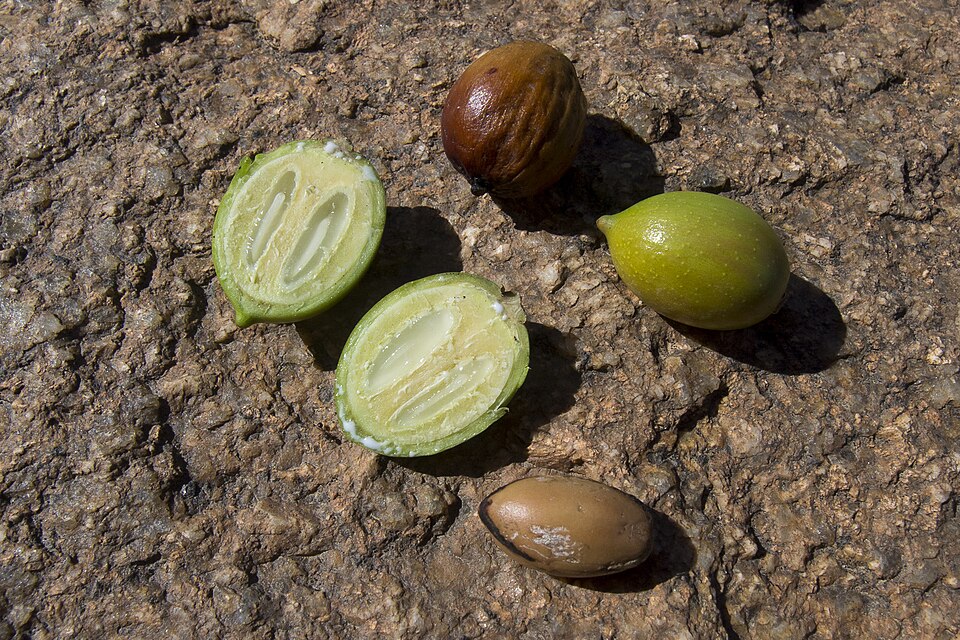

The oil comes from kernels inside the fruit’s hard nut, not from squeezing its outer flesh. A 2022 review in Frontiers in Nutrition describes collection, drying, removal of the outer covering and cracking the nuts to recover the kernels before further processing.
Traditional extraction involves grinding kernels with a hand mill, then working the paste with small additions of water to release oil. UNESCO’s account includes the local craftspeople who make the mill. The tool and the judgement needed to use it are part of the same story.
A demonstration can make this sequence easier to understand. It cannot, by itself, tell a visitor how every bottle sold at that location was made, where its kernels came from or how the proceeds are divided.
Why roasting separates two products
The scientific review distinguishes culinary oil made from roasted kernels from cosmetic oil made from unroasted kernels. Roasting contributes to the food oil’s characteristic nutty flavour. The review also describes culinary uses with bread and in amlou, a preparation combining almonds, honey and argan oil.
For a visitor, the first question is therefore the intended use. If buying oil for the table, ask specifically for a product sold for food use. Do not infer that a bottle marketed for hair or skin is suitable for eating because it bears the word argan. Equally, colour or an appealing smell is not a complete authenticity test: the review describes laboratory and sensory checks used to assess quality and adulteration.
This guide does not certify a particular seller, batch or brand. Nor does the cultural listing validate a health claim printed on a label.
Hand work and machinery are not a simple authenticity test
The 2022 review describes mechanical extraction in industrial units and women’s cooperatives, including press extraction without the water used in the traditional process. It links changes in processing to questions of yield, quality and traceability.
It would therefore be misleading to suggest that only hand-ground oil can be genuine, or that a machine automatically erases the knowledge of the people preparing the kernels. The better questions concern the actual process, product and producer. Ask which stages are done by hand, which use a press, and who made the oil being offered.
A landscape designation is different again
The Arganeraie Biosphere Reserve, nominated in 1998, covers a landscape in south-western Morocco between the High Atlas, the Anti-Atlas and the Atlantic. UNESCO’s account describes an ecosystem and a place for conservation, research and social and economic development. That designation is distinct from the 2014 cultural inscription.
Neither should be turned into an endorsement of every commercial product using the name. Our Essaouira guide offers another way to think about this Atlantic region: places visited by tourists remain working environments, not simply backdrops.
The useful souvenir is an informed choice. Learn what is being made, distinguish food from cosmetics, and treat claims about workers’ benefits or woodland protection as questions that need evidence. Recognising the knowledge behind argan oil should make those questions more specific, not make them disappear.