
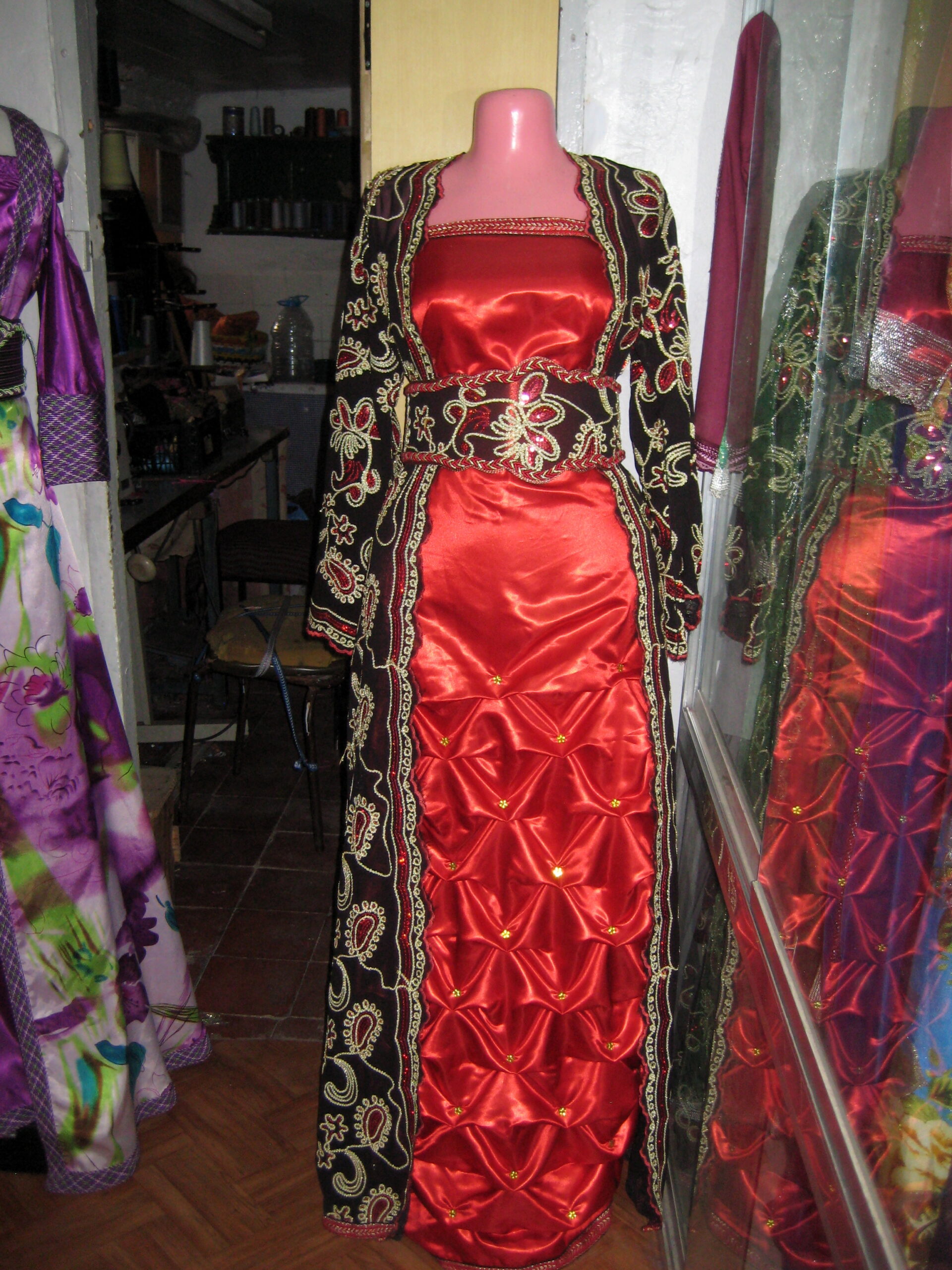

A photograph of a Moroccan caftan captures the finished silhouette. It usually leaves out the network of work that makes it possible: woven cloth, shaped panels, decorative braid, handmade buttons and embroidery. That hidden sequence is the more revealing way to read the garment.
UNESCO inscribed “Moroccan Caftan: art, traditions and skills” on its Representative List of the Intangible Cultural Heritage of Humanity in 2025. The wording matters. The recognition concerns a living practice and its transmission, rather than a single outfit or designer collection.
Start with the makers, not a trend forecast
UNESCO’s description identifies the weavers who produce fabrics such as brocade, velvet and silk; tailors who shape the garment; and artisans who make its buttons, braids and embroidery. A caftan can therefore bring several kinds of specialised work into one piece.
The garment is described as a long tunic worn by people of different ages and genders for special occasions and celebrations, with varied fabrics and styles and an optional decorative belt. Its central opening, buttons and handmade decoration help define the tradition without reducing it to one fixed appearance.
How a wardrobe becomes an archive
Skills pass within families and through workshop apprenticeships, as well as training centres and fashion schools. That combination is important: continuity does not require every maker to learn in the same place or repeat every earlier design.
For an international reader, this changes the question from “Is it traditional or modern?” to “Which skills and decisions are visible in this piece?” A contemporary choice of colour can sit alongside methods learned over generations. Novelty in the finished look does not make the labour behind it disappear.
What the inscription does, and does not, certify
The committee’s decision connects the practice with community life, income and the passing-on of knowledge. It recognises heritage. It is not a quality seal for every garment advertised online as a Moroccan caftan.
That distinction is useful when buying or commissioning one. Ask a seller to explain the fabric, the construction and the decorative work. Ask which elements are handmade, who carried out the work and how the garment should be cared for. Those are practical questions, not a demand that every piece be made in an identical way.
Look beyond the occasion
Weddings, festivals and other celebrations give the caftan public visibility. The supporting craft economy continues between those moments. A careful account of Moroccan fashion should make room for that everyday work as well as the final presentation.
The caftan’s international appeal is easy to see. Understanding it takes a second look, closer to the seams, the braid and the hands that learned how to make them.
Reported and written from the linked published sources. Featured photograph: Caftans in the casbah of Tetouan, 23 June 2010. Photo: Allen Gathman, via Wikimedia Commons. Photograph and display crops licensed CC BY-SA 2.0. Archive photograph.
