

“Get lost in the medina” is an easy promise to sell about Fes. It is a less useful way to understand the place. Morocco’s historic city is not an obstacle course built for visitors: its streets connect homes, places of worship, shops and workplaces. A rewarding visit starts by asking what those connections do.
That changes the itinerary. Instead of collecting doorways and tannery photographs, look for the relationship between a gate, a trading street, a courtyard and the people using them. Fes becomes easier to read when its buildings are treated as parts of a city rather than isolated sights.
First, know which “old city” you mean
A medina is a historic urban district, often enclosed by walls. In Fes, the familiar label hides more than one period of development. UNESCO’s account of the World Heritage site, inscribed in 1981, distinguishes Fes el-Bali, the older city, from Fes Jdid, the “new” city founded in 1276. “New” here is a historical comparison, not a synonym for a modern suburb.
The earlier settlement developed from two fortified quarters on opposite sides of the Fes river. The Almoravids brought them within a single wall in the 11th century. Later, the Marinid rulers added Fes Jdid to the west, with a royal palace, military headquarters and residential areas. The result is a city shaped by successive decisions about trade, authority, faith and housing, not a single medieval moment preserved unchanged.
This is a useful contrast with Rabat’s layered urban history. Neither city makes much sense if every old-looking building is assigned to the same era.
Use a gate as an anchor, not a finish line
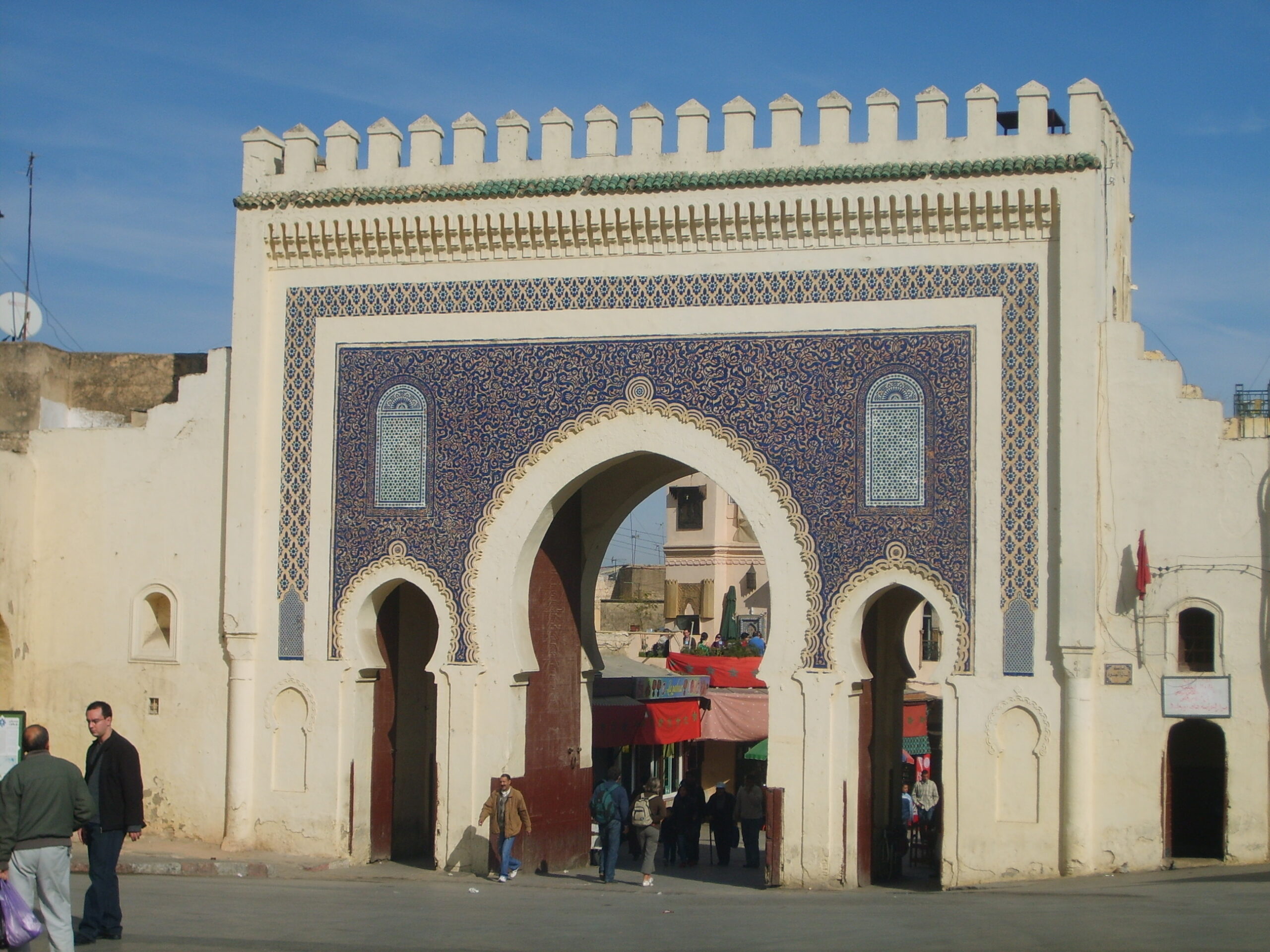
The Moroccan National Tourist Office identifies Bab Boujloud as an easy entrance to the medina. It can serve as a starting reference rather than the first item in a race through monuments. Before setting off, identify where you intend to return and ask your accommodation to explain the approach on foot.
Build a visit around a small number of places and the streets between them. A madrasa is a school associated with religious learning; a fondouk is a courtyard building historically used by merchants for lodging, storage and trade. Knowing those functions makes a facade or courtyard more informative. It also helps separate a public route from a doorway that simply belongs to someone’s home.
These are planning principles, not a turn-by-turn walking route. Access rules, opening hours and entry charges need checking with each site before a visit. A photograph of an entrance is not evidence that the building beyond it admits visitors.
Read a fondouk as economic infrastructure
The fondouks offer a particularly useful way to understand Fes. Their courtyards joined movement, storage, accommodation and exchange. Their modern reuse raises a practical question: can a historic building keep earning a place in the city’s economy without losing what makes it distinctive?
In reporting published in 2019, The Independent described four restored fondouks being used as craft centres, including spaces for production and sales. That is historical reporting, not confirmation of today’s tenants or a promise that every workshop is open. But it shows why restoration can be more than repairing decorative surfaces.

There is a caution alongside the attractive before-and-after story. The US Millennium Challenge Corporation’s evaluation of its earlier artisan and tourism programme recorded unfinished rehabilitation at programme end and limits on measuring economic impact. A restored site and a successful livelihood are different outcomes. Visitors should be wary of assuming that handsome premises prove everyone working nearby has benefited.
Ask about making, not only buying
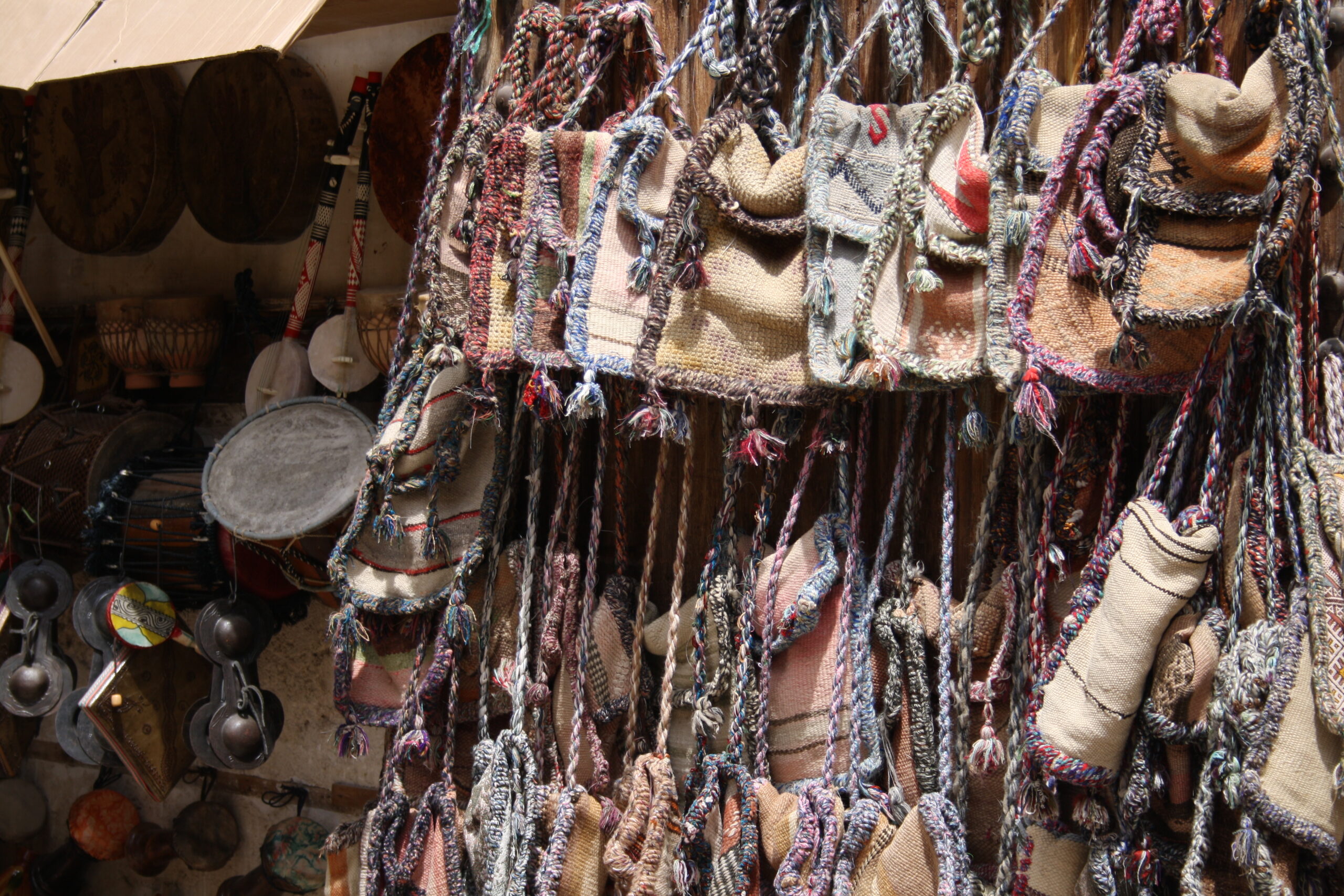
For a traveller, the useful response is curiosity rather than a claim to solve the medina’s economy through shopping. Ask who made an object, where it was made and which steps were done by hand. A display in Fes does not by itself establish Fassi origin. Agree on the price of any demonstration or activity beforehand, and ask before photographing workers or entering a workspace.
Our explanation of the skills behind the Moroccan caftan offers the same lens: the finished object is the visible end of a much longer chain of work.
Fes does not need to be described as frozen in time to deserve attention. Its value lies partly in the work of remaining a city. As with Essaouira’s working port and medina, the better travel question is not how convincingly a place resembles the past, but how its history continues to function in the present.
Featured photograph: Bab Boujloud, January 2007. Archive image, not a current conditions report. Davide Cesare Veniani / Wikimedia Commons, CC BY-SA 3.0; resized by WordPress. This guide draws on published sources, not an on-site reporting visit.
