
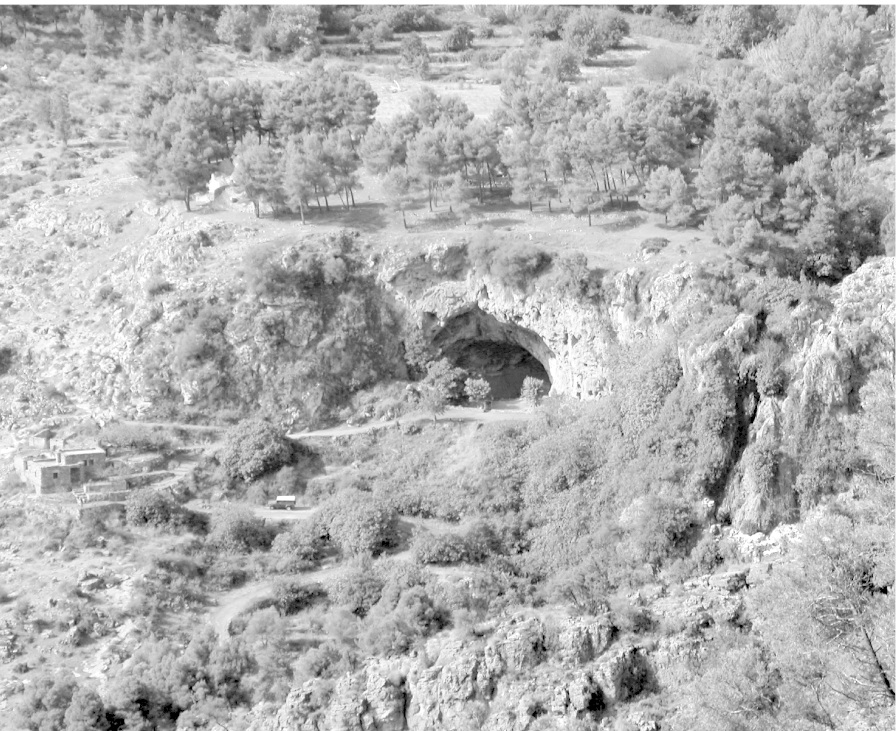

At Taforalt Cave in northeastern Morocco, fragments of animal bone became tools for working stone. A study of 20 pieces identified damage consistent with retouching and resharpening stone implements, adding a practical connection between the animals processed in the cave and the tools maintained there.
The finds are not newly excavated objects announced this week. Elaine Turner and colleagues published their analysis in March 2020, drawing on faunal remains from excavations conducted between 2005 and 2015. Their interest extends beyond an inventory of unusual bones: overlapping marks can preserve the order in which an object was cut, used and eventually discarded.
A tool for maintaining other tools
Taforalt, also called the Grotte des Pigeons, lies in northeastern Morocco, about 40 kilometres from the Mediterranean coast. Its deposits preserve different periods of occupation. The retouchers in this study came from one excavation area, Sector 2, not from a census of everything people made in the cave.
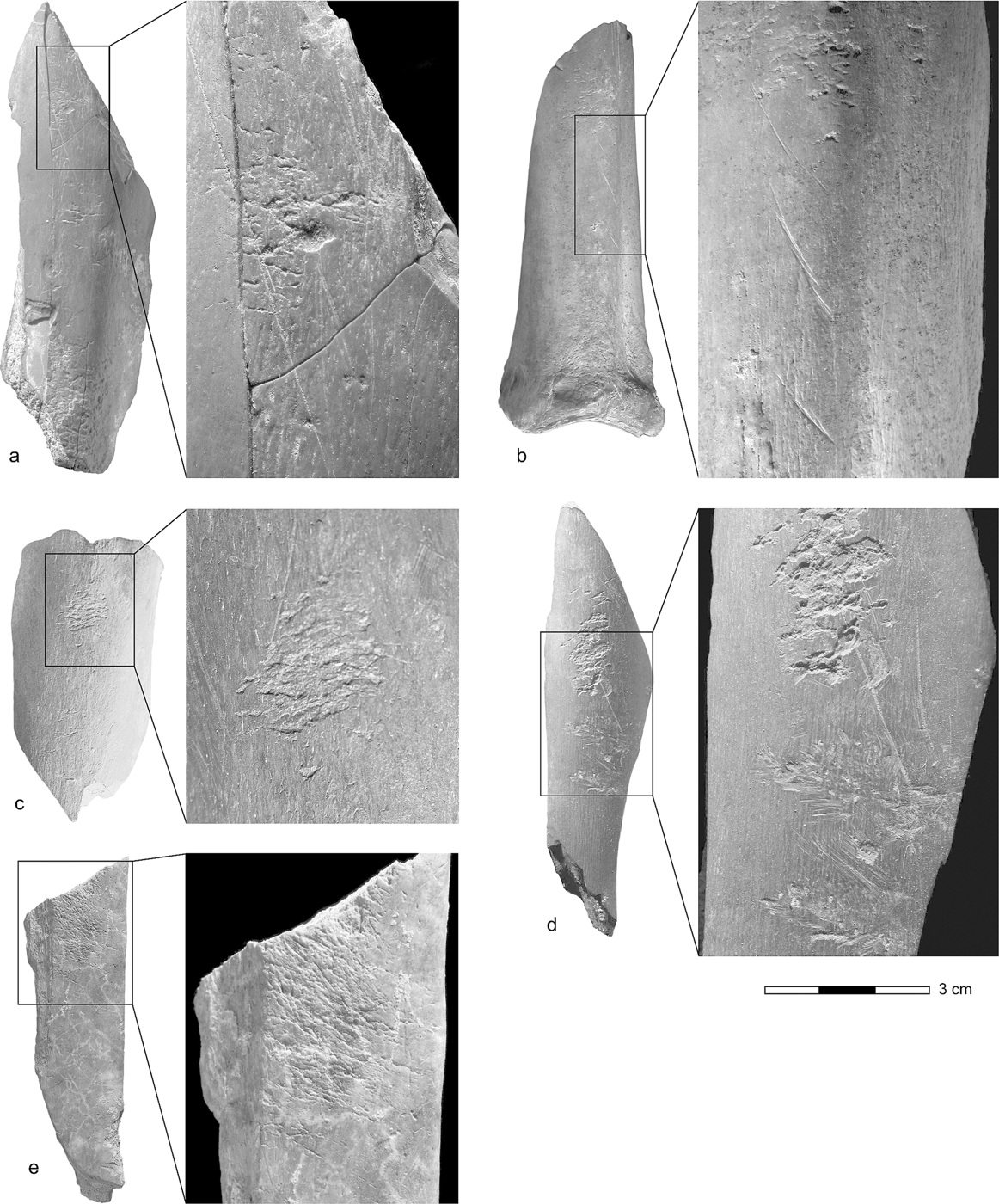
A retoucher is an intermediary. Rather than being a finished stone scraper or point, it helps shape or refine the edge of a stone implement through percussion or pressure. A fragment that looks like ordinary animal debris can therefore belong to the toolmaking process. The researchers identified pits, scores and other areas of damage on the bone surfaces, then compared their characteristics with published experimental evidence.
Most of the pieces were fragments of the shafts of limb bones. Five could be identified as Barbary sheep, while most of the others belonged to an animal-size category compatible with that species. That does not mean every fragment could be assigned to a particular animal. The distinction between a species identification and a size grouping matters when reconstructing how the material was selected.
The marks can put events in order
The strongest evidence for a sequence comes where one kind of damage overlies another. The paper reports retoucher wear over cut marks on 11 finds. Another piece had retoucher damage on the surface left by a detached bone flake. These relationships support a progression from animal processing to a later use of the bone in stone-tool work.
That is more informative than simply finding a bone and a stone tool in the same layer. It places different activities on the same object. Some pieces also bore burning, and one preserved a heat-related fracture that removed part of a retouching area. In that case, the burning came after use as a retoucher.
Not every mark offers such a clear sequence. Carnivore tooth scoring on one fragment could not establish whether people or the animal had reached the bone first. Nor did the distribution of use marks permit a reliable conclusion about the users’ handedness.
A long span is not continuous occupation
The study places the oldest examples at about 85,000 years ago and describes finds in younger deposits extending to about 24,000 years ago. The 20 pieces belong to different contexts: three to Aterian deposits, 16 to late Middle Stone Age deposits, and one to a context described as apparently transitional. Those groups add to 20; they should not all be given the age of the oldest finds.
The authors describe intermittent occupation. The spread of dates is not evidence that a single community stayed in the cave continuously for tens of thousands of years. Nor can a small collection establish how common bone retouchers were throughout Morocco or North Africa.
Reading a working system, not just a shape
A review published in October 2026 places this kind of work in a wider research problem. North Africa’s Aterian stone-tool traditions have often been studied through tool shapes and manufacturing techniques. Microscopic wear, residues and experiments can add evidence about activities and materials that are less visible in the surviving objects. The review stresses how sparse and geographically uneven those functional studies remain.
Taforalt offers a concrete example, not a complete solution. The 2020 authors leave open whether choosing bone rather than stone for these expedient tools reflected an economic decision. Apparent absence elsewhere may also reflect failures to recognise such pieces, rather than proof that people never used them.
At Jebel Irhoud, tools and their archaeological setting help address a different, much older question about human origins. The interpretation of Moroccan dinosaur tracks likewise separates a surviving trace from the full behaviour that might have produced it. At Taforalt, the contribution is more specific: animal remains were also a material resource for maintaining stone tools. A fragment of bone can record work as well as a meal.
Sources and method: This is a source-based explanation of published archaeological research, not a site visit, a new discovery report or an independent examination of the specimens. The primary paper’s methods, results and conclusions were inspected alongside the 2026 review. Counts refer to the selected specimens and contexts, not a population survey.No current visitor-access or site-condition claim is made.
Lead photograph: The entrance to Taforalt’s Grotte des Pigeons, cropped from the upper-right photograph in Turner and colleagues, Figure 2, © 2020 Turner et al., CC BY 4.0. The source does not name an individual photographer or give a shutter date. Cropped and converted to JPEG; source monochrome appearance retained. It is an archive research image, not a November 2026 condition survey.