
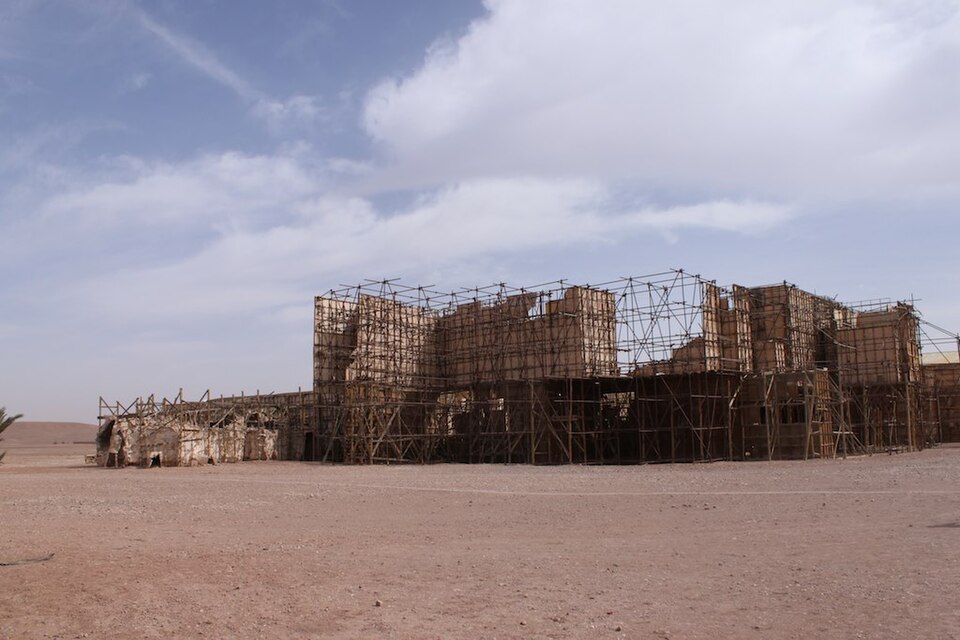

A film set in Ouarzazate can look ancient without being an ancient monument. That simple distinction is a useful starting point for understanding Morocco’s cinema city: the landscape is real, the screen location may be invented, and the work that makes the illusion convincing is an industry rather than scenery.
For international visitors, Ouarzazate often enters the itinerary as a place associated with famous foreign productions. A better question is what happens behind that association. Who builds a convincing street, keeps a production moving and turns a location into a finished image?
Featured archive photograph: Atlas Studios in Ouarzazate, 19 February 2011. Photo: Richard Allaway / Wikimedia Commons, CC BY 2.0. Resized. Film scenery, not an archaeological site.

A film city is more than a list of credits
UNESCO lists Ouarzazate as a Creative City of Film. Its profile connects cinema with local crafts, training, employment opportunities and tourism. Those are the ambitions of a creative-city approach, not proof that every resident benefits equally or that work is continuous.
The Ouarzazate Film Commission describes its role as facilitating filming in the region, including helping visiting crews with production conditions. That is a different function from directing a film, financing it or deciding how Morocco appears in the final story.
Keeping those roles separate makes the city easier to understand. A location can attract international productions while local filmmakers still face different questions about development, finance and distribution. Successful hosting and a strong national cinema are related goals, but they are not the same measure.
Look at the making, not only the illusion
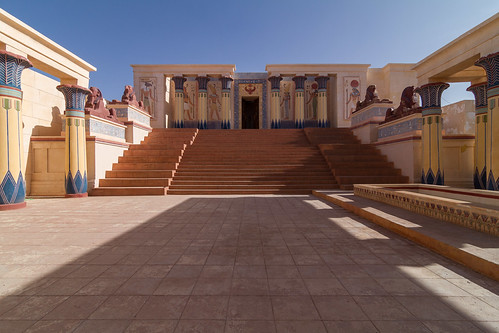

In a studio setting, ask how the effect is made: which surfaces are built to be seen by a camera, how scale works and what a frame leaves outside the image. A convincing screen world is a designed view, not necessarily a complete building or a faithful historical reconstruction.
A 2017 AramcoWorld report on Ouarzazate described reused scenery, local technical training and the work of people serving productions. It is useful evidence of how the industry operated at that time, not a current headcount or a promise of today’s studio access.
That perspective changes the familiar question from “Which star stood here?” to “What knowledge made the scene possible?” Building, costume, logistics and technical preparation belong in the story alongside the performer and director. As with the skills behind the Moroccan caftan, the finished image can hide a chain of work.
Foreign shoots and Moroccan stories are different lenses
The Centre Cinematographique Marocain, Morocco’s public film body, presents the country’s varied landscapes and production infrastructure as attractions for film shoots. Its promotional account helps explain the hosting offer. It should not be read as an independent assessment of every project’s local impact.
For a reader watching films, the distinction matters too. A production filmed in Morocco may be set somewhere else. Its presence says something about location choices and production capacity; it does not automatically make the story a portrait of Moroccan life.
Conversely, Moroccan cinema should not be reduced to servicing visitors. Authorship, language, characters and the audience a film reaches are different questions from where a crew sets up. Our guide to the Marrakech film festival’s jury brief offers another way to look beyond celebrity attention and consider the films themselves.
Visit with the distinction intact
If a studio visit is part of a trip, confirm current opening arrangements and which areas are accessible before traveling. A working production space is not the same thing as a permanently available museum display. This guide does not promise a ticket price, a tour schedule or access to an active shoot.
Keep historic places and constructed scenery separate in photographs and captions. Calling a movie facade an ancient palace gives the wrong history; treating a historic place only as a screen backdrop erases its own meaning.
Ouarzazate is most interesting when the magic and the making can be seen together. Enjoy the illusion, then look for the craft, training and organization that allow a Moroccan city to help create worlds for a camera.