
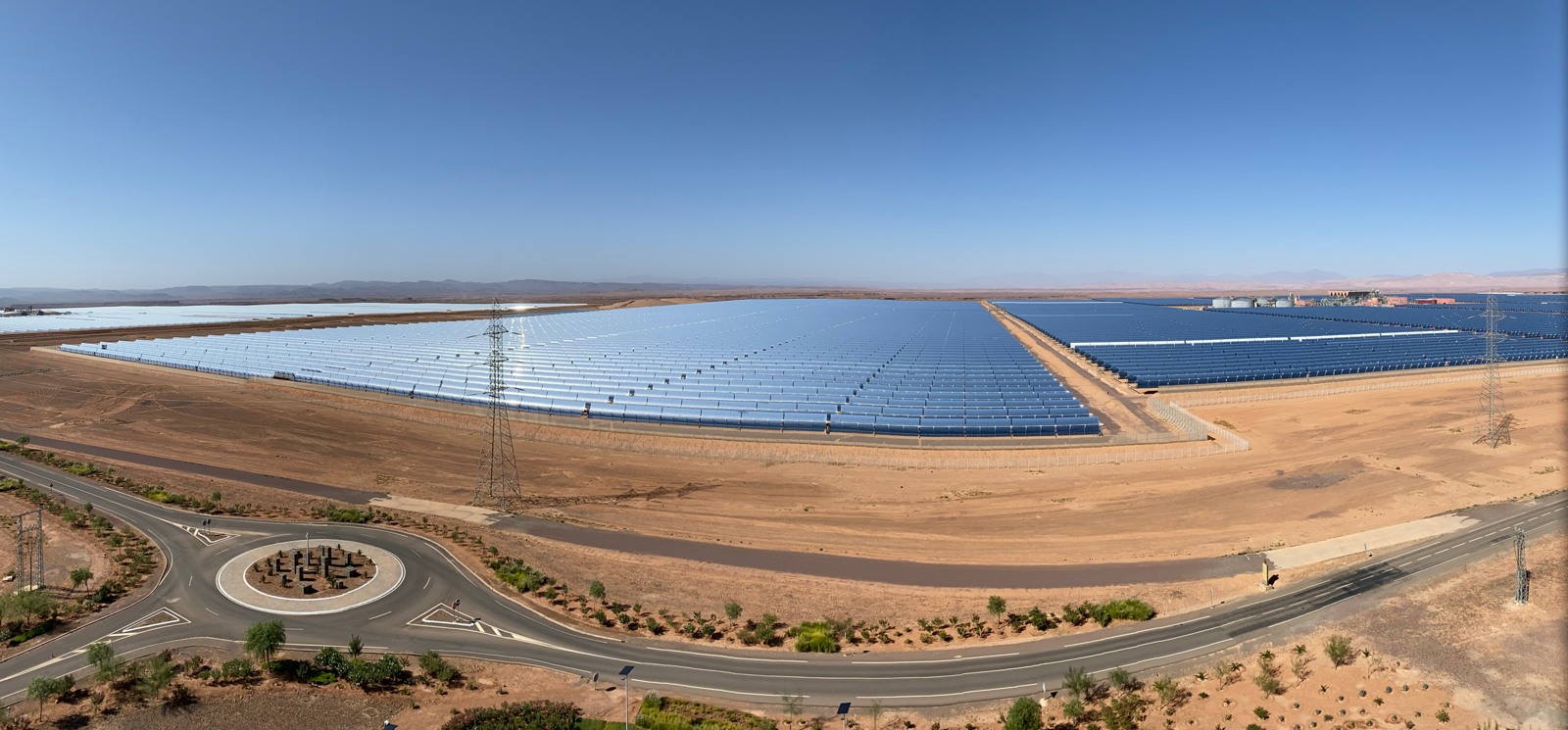

Morocco’s renewable electricity figures answer two different questions. How much generating equipment is installed? And how much electricity did it actually produce? In the national regulator’s 2024 accounts, renewables represented about 45% of installed capacity but about 27% of domestic generation. Both figures belong in an assessment of the transition. Neither can replace the other.
Executive summary
- For 2024, Morocco’s electricity regulator counted 5,439 megawatts of renewable capacity within a 12,017 MW generating fleet, including pumped storage.
- The same report recorded 11,666 gigawatt-hours of renewable generation out of 43,713 GWh in total. The rounded shares are 45% for capacity and 27% for output.
- Storage classifications and reporting dates also matter. Comparing percentages without checking their definitions can turn compatible measurements into an apparent contradiction.
A power station is not a year’s production
The 2024 annual report of ANRE, Morocco’s National Electricity Regulatory Authority, supplies a useful common baseline. Its capacity and production tables describe the same national electricity system and year. They do not describe the same thing.
Capacity, measured in megawatts, describes the rate at which equipment can produce power under specified conditions. Generation, measured here in gigawatt-hours, records energy produced over time. As the US Energy Information Administration explains, a 1 MW generator operating at full capacity for one hour produces 1 megawatt-hour. At half capacity for that hour, it produces half as much energy.
An end-of-year capacity figure is a snapshot. Annual generation is an accumulation. A plant connected late in a year adds to the December snapshot without having operated for the preceding twelve months. Equipment can also be available without running continuously.
This distinction is not evidence that installed assets are fictitious or that a transition has failed. It is the normal difference between the size of a generating fleet and its use.
What the 2024 accounts show
ANRE counted 2,390 MW of wind capacity, 928 MW of solar, 1,306 MW of conventional hydropower and 814 MW of pumped storage. The regulator reports a renewable total of 5,439 MW; its displayed component figures differ from that total by 1 MW. Dividing the reported total by the fleet’s 12,017 MW gives 45.3%, or 45% rounded.
The production account has a different composition. Wind generated 9,363 GWh, solar 1,617 GWh, conventional hydropower 321 GWh and pumped storage 365 GWh. Their sum, 11,666 GWh, represented 26.7% of the 43,713 GWh national generation total, or approximately 27%.
Coal, meanwhile, generated 26,229 GWh, almost exactly 60% of that total. This is a statement about the regulator’s 2024 production account, not a claim about today’s hourly electricity mix.
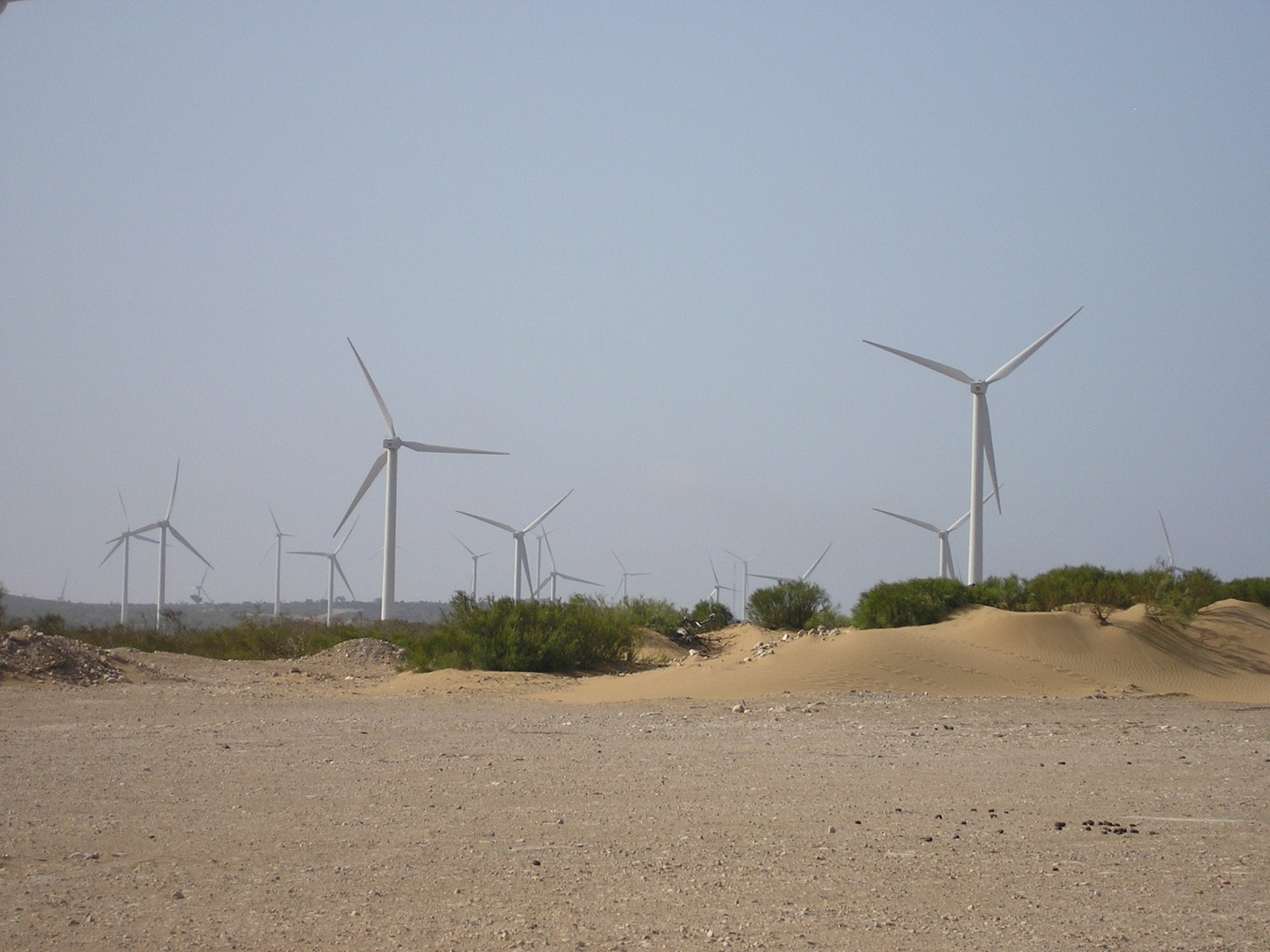
Wind supplied most of the output in ANRE’s renewable grouping. The fleet’s installed megawatts were therefore not interchangeable units of annual production. Resource conditions, plant availability and operating decisions affect output, while additions during the year complicate any comparison with the year-end fleet. These accounts alone cannot identify how much each factor contributed to the capacity-output difference.

Why pumped storage changes the comparison
Pumped storage adds a second question: what is being counted as renewable capacity? These facilities use electricity to pump water uphill, then release it through turbines when power is needed. The US Department of Energy describes the process as a form of energy storage, comparable in function to a large battery.
That service can help a power system shift energy between times of surplus and need. But the water’s return downhill does not establish whether the electricity used to pump it came from wind, solar, coal or another source.
ANRE includes pumped storage in the renewable grouping above. The International Renewable Energy Agency, or IRENA, excludes pure pumped storage from its renewable capacity totals. Its Renewable Capacity Statistics 2026 lists Morocco at 4,659 MW in 2024 and 4,851 MW in 2025, with 814 MW of pure pumped storage shown separately in both years.
Storage explains much, but not all, of the difference between the two institutions’ 2024 totals. Subtracting ANRE’s 814 MW of pumped storage leaves 4,625 MW, still 34 MW below IRENA’s figure. The published totals do not provide a complete reconciliation. It would be wrong to force them into an exact match or present either series as a correction of the other.
The denominator belongs in the headline
A renewable share of installed electricity capacity is not a renewable share of generation. Neither is automatically a share of electricity consumed after cross-border exchanges, and none describes the whole energy economy, including transport fuels.
Nor does a national annual generation share certify the electricity supplied to an individual factory. That would require evidence about the buyer’s supply arrangements, the relevant period and the accounting rules being applied.
The distinction has consequences beyond power-sector statistics. As with Morocco’s water economy, adding infrastructure and measuring the service it delivers are separate tasks. And as the trade balance illustrates, a strong result in one measure does not settle a different economic question.
The useful reading of Morocco’s electricity transition keeps several measures together: installed assets, annual production, storage and the boundaries of each dataset. The 2024 accounts show a substantial renewable fleet alongside a production mix still led by coal. That is a more precise conclusion than either percentage alone can carry.
Source and image note: This is a source-based analysis, not field reporting. The matched capacity and generation comparison uses ANRE’s 2024 accounts; IRENA’s later publication is used to explain statistical scope, not to update 2024 generation. Lead photograph: Noor 1 and 2 solar facilities near Ouarzazate, 17 October 2019, Richard Allaway, via Wikimedia Commons, CC BY 2.0, resized. Both photographs are archival. AI assisted research, translation, drafting and editorial review; factual claims were checked against the linked sources.
