
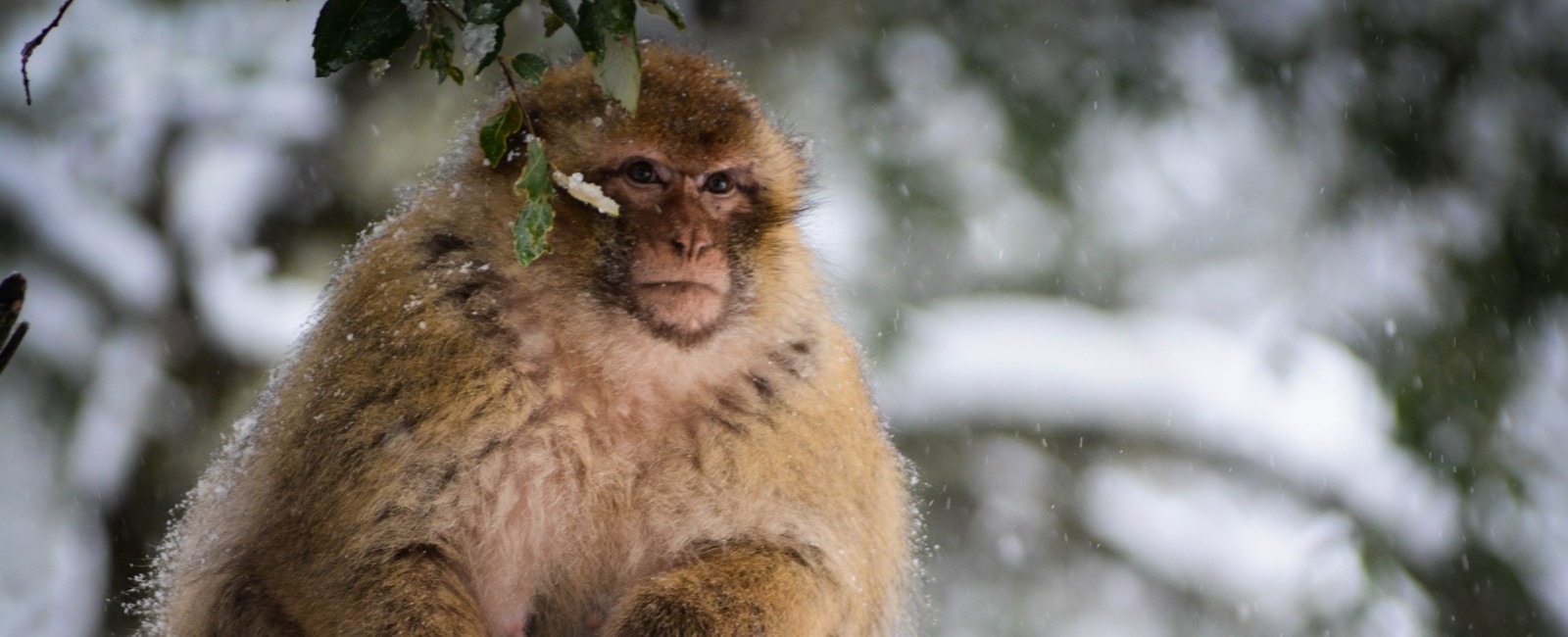

A Barbary macaque approaching a visitor in Morocco’s Middle Atlas is not proof that the encounter is harmless. Research in Ifrane National Park found that food from tourists could draw animals towards people while being associated with signs of stress and changes in body condition. The important question is not simply whether a monkey accepts a snack, but what repeated feeding changes about its life.
Two studies published in 2016 help explain that distinction. They concern particular groups observed years earlier, not a fresh assessment of every Moroccan forest. Read within those limits, they offer a more useful way to understand wildlife tourism than the assumption that an animal’s willingness to come close means that it benefits.
A forest animal before a visitor attraction
The Barbary macaque, Macaca sylvanus, is a monkey native to Morocco and Algeria. Despite the familiar name “Barbary ape”, it is not an ape. The University of Michigan’s Animal Diversity Web account describes an adaptable diet of plant material and animal foods, including insects, and a life in social groups. It is not an animal that naturally depends on a visitor’s bag of food.
The Middle Atlas, the mountain region around towns including Ifrane and Azrou, is one important setting for that life. A field study published in Scientific Reports in September 2016 examined macaques in Ifrane National Park. Its setting matters: interactions at a heavily visited site cannot stand in for the behaviour of all macaques across their range.
The IUCN Red List entry lists the species as Endangered. That is a conservation classification, not a count of the animals a traveller might see beside one road. Nor does a conspicuous group near visitors establish that the wider population is secure.
What the feeding comparison measured
In a May 2016 PLOS ONE paper, Laëtitia Maréchal and colleagues compared two groups living about two kilometres apart in Ifrane National Park. One regularly encountered tourists and received substantial food from them. The other rarely met tourists and relied on natural food.
The main observations ran from March to December 2012. Researchers followed 17 adults in the tourist-fed group and 11 in the comparison group, using non-invasive measures rather than capturing animals for a clinical examination. Those measures included body size, visible hair loss and hormone metabolites in faeces, used to assess physiological stress.
The results were not identical for males and females. Compared with the other group, tourist-fed females had larger bodies; males had more hair loss; both sexes had higher physiological stress measures. Within the tourist-fed group, heavier reliance on human food was associated with larger body size in both sexes and higher stress measures in males. Female coat quality also improved with greater provisioning, an example of why the findings cannot be reduced to a claim that every measured outcome worsened.
Some observations, including births, deaths and symptoms of illness, were descriptive because the sample was too small for statistical testing. They should not be turned into a claim that tourist feeding caused a particular death or a nationwide decline.

Coming closer can be a trade-off
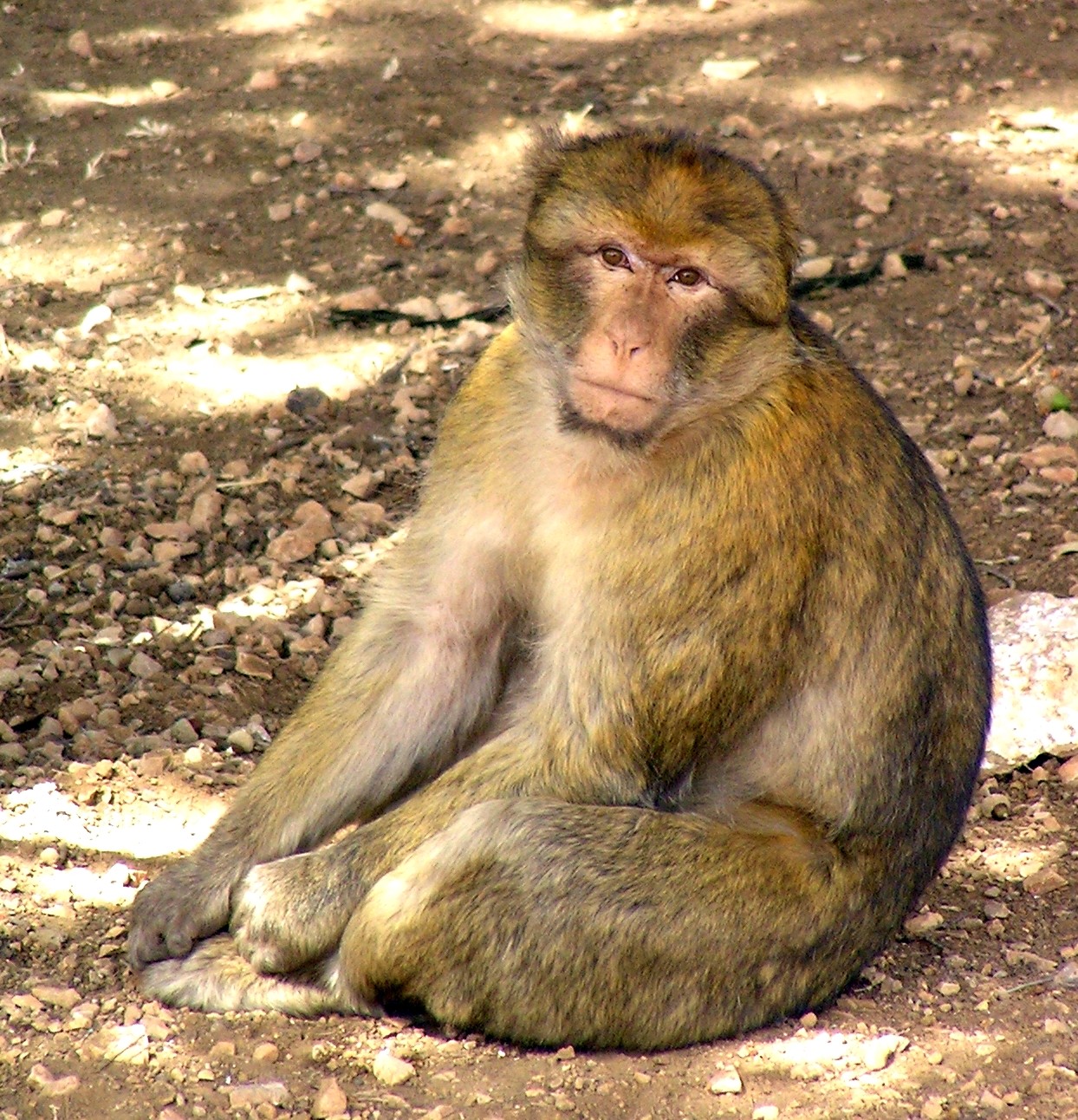
The Scientific Reports study asked a related question: how do animals respond when tourists offer both a possible reward and a possible threat? It examined 17 adults in one heavily visited group. Researchers recorded several responses, including physical avoidance, proximity to social partners, friendly interactions, aggression and behaviours such as self-scratching.
The authors interpreted the pattern as a trade-off between risks and benefits. Access to desirable food can help explain why an animal remains near people despite the pressure associated with the encounter. Approaching is therefore not a reliable test of welfare.
These papers are related research, not two independent national surveys. They do not establish a universal threshold for safe feeding, and higher hormone measures alone do not prove a specific long-term health outcome. The PLOS ONE authors explicitly noted the small sample, the absence of replication across multiple groups and possible differences between sites. Group size could also affect competition and stress.
Protecting the animal means looking beyond the snack
Feeding is only one part of conservation. A Natural History Museum account published in March 2024 describes habitat loss and the illegal pet trade alongside the problems associated with feeding. Those pressures explain why the wider problem cannot be solved merely by changing how a single visitor behaves. No current population total is inferred from that account.
Morocco’s nature stories often extend beyond the most visible attraction. At Merja Zerga, understanding birds requires attention to the lagoon’s food web. The knowledge behind argan oil likewise belongs to a wider relationship between people and a living landscape. A roadside macaque encounter should be read in its forest setting, not as an isolated performance.
The practical conclusion is a cautious one: watching without offering food avoids adding to the provisioning pressure examined in these studies. It is not a complete conservation programme, and it does not replace habitat protection or work against wildlife trafficking. But it respects a basic finding of the research: attracting a wild animal is not the same as caring for it.
Sources and method: This is a source-based explanation of published research, not a site visit or a current population survey. The original 2016 papers were inspected; their observations and limits are stated. No claim is made about present-day feeding rules at a particular site. AI assisted research, translation, drafting and editorial review; factual claims were checked against the linked sources.
Lead photograph: Barbary macaque in Azrou, 22 March 2016. Archive image, not a current field observation. Photo: Kamil Laghjichi, via Wikimedia Commons, CC BY-SA 4.0. Web header cropped and resized. No generative changes.
