

Economy and public policy | 31 October 2026
Morocco’s 2027 budget debate is moving from headline promises to the question that matters for households: which measures would change income, which would improve services, and when would either take effect?
The House of Representatives’ Finance and Economic Development Committee listed the conclusion of its general discussion and the government’s response for 30 October. That is a stage of parliamentary scrutiny, not proof that every proposal is now law. The Finance Ministry’s presentation to the committee provides a useful way to separate next year’s proposals from longer-term targets.
Tax relief has a timetable, not a single switch
The ministry describes an income-tax reform to be introduced gradually between 2027 and 2031. Its stated objectives include raising the first exempt band of annual income from MAD40,000 to MAD60,000, reducing the number of taxable bands, and bringing the highest marginal rate from 37% to 30% by the end of that period.
Those figures should not be collapsed into a claim that all workers immediately receive the final tax schedule in January. Nor is taxable income the same as gross salary or take-home pay. The final legislation, the annual transition and a worker’s taxable base would determine the actual effect.
The distinction also explains a question raised in Hespress’s account of the committee debate: income-tax reductions cannot directly help someone who already has no income-tax liability. Cash support, employment and public services therefore remain separate tests of the budget’s reach.

Direct support and services are different promises
The presentation proposes raising the minimum monthly direct social assistance from MAD500 to MAD600 as a first stage in 2027. It places that within a wider gradual objective of MAD1,000. A budget proposal is not, by itself, a new entitlement or an instruction to apply: eligibility and implementation rules still matter.
The document also sets out MAD45.4 billion for health in 2027 and MAD121.3 billion for education, higher education and training. These are planned resource envelopes. They should not be read as evidence that a particular hospital has opened, a classroom has been built or a doctor has arrived in an underserved area.
For readers, the practical follow-up is delivery: where posts are filled, which facilities become operational and whether access improves. A larger allocation and a better service are connected ambitions, not interchangeable facts.
MAD400 billion is not one central-government cheque
The planned public-investment effort totals MAD400 billion. The ministry divides it between MAD251 billion through public establishments and enterprises, including the Mohammed VI Investment Fund; MAD124 billion through the general budget, special Treasury accounts and autonomously managed state services; and MAD25 billion through territorial authorities.
That breakdown matters when asking who will carry out a project and how it will be financed. It also gives substance to the debate about regional distribution: a national total alone cannot show which communities will see transport, water or other services improve.

What to watch before treating a proposal as a result
Three checks make the next phase easier to follow: the wording Parliament adopts, the dates and rules used to implement it, and the evidence of delivery after money is allocated. The ministry’s 3.7% growth assumption for 2027 is a forecast underpinning the plan, not an economic result already achieved.
The budget is an opportunity to debate trade-offs between household relief, services and investment. The useful question is not whether one large number sounds ambitious. It is who benefits, on what timetable, and how the result can be checked.
This is a source-based budget explainer, not personal tax advice. Figures describe proposals and targets in the Finance Ministry’s October 23 presentation. Parliamentary scheduling does not establish the outcome of a vote.
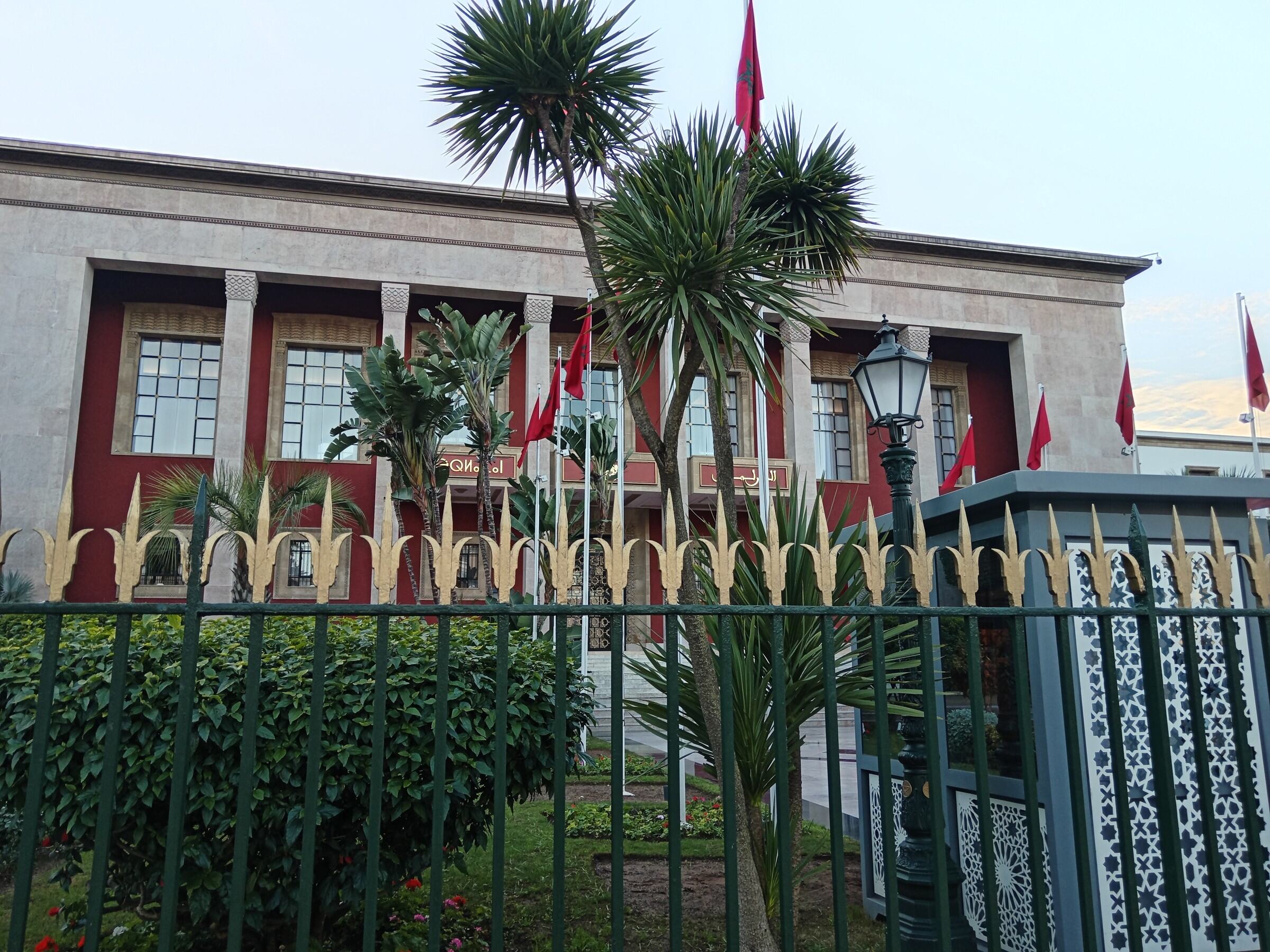
Featured photograph: Moroccan Parliament in Rabat, 31 January 2026, not the October committee meeting. Photo: CAPTAIN RAJU, Wikimedia Commons, CC0 1.0. Resized; header may be cropped.
