

Morocco’s National Library is marking its centenary with exhibitions and new cultural projects. The anniversary also draws attention to less visible work: acquiring publications, describing them accurately and deciding how readers can consult them. A document can be preserved without being easy to find, and listed in a catalogue without being available to read online.
The celebrations opened in Rabat on 17 November 2026. Morocco’s education ministry confirmed its participation, while Morocco World News reported a year-long programme including research awards, publications about the institution and a general catalogue of its manuscripts. The catalogue is an announced project, not a completed inventory demonstrated by the launch ceremony.
Why the anniversary starts in 1926
The Bibliothèque Nationale du Royaume du Maroc, usually shortened to BNRM, is the National Library of the Kingdom of Morocco. Its own historical account dates the creation of the General Library to 1924. In 1926 it became the General Library and Archives and a public establishment. That institutional milestone explains the 1926-2026 centenary; it does not mean the collection began from nothing that year.
The library’s history describes collections enriched by private libraries as well as material inherited from institutions of the French Protectorate. Its account identifies legislation, surveys, statistics and studies among those holdings. Such documents preserve evidence of the period, but their institutional origin also matters when researchers interpret them. Keeping a colonial-era survey does not require accepting its categories or conclusions.
The present name dates to a legal reorganisation in 2003. The current headquarters in central Rabat opened in October 2008, according to the same history. It belongs to the city’s modern institutional landscape, a different layer from the older monuments discussed in Sada Journal’s account of Rabat’s layered capital.
How publications enter a national collection
One acquisition route is legal deposit: a requirement to deliver copies of specified publications to a designated institution. Morocco introduced deposit legislation in 1932. The text of Law 68-99 published by the library, promulgated in 2003, sets out collection, preservation, national bibliographies and public access as its purposes. Access remains subject to copyright and related rights.
The law’s scope extends beyond printed books to photographic, sound, audiovisual and multimedia documents, as well as databases and software. It also contains exclusions, including specified administrative and commercial printing and certain unpublished university research. It should not be described as a rule that places every document created in Morocco automatically in the library.
Nor does depositing a work make it free of copyright. Article 10 gives deposit a declarative value in relation to rights; it does not replace other special administrative or judicial deposits. The preservation obligation and permission to reproduce a work are separate questions.

A catalogue is a finding tool
The library’s Bibliographic Agency describes two linked responsibilities: collecting and conserving national documentary production covered by deposit, and building bibliographic tools. These include the national bibliography and records that help identify authors and works consistently.
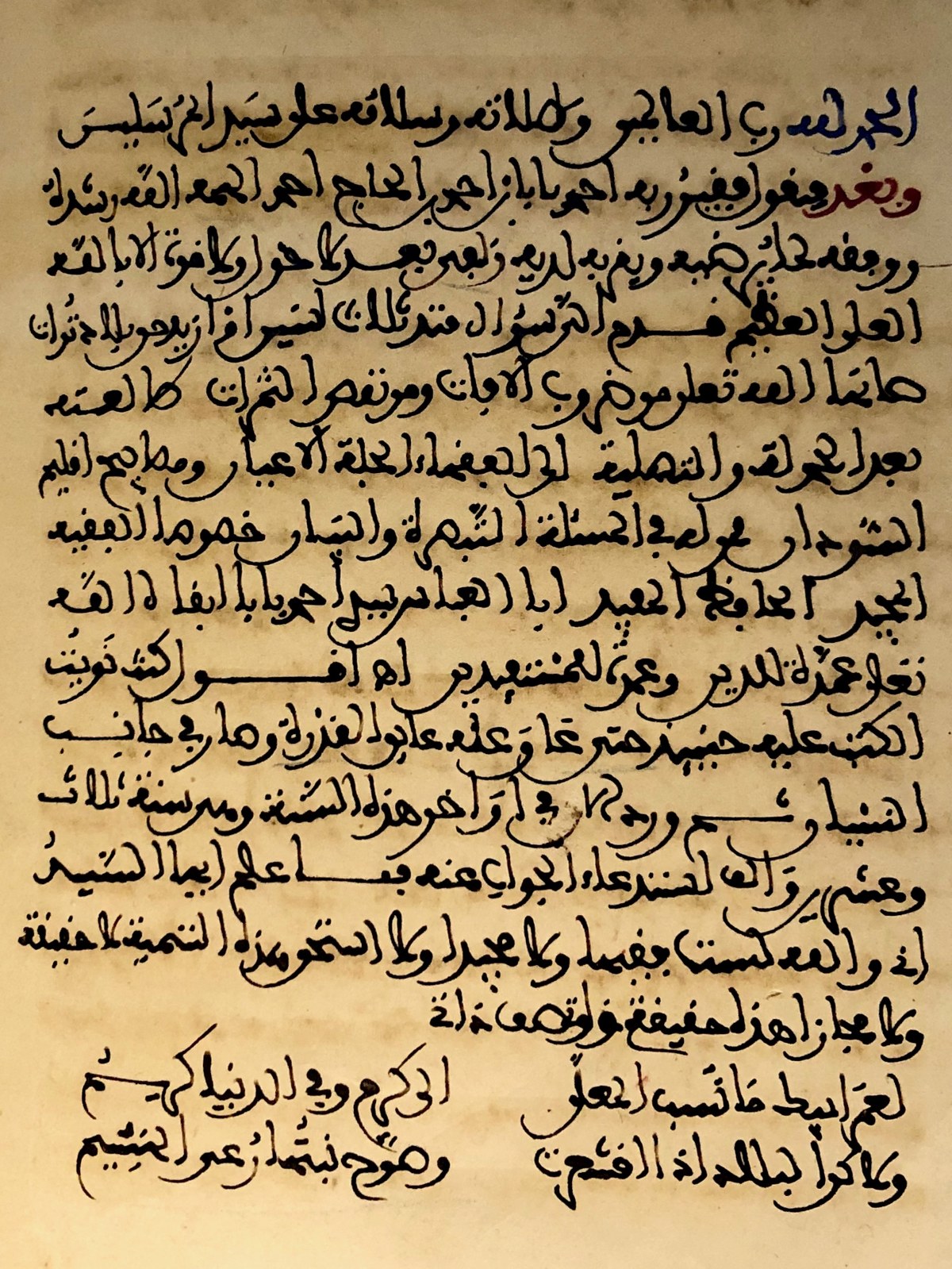
A catalogue record describes a document. A digital reproduction shows its pages. A reader may need both, but one does not establish that the other exists. The agency explains that its authority records are intended to reconcile different spellings and linguistic forms of names, helping readers find an author’s work even when a name appears differently across publications.
That is practical work in a multilingual collection, not merely clerical tidying. As the distinction between language and script illustrates in another Moroccan context, the way words are written and the information they convey are different layers. Search tools must account for forms of names as well as the physical documents they describe.
What the digitisation figures can establish
The BNRM’s published digitisation table records 6,110,502 scanned pages as of 1 January 2024. Of those, 5,245,508 are listed under manuscripts, representing approximately 15,708 volumes. Other categories include monographs, periodicals and specialised collections, manuscript catalogues and institutional reports.
These are dated production figures, not a November 2026 count. They do not supply the total number of pages requiring digitisation, so they cannot establish a completion percentage. Nor does a scanned-page total alone show that every image is freely accessible online, searchable as text or accompanied by a complete catalogue record. The library frames its digital-access work with reference to documents free of rights restrictions.
The centenary programme gives these distinctions a current purpose. L’Observateur’s account of the launch describes manuscript exhibitions alongside plans for a general catalogue and scientific meetings. Exhibiting a selection, describing a collection and expanding digital access are complementary tasks. Their results need to be assessed separately, rather than counted together as one completed modernisation.
Source note: This article draws on the library’s published history, legal and bibliographic documents, a dated digitisation table and reporting on the centenary launch. It is not a visit, a collection audit or a test of the complete digital service. No current holdings total, digitisation completion rate or exhibition access schedule is asserted.
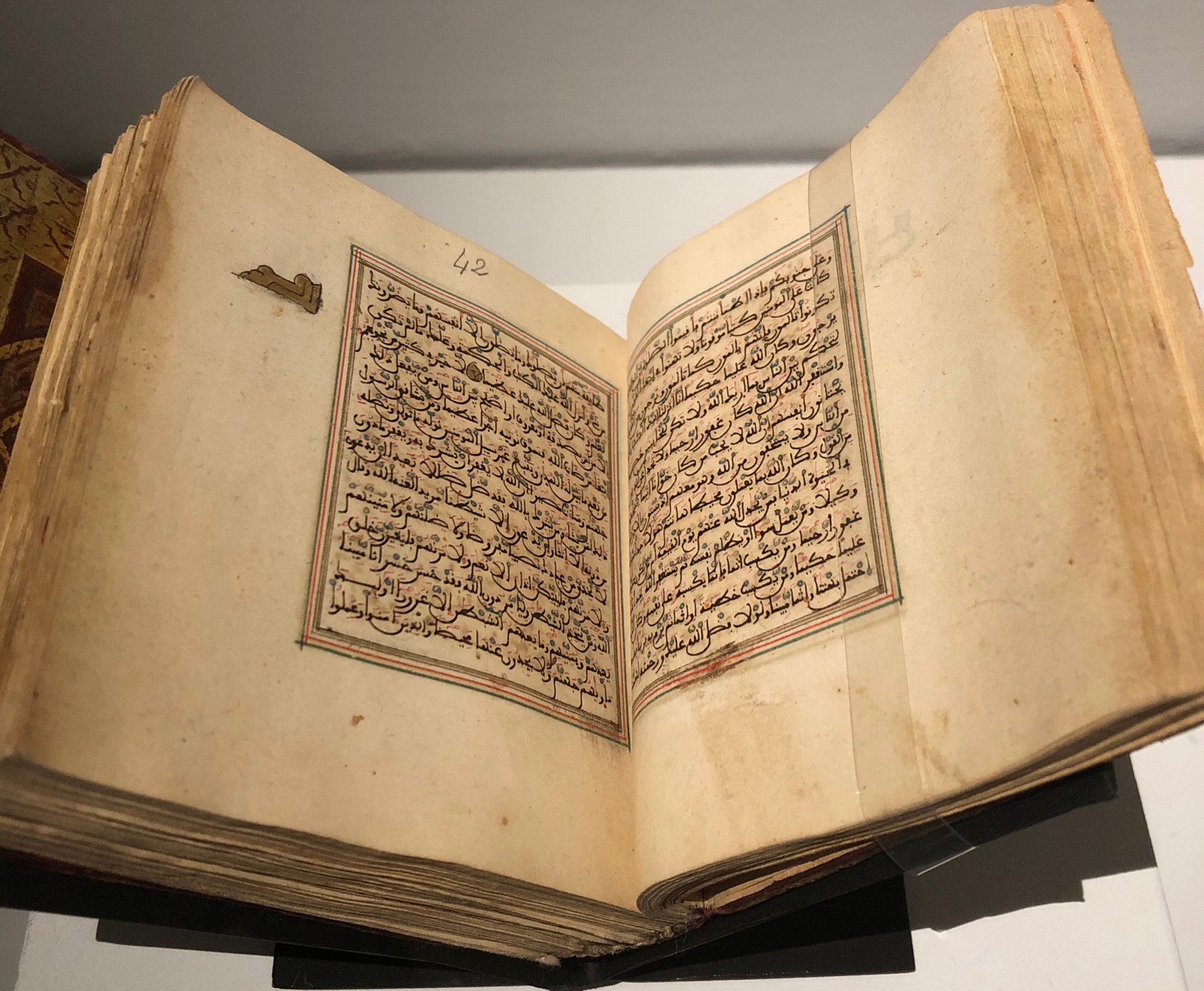
Lead photograph: Quran manuscript 752 G, photographed on 1 November 2019 at the Treasures of Islam in Africa exhibition at the Mohammed VI Museum of Modern and Contemporary Art in Rabat. The Commons record identifies it as part of the National Library collection. Not a photograph of the 2026 centenary exhibitions. Photo: Commons contributor إيان, Wikimedia Commons, CC BY-SA 4.0. Resized and recompressed; photograph and display crops under the same licence.
