

Morocco has confirmed 30 cases of diphtheria and three deaths, mainly in the Casablanca-Settat and Rabat-Salé-Kénitra regions, the Health Ministry said on Friday, insisting that the situation is under control and that no outbreak clusters have been detected.
Jaouad Hammou, head of the ministry’s Communicable Diseases Division, told Le360 that the country is dealing with “scattered cases” rather than an outbreak, and stressed the need to distinguish between suspected cases and infections confirmed by laboratory testing.
Suspected cases are not confirmed infections
Hammou acknowledged that there were “quite a few” suspected cases but said that was entirely normal under a deliberately highly sensitive surveillance protocol. Under the ministry’s case definitions, any patient with an upper respiratory tract infection accompanied by an adherent pseudomembrane is considered a suspected case, as is an ear, nose or throat infection with a marked deterioration in the patient’s general condition or signs of complications. A case is confirmed only after laboratory testing, and a death is counted only when a patient with a confirmed infection dies from a complication of diphtheria rather than another cause.
The ministry said the emergence of cases had been expected and prepared for, with a coordinated response involving the Health Ministry, private healthcare providers, military medical services and a dedicated scientific committee. “Nevertheless, three deaths have been recorded despite those preparations and the mobilization of all medical personnel,” Hammou said.
For people who have been in contact with infected patients, the ministry is using vaccination and antibiotics. Chemoprophylaxis is mandatory for high-risk contacts, while antibiotic resistance data show the circulating strain is resistant to penicillin G, according to doctors who presented the strategy in a ministry webinar earlier this month.
Vaccination gaps and school checks
Health officials link the resurgence of the disease to falling vaccination rates, Hespress reported. During an outbreak, the period of protection considered valid after a vaccine dose is reduced from ten years to five, though previously administered valid doses still count and vaccination schedules can be continued without restarting. Children under seven receive DTP, pentavalent or hexavalent vaccines, while children aged seven and over and adults receive the Td vaccine.
The Ministry of National Education has issued a circular drawn up jointly with the Health Ministry calling for tighter surveillance in schools, checks on pupils’ vaccination status and, where directed by health authorities, the temporary exclusion of affected pupils.
Moroccan media had reported suspected cases and the deaths of children in Salé in the days before the ministry’s confirmation on Friday. Diphtheria is a bacterial infection that had become rare in Morocco after decades of routine childhood vaccination.
Sources: Le360 English, citing Health Ministry Communicable Diseases Division head Jaouad Hammou; Hespress English; Medias24.
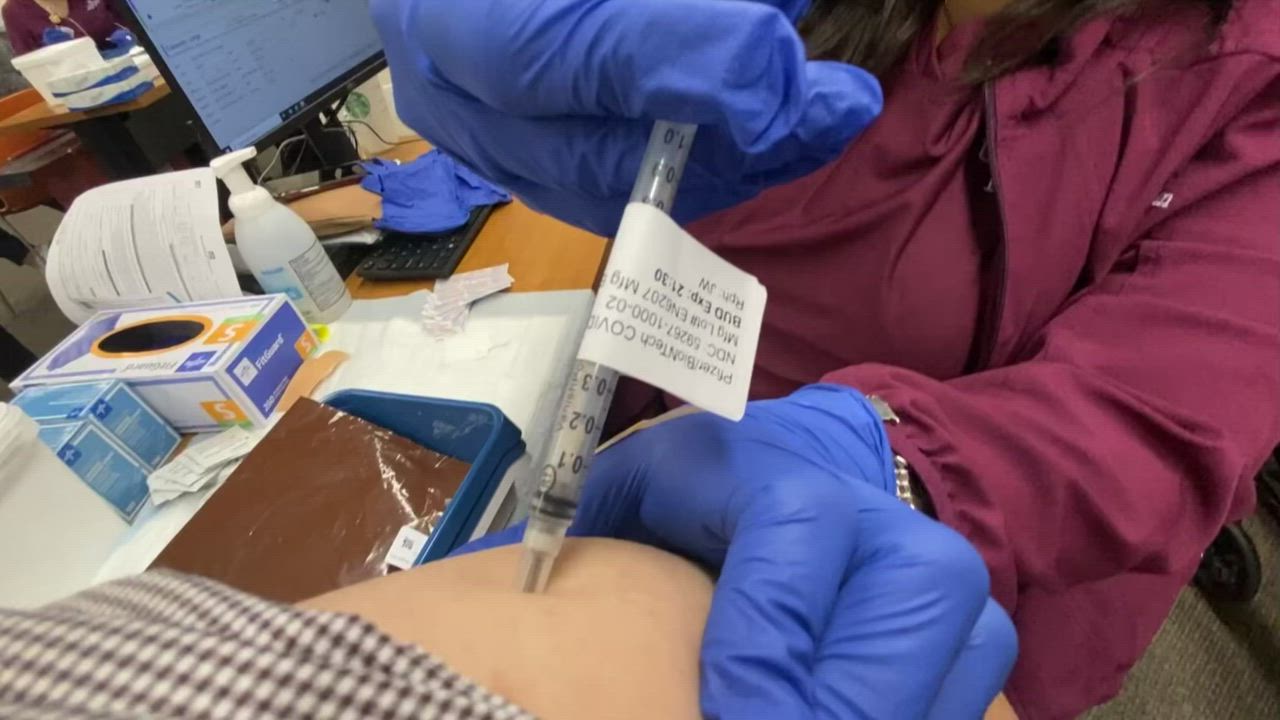
Featured image: an illustrative photo of a vaccination, not taken in Morocco. Photo: USDA, public domain, via Wikimedia Commons.