
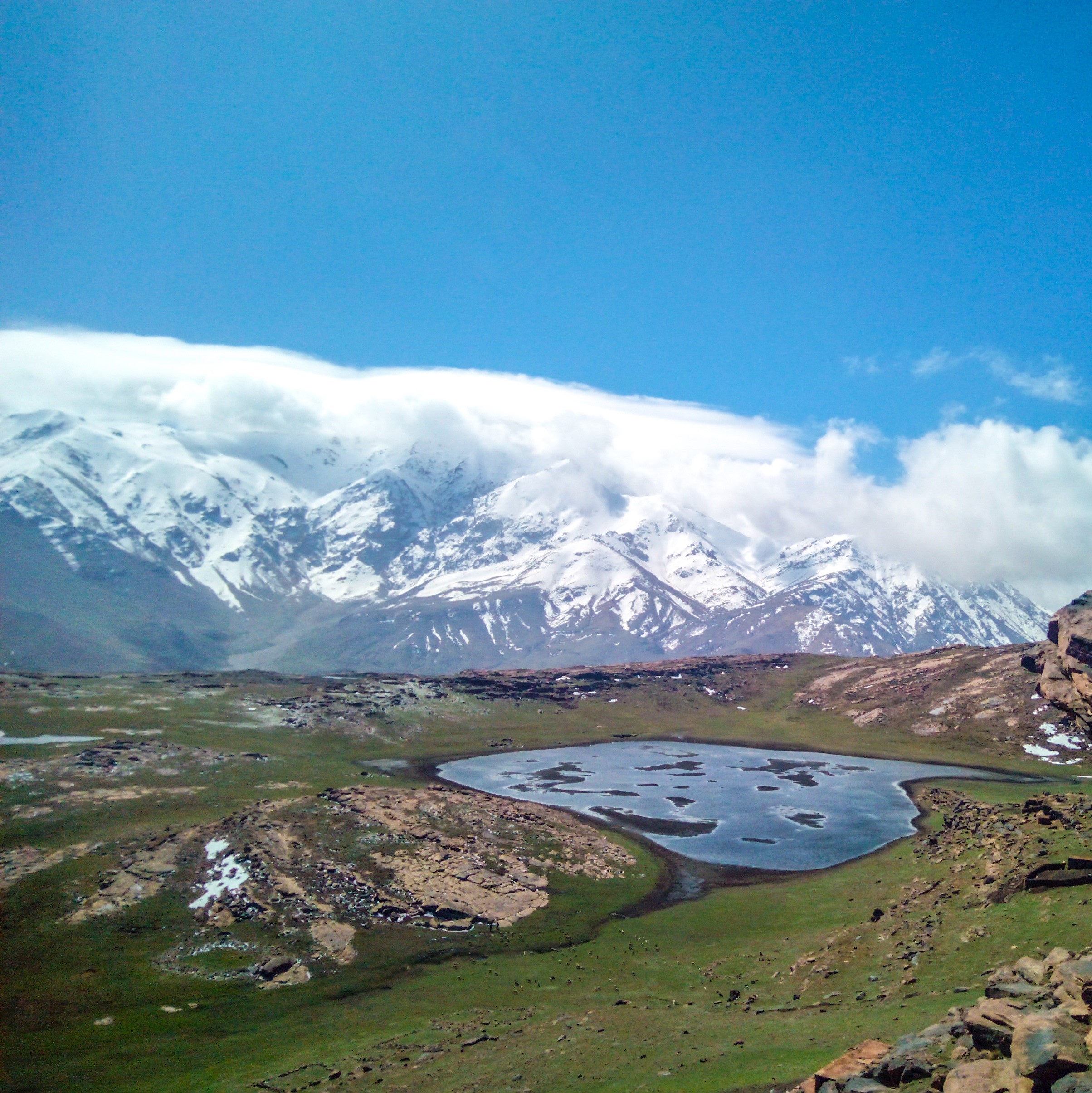

A pasture can be shared without being available every day. In Morocco’s High Atlas, pastoral agdals reserve grazing land for part of the year, giving plants time to grow before livestock return. The arrangement depends on people agreeing who may enter, when the closure ends and what happens when someone breaks the rules.
The Yagour plateau, southeast of Marrakech, shows how that system works. Research there describes a landscape linked to villages, cultivated terraces and other grazing areas through a seasonal calendar. Protecting the high pasture means organising the places where animals must feed while it is closed.
A pasture with a calendar
Agdal has several related meanings. It can describe a protected resource, the territory containing it, a period of restricted use or the institution that makes the restriction effective. Pastoral agdals are one form; the term also applies to arrangements involving forests, fruit and other resources.
In a 2012 chapter on the Yagour, environmental anthropologist Pablo Domínguez described a customary closure running from late March into early July. Representatives of the groups using the plateau negotiated the opening. The chapter also recorded changes from an older calendar towards decisions responding to the year’s conditions.
Those dates describe the system studied, not a confirmed timetable for 2026. There is no single national agdal opening day. In her 2023 field report for New Lines, journalist Kira Walker described differences between communities that adjusted dates and others where longstanding agreements were harder to change.
The ecological purpose is straightforward: reducing grazing during a sensitive growth period allows flowering, seed production and the renewal of pasture. A Yagour account by Domínguez for the Museum of Human Ecology explains the closure in those terms. It is a temporary reserve for subsequent use, rather than a permanent ban on pastoralism.

The closure reaches beyond the plateau
Herders still need somewhere to keep their animals during the closure. Domínguez’s Yagour research followed the relationship between the high pasture and smaller grazing areas, crops and stored fodder used by the Ayt Ikiss community. Its household survey was conducted in the summers of 2006 and 2007 and interviewed 83 household heads out of 97.
The chapter recorded seasonal pressure on other grazing areas and disagreements involving larger herd owners and the wider community. That is an important limit to what a protected patch can achieve on its own. A closure can conserve forage in one place while making access to another more pressing.
This is also why transhumance matters. The term means the seasonal movement of livestock between complementary grazing areas. Its operation depends on a sequence of usable places, not simply the survival of grass at the final destination. The Yagour study is local and historical; it is not a census of today’s herders or a measurement of current national grazing pressure.
Morocco’s collective granaries offer a different example of rules governing shared protection. There the object is stored produce. In a pastoral agdal, the resource is vegetation whose availability changes with the season.
Shared land still has boundaries
Collective use does not mean unrestricted entry. Pastoral agdals have recognised rights-holders, negotiated restrictions and mechanisms for enforcement. Walker’s reporting described guardians and penalties, alongside disputes over dates and breaches. The institutions manage competing interests; their existence does not mean those interests disappear.
A 2025 Cambridge University Press chapter on High Atlas land rights, by Ahmed Bendella and colleagues, describes local assemblies, often called j’maa, as central to these arrangements. It also cautions that women and younger generations generally remain excluded from direct participation when a male household head speaks and votes for the household.
Protecting a customary institution therefore leaves a further question: who has a voice within it? An assembly can command local legitimacy while still leaving some of the people doing pastoral work without a direct vote. Neither blanket dismissal of collective management nor a romantic picture of village democracy explains that combination.
Keeping a working system
Walker’s 2023 reporting from the Igourdane agdal, elsewhere in the High Atlas, documented families balancing seasonal herding with schooling, uncertain incomes and access to services. Those accounts concern named households and a particular reporting period. They should not be turned into an updated national count of agdals or a claim that all are disappearing at the same rate.
The practical question is whether the people maintaining the rules can continue to make them work. A grazing calendar needs agreement, credible enforcement and viable alternatives during the closure. It also needs institutions able to address disagreements about access and representation.
As with the water-sharing arrangements behind Morocco’s khettaras, the visible landscape is only part of the system. The Yagour’s pasture is sustained through decisions about its use. Understanding those decisions explains more than treating the plateau as either untouched nature or land open to everyone.
Sources, method and image credits
This source-based explainer draws on the full 2012 Yagour chapter, including its 2006-07 survey methods, the 2025 Cambridge chapter, the Museum of Human Ecology account and Walker’s 2023 reporting. Some sources share researchers and are not independent replications. Sada Journal has not visited the pastures, interviewed rights-holders or verified 2026 opening dates.
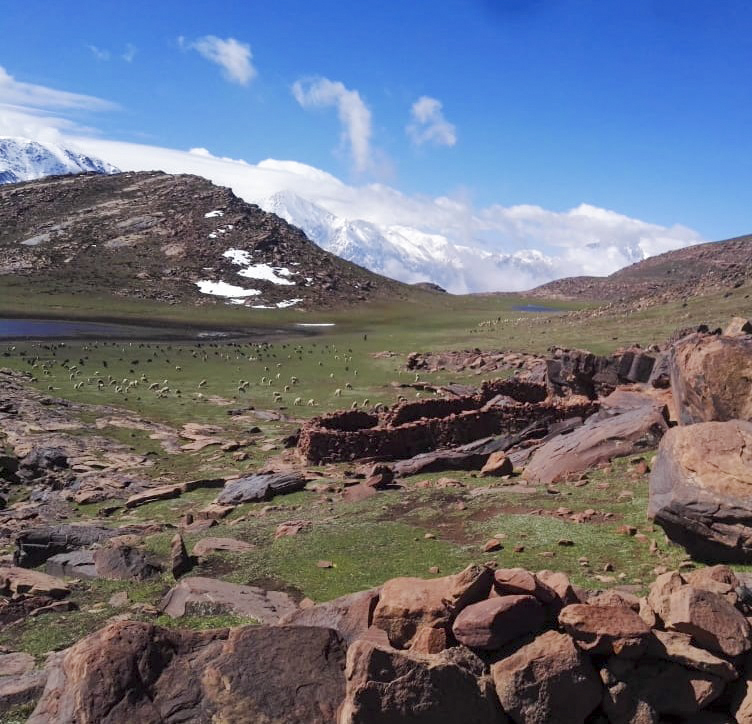
Hero image: the Yagour plateau and a mountain pool, photographed by Mounir Neddi, dated 20 March 2021 in the Commons record, CC BY-SA 4.0. Archive landscape, not a current-condition survey. Original uploaded unchanged; the website may crop its display. Both photographs and any display crops remain under CC BY-SA 4.0.
