

Opinion / Economic Analysis
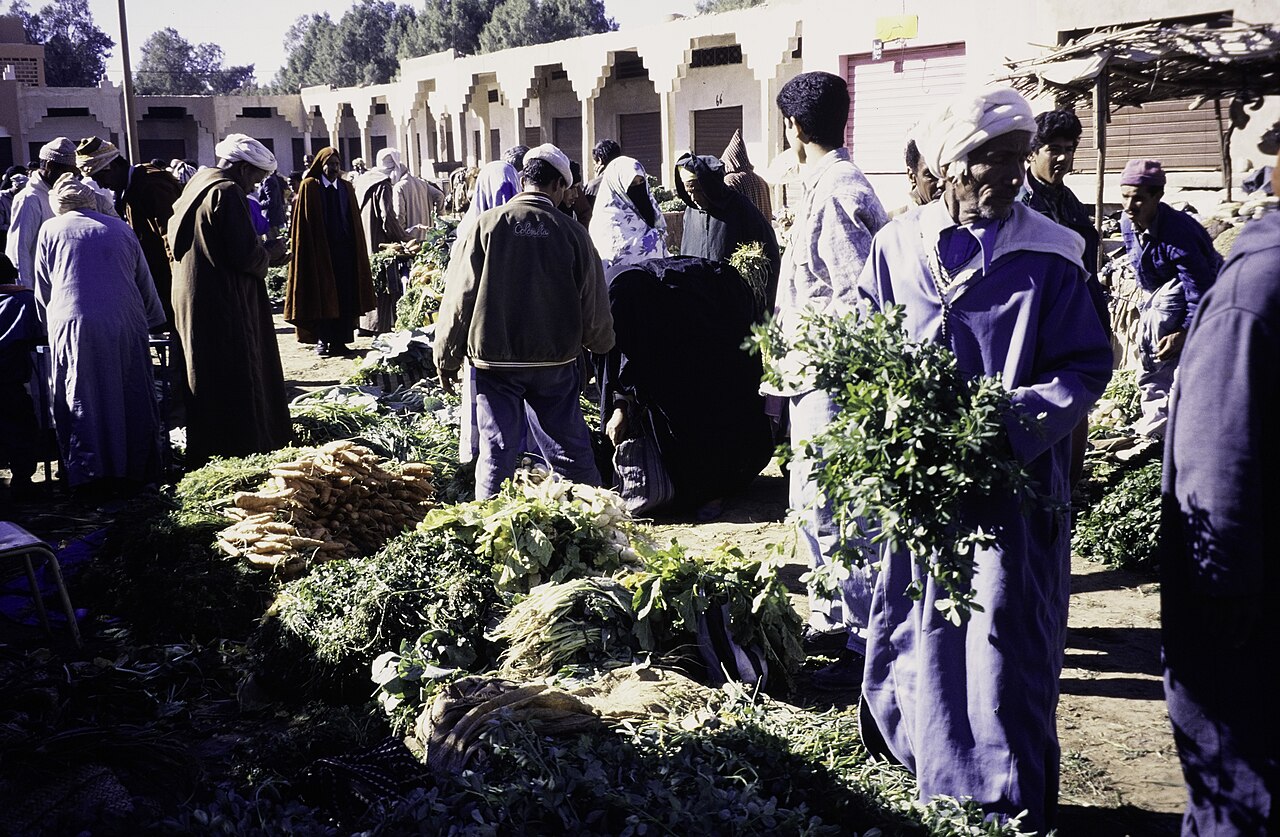
On Thursday evening, November 19, Head of Government Fatima Ezzahra El Mansouri chaired the second meeting of a body that did not exist three weeks ago: the interministerial committee for monitoring purchasing power, created on November 3 with an eye on Ramadan demand. The statement after the meeting, reported by le360, lists the government’s chosen levers with unusual candor. For vegetables: give priority to supplying the national market and keeping it balanced, and shorten distribution chains by reducing the number of intermediaries “to curb unjustified increases.” For meat: regulate marketing channels for transparency and price stability, and continue the effort to reconstitute the national herd for the medium and long term. The interior, finance, agriculture, industry and fisheries ministers all attended, along with the government’s secretary-general.
Read that list carefully and you can see three different theories of why Moroccans are paying more for food. The export story: supply is leaking abroad, so keep it home. The middleman story: margins multiply between farm and stall, so shorten the chain. The herd story: there simply is not enough meat, so rebuild supply over years while importing the difference. Each theory has a policy attached. Only one of them is fast.
A relative-price problem, not an inflation problem
The numbers behind the committee’s urgency are worth stating precisely, because they are routinely misstated. Morocco’s consumer price index rose 1.0% in September from August, the High Commission for Planning reported, with food up 1.6% on the month, meat and vegetables up 4.3%, and fuel up 2.0%, as relayed from the HCP release by Madar. Year on year, however, the index was up only 0.5%, and annual food prices were actually down 2.5% on September 2025; August’s annual reading had been negative. In other words, Morocco does not have generalized inflation. It has a sharp, recent, concentrated rise in the prices of what households buy every week, landing on budgets already thinned by years of drought economics. The largest monthly increases were in the south, Laayoune at 2.8% and Beni Mellal at 2.4%, which matters for a government attentive to regional equity.
This distinction drives everything about the response. A central bank fights generalized inflation with rates; a government fights a relative-price spike in the food basket with supply management. That is what the committee is, and its toolkit is administrative: what crosses borders, through how many hands, under which tax treatment.
The export lever is already pulled
The “national market first” principle is not new this week. El Mansouri announced a suspension of new export permits for tomatoes, potatoes and onions at the November 12 cabinet meeting, explicitly framed as a purchasing-power measure; the pause covers new authorizations rather than all shipments, and Sada Journal’s reporting shows African markets taking the cut while Europe is spared. On November 17 Hespress reported, citing a government source, that the suspension toward African markets is maintained “for the time being,” reviewed at the end of each month against stocks and prices, with resumption possible only if production generates a surplus. The November 12 package went wider than vegetables: the cabinet also raised the minimum direct social assistance payment from 500 to 600 dirhams a month starting January 1, 2027, with a stated target of 1,000 dirhams by 2031, and extended exceptional fuel subsidies for road transport operators, the single biggest input into every distribution chain the committee now wants to shorten. That is the purchasing-power doctrine already in force: hold supply at home, cushion incomes, subsidize the fuel that moves the food. The costs are real and will compound: West African buyers do not wait politely, exporters lose shelf position they spent years winning, and the treasury loses the foreign currency those shipments earned. The government is accepting that bill because the political cost of expensive tomatoes in November, four months before Ramadan, is higher. We track whether the freeze survives its month-end review in our coverage; our current assessment gives it an 85% chance of remaining in force past November 30.
The middleman hunt is the weakest plank
The committee’s second idea, reducing intermediaries in vegetable distribution, is the most politically satisfying and the least evidenced. No margin data accompanied the statement: no published estimate of how many hands a crate of tomatoes passes through between Souss-Massa and a Casablanca stall, or what share of the final price each hand captures. Morocco’s wholesale markets are regulated spaces with documented fees; the long tail of brokers, transporters and stall-holders beyond them is not. Shortening chains may help at the margin, and the announced review of distribution circuits may produce useful transparency. But a government that cannot yet measure the middleman’s cut cannot promise that cutting him will move the price the shopper pays. What it can do, and what the statement’s emphasis on control services and local authorities suggests, is police visible abuses: speculation, hoarding, unjustified markups. Expect inspections and sanctions before structural change.
The herd is the hard truth
Meat is where the arithmetic refuses to cooperate. The national cattle and sheep herd had fallen 38% by early 2025 compared with the last census nine years earlier, after six consecutive drought years, Agriculture Minister Ahmed El Bouari said in February 2025, Reuters reported; rainfall that season was 53% below the thirty-year average. The shortage was severe enough that the King called on Moroccans to forgo the Eid al-Adha sacrifice in 2025 to protect what remained of the flock. Rebuilding a herd is a biological process measured in years, not a procurement decision, which is why the committee’s statement puts herd reconstitution in the “medium and long term” column and why, in the meantime, the state leans on imports: parliament recently rejected a bid to end customs exemptions on livestock and meat imports, keeping the import channel cheap precisely because domestic supply cannot fill the gap. The import lever has its own exposure: it makes Moroccan meat prices a function of foreign markets, freight and the dirham, and it competes for budget room with a finance bill already arguing over fuel taxation. The governing coalition meets next week on fuel prices and purchasing power, Hespress reported on November 19, a sign the file is widening, not closing.
What to watch
Three checkpoints will show whether this committee is an instrument or a talking shop. First, the month-end review of the vegetable export suspension: extending it into December confirms the priority-to-domestic-supply doctrine is durable. Second, the October consumer price reading, due from the HCP in the coming days: if meat and vegetables post another monthly rise near September’s 4.3%, the political pressure escalates regardless of the annual figure. Third, the coalition’s fuel meeting next week: fuel feeds every link of the distribution chain the committee wants to shorten, and any relief there interacts with the food file directly. The deadline behind all of it is Ramadan, expected from mid-February, when food demand peaks and a government that promised “preemptive intervention” will be judged on what it pre-positioned.
Our assessment: the committee is the right instrument for the problem Morocco actually has, which is a food-basket price shock rather than general inflation, and its diagnosis is mostly honest: supply first, chains second, herd last. Its strongest lever, export rationing, is already in use and already imposing costs on exporters that nobody in the statement priced. Its weakest, the war on intermediaries, currently rests on a margin nobody has published. And its most important file, the herd, will not be solved by any committee before the drought cycle does part of the work. Expect a quieter market intervention, more inspections, and the import taps kept open through Ramadan.
Sources and limits. This analysis relies on: le360’s Arabic-language report of the November 19 committee meeting, quoting the Head of Government’s statement (read in Arabic and translated by this desk); le360’s English report of the committee’s creation on November 3; Madar’s relayed figures from the HCP’s September consumer price release (the HCP release itself was not read directly); Reuters’ February 2025 report on the herd decline and drought, and its report on the Eid al-Adha call; Hespress on the November 12 export suspension and social assistance package, the maintained suspension as of November 17, and the coalition’s planned fuel meeting (headline-level for the latter). Sada Journal’s own coverage is linked in the text. The government statement cited no intermediary-margin data, and none is claimed here. The October price figures were not yet published at the time of writing.
Forecast (ledger F33). The suspension of tomato, onion and potato exports to African markets remains in force on December 31, 2026: probability 60%. This is consistent with our standing assessment (ledger F5, 15% probability of resumption by November 30) and extends the horizon; it resolves against the same government-source and press evidence standard. Updates will appear here, dated, with the original text preserved.