
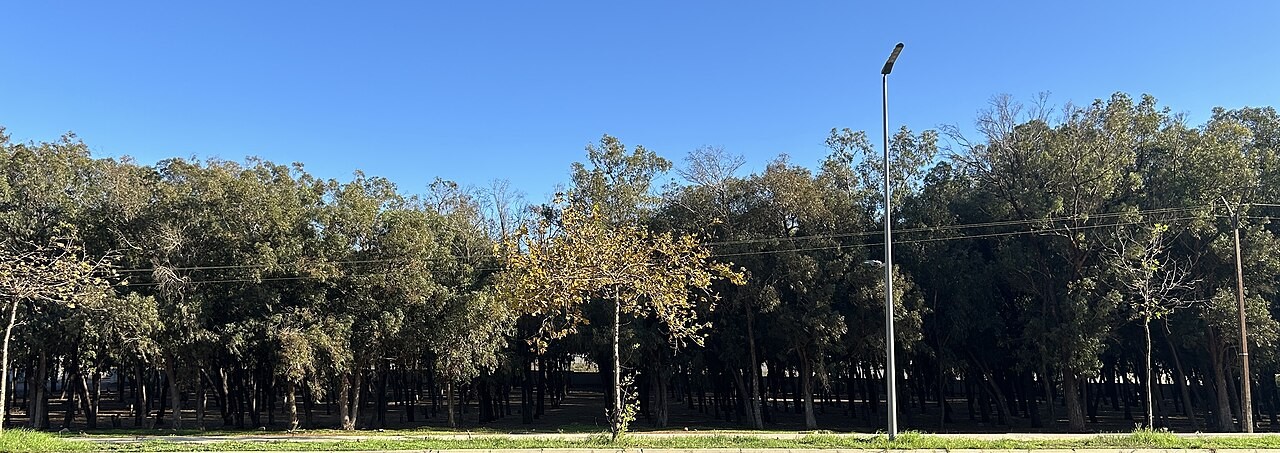

A young tree planted in Morocco’s Maamora forest is not yet a replacement for an ageing cork oak. It must survive dry summers, browsing animals and competition for water. Research from this Atlantic forest shows why the number planted, the number still alive and the shape of the surviving trees answer different questions.
Maamora lies between Rabat, Morocco’s capital, and Kenitra. It includes cork-oak stands alongside plantations of other species. Its regeneration problem is therefore more specific than keeping a forest boundary on a map: the next generation of cork oaks must establish itself within a landscape that also provides livelihoods.
Start with the acorn, not the planting ceremony
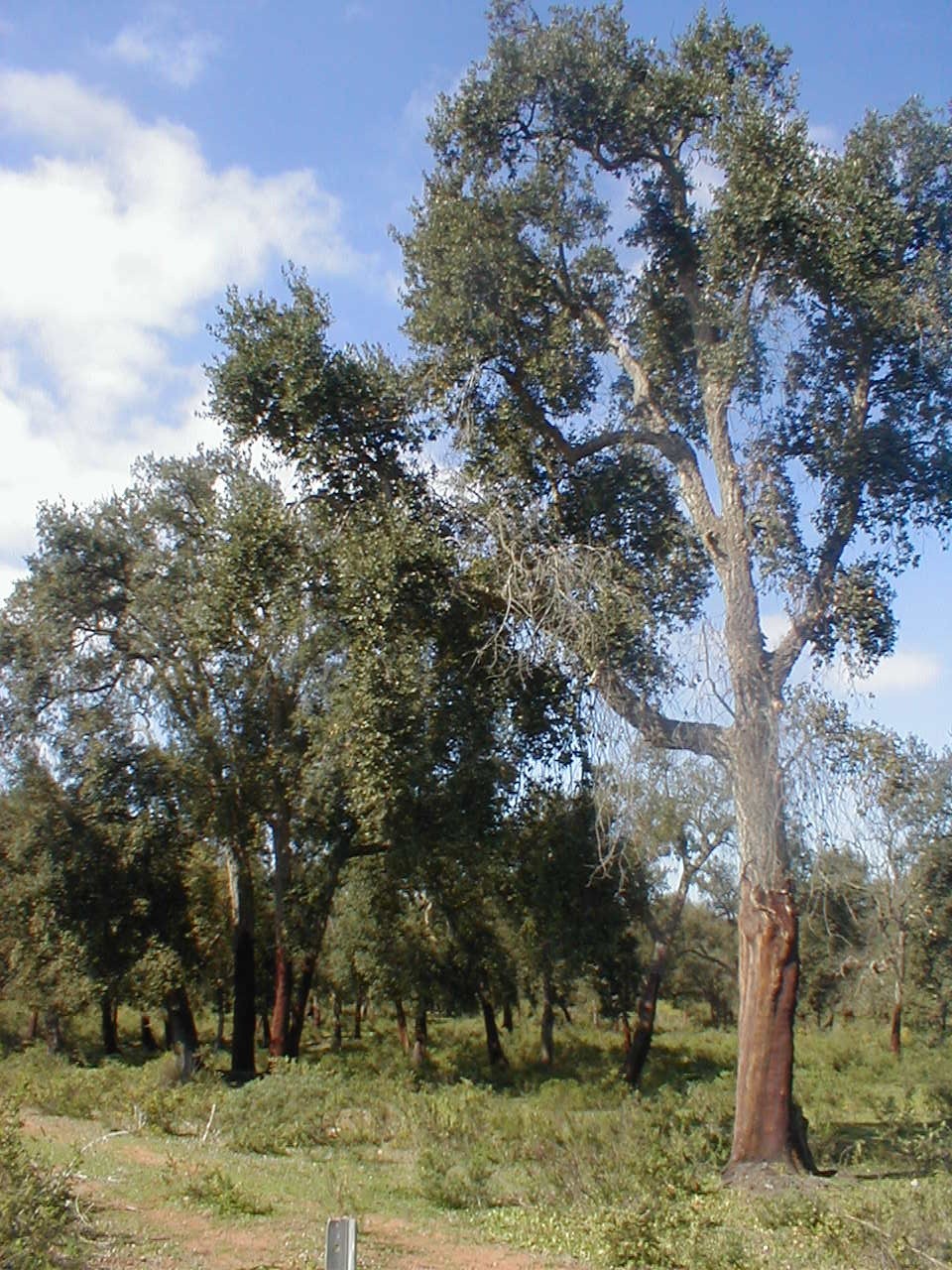
Cork oak, Quercus suber, can be regenerated by sowing acorns directly or by planting young trees raised in a nursery. A 2023 study in the Journal of Ecological Engineering compared those two methods with three heights of protective tube and an unsheltered control. Its main measurements covered 2010-2018, with a further survival inventory in 2021.
The distinction matters. Direct sowing allows a root system to develop in place; nursery-grown trees arrive with a head start above ground but must adjust after transplanting. The authors discuss root development and transplanting stress as possible explanations for the differences they observed. Those mechanisms are interpretations supported by earlier research, not proof that every nursery seedling is inferior.
In this experiment, directly sown plants generally performed better in survival and later growth. But the result was not consistent in every season. During the particularly dry 2014-2015 season, mortality was higher among plants grown from acorns than among the planted seedlings. A method that works well over the study period can still be vulnerable in a bad year.
A shelter changes more than access for animals
The tubes are intended to protect young plants from browsing and alter the small environment around them. Height, light, air movement and temperature can all matter. They are not simply miniature fences.
The experiment found benefits for survival, especially among directly sown plants, but no uniform advantage across every treatment and measurement. In the 2021 follow-up, sheltered trees in the direct-sowing group performed better than the unsheltered ones. Among nursery-planted trees, however, the unsheltered treatment had the highest reported survival. The interaction between method and protection is more informative than a claim that tubes always work.
The Yale restoration library’s summary stresses another limit: early height gains need not persist. In the original study, differences in height between sheltered and unsheltered trees were not significant in the later growing seasons. A taller young plant is not automatically evidence of a lasting growth advantage.

Read the denominator before the percentage
The paper defines its growing-season survival measure using plants successful in the previous period. That is not the same denominator as all plants initially installed. A high rate for one season cannot be read as the share of the original planting still alive many years later. The later follow-up is a separate checkpoint, not a licence to combine percentages that measure different intervals.
The study was also an experiment on a 1.5-hectare plot, not a census of Maamora. Its findings help test restoration choices; they do not establish a forest-wide success rate or the current condition of every stand.
Older field research gives another reason to avoid a single recipe. A 2015 Geo-Eco-Trop study examined 212 sample plots across 3,742 hectares of reforestation. It identified vegetation cover and soil-preparation techniques as important factors in the results. Those historical observations cannot substitute for a current inventory, but they show why site conditions belong alongside planting method.
A working landscape has more than one user
Forest protection also has a social denominator. A Plan Bleu assessment based on work in 2013-2015 considered wood, cork, fodder, recreation, acorns, truffles, tannins and nectar. These goods and services benefit different groups. A regeneration measure that restricts grazing or acorn collection therefore affects more than trees.
A 2015 botanical review describes the combined pressures of resource use and environmental stress. More recently, FAO’s account of a March 2024 field visit reported natural regeneration, enrichment planting and participatory approaches in Maamora. That is an account of activities observed by the organisation, not an independently measured forest-wide recovery.
The same need to connect ecology with human use appears in Morocco’s argan economy and in research on tourist feeding of Barbary macaques. The species and pressures differ; neither supplies a ready-made solution for Maamora.
A useful restoration record would follow the cohort: what was sown or planted, where, under which protection, and what survived successive dry seasons. That is a more demanding test than a planting total. It is also closer to the question the forest poses: whether today’s young trees can become tomorrow’s living stand.
Method and transparency: This is a source-based explanation, not a field report. AI assisted research organisation, drafting and editorial review. The linked studies and project accounts were checked against their stated dates, methods and limits. Historical findings are not presented as a 2026 forest inventory.
Lead photograph: Maamora forest at Bouknadel, 21 November 2024, by Anass Sedrati, via Wikimedia Commons, CC BY-SA 4.0. Archive landscape, not the experimental plot or evidence of current regeneration. Full-frame reduced-resolution reproduction; no generative changes. Source photograph supported by Wikimedia Morocco.
