

A henna design can be photographed in an instant. Preparing it, applying it and knowing what the occasion requires involve a different kind of work. In Morocco, that work can belong to a family celebration, a specialist’s visit to a home or a service sold to visitors. The same material does not make those settings interchangeable.
The distinction helps explain the 2024 UNESCO recognition of henna rituals, aesthetic and social practices. The inscription concerns knowledge and relationships as well as decoration. For Morocco, one of sixteen countries in the joint nomination, the question is how those practices continue to be learned and paid for without being reduced to a single tourist image.
The occasion shapes the work
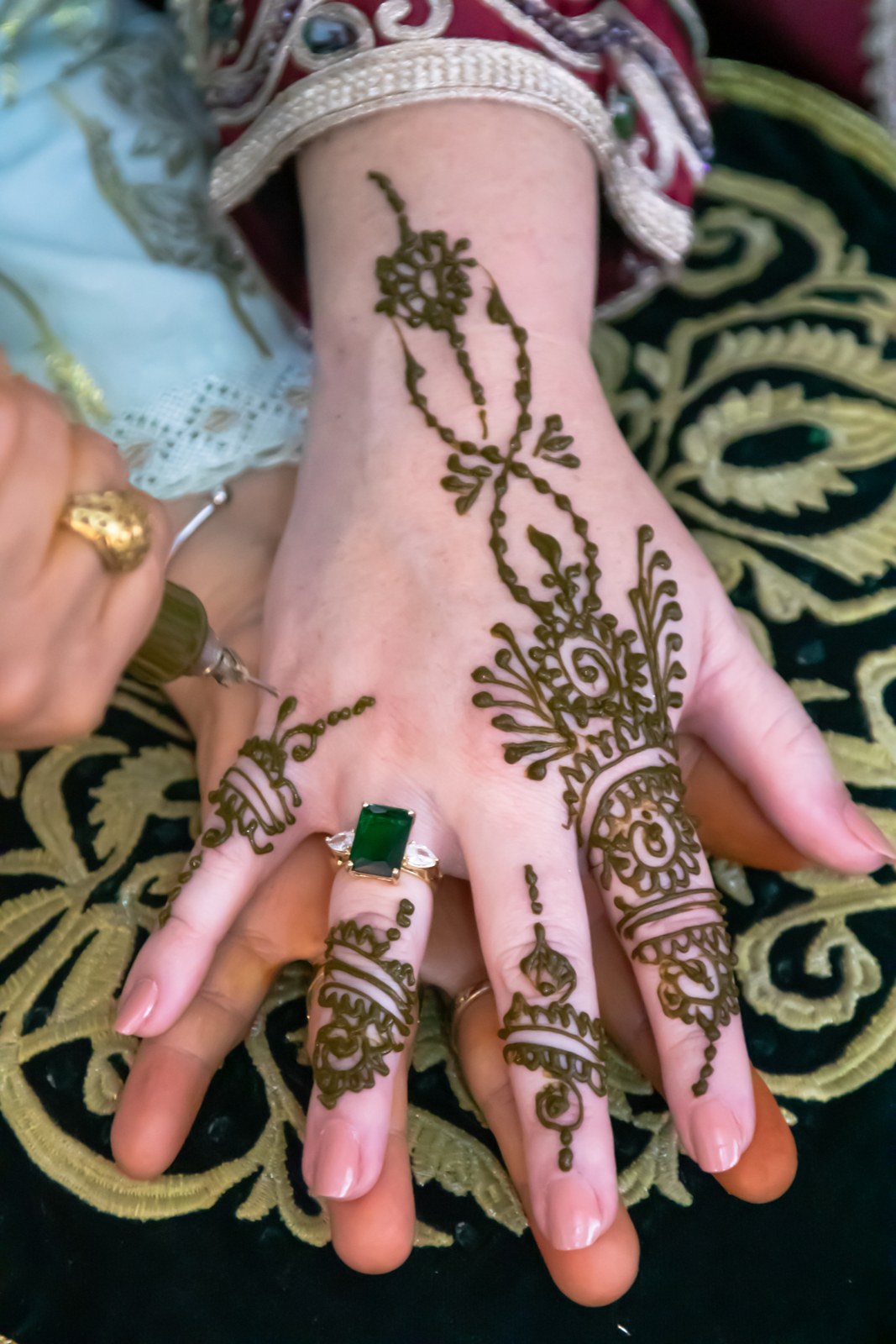
In a December 2024 report from Casablanca, RFI correspondent Matthias Raynal described a henna specialist, Khamissa, applying a design to a client’s feet in a living room. She stirred the paste to keep it from drying and used a syringe to lay it on the skin. The report identifies the specialist as a naqqacha, a henna designer.
Those details show that application is a process, not simply the purchase of a pattern. Material has to remain workable while the practitioner controls its placement. The social setting matters too: this was an appointment in a home, rather than an anonymous display of finished hands.
A separate Africanews report with AP, updated in February 2025, followed a celebration for a pregnant woman and the work of artist Mama Yaaqoubi. It described grinding leaves into powder and preparing paste before application, with women gathering around the occasion. These are reported examples, not a rule that every Moroccan family follows the same ceremony or preparation.
Like the skills behind the Moroccan caftan, henna work becomes visible at a celebration while depending on knowledge learned beforehand. The finished appearance records only part of that knowledge.
A livelihood can carry changing meanings
Tourism adds another setting, with its own customers, pace and expectations. Anthropologist Patricia L. Kelly Spurles examined that distinction in her 2004 doctoral thesis, Henna for Brides and Gazelles. Its introduction and methods describe research among household-oriented and tourist-sector practitioners in Morocco, including fieldwork in 1998 and 2000-2001.
The study distinguished those sectors by their customers and conditions of production, including household and street settings. Domestic Moroccan tourists also bought tourist-sector henna. That matters: a service sold in a visitor district was not necessarily something consumed only by foreigners, or emptied of meaning for Moroccan customers.
This is historical qualitative research, not a survey of today’s workforce. Its participants were recruited through social networks using a non-random sampling method, and its main town was given a pseudonym. It cannot establish current national earnings, employment totals or the present organisation of every tourist square.
Its useful question survives those limits. Changing where a practice is sold can change how it is performed and understood. Payment does not automatically destroy cultural meaning, just as commercial popularity does not prove that the people doing the work have secure livelihoods or control over its presentation.

Recognition includes a warning about the market
UNESCO’s 2024 inscription decision describes knowledge transmitted through observation and hands-on practice, alongside teaching in organisations, schools, beauty centres and the media. It also records that the multinational nomination initiative emerged from civil-society discussions at Morocco’s Moussem of Tan-Tan in June 2019.
The committee did more than approve a celebratory label. It warned the submitting countries about decontextualisation and over-commercialisation, and called for broad community participation in safeguarding. It also noted that some countries had supplied only a handful of consent letters, without identifying Morocco as the country concerned.
That is a concrete distinction between visibility and participation. A widely circulated design can attract attention to henna while telling little about who teaches the work, whose account of the occasion is heard or who benefits from its sale. As with the living cultural space of Jemaa el-Fna, the exchange between people matters alongside what a visitor sees.
The 2003 convention defines safeguarding in terms of a practice’s viability, including research, documentation and transmission. Its Representative List is intended to improve visibility, awareness and dialogue. Recognition is therefore a starting point for that work, not evidence that it has already succeeded.
Heritage recognition is not a product-safety test
The cultural record also needs to be kept separate from claims about ingredients. The US Food and Drug Administration’s henna fact sheet warns that products sold as henna can contain additional ingredients. It identifies p-phenylenediamine, or PPD, as an ingredient often used to darken products marketed as black henna and capable of causing dangerous skin reactions.
This is a safety warning from a US regulator, not a statement of Moroccan law or a finding about the practitioners and photographs in this article. Neither a heritage inscription nor the appearance of a paste establishes what a particular product contains. Traditional therapeutic claims in cultural accounts are not treated here as verified medical benefits.
Reading henna carefully means keeping these questions distinct: what occasion the practice serves, how the practitioner learned it, how the work is valued and what material is being used. The pattern is visible. The knowledge and decisions around it require more attention.
Sources, method and photograph credits
This explainer draws on UNESCO’s published entry, decision and convention; attributed RFI and Africanews/AP reporting; the inspected introduction and methods of Kelly Spurles’s thesis; and the FDA fact sheet. It includes no new interviews, visits, ingredient tests or national workforce estimates. The full UNESCO nomination form could not be retrieved and is not claimed as inspected. The 2024 inscription is background, not a new announcement.
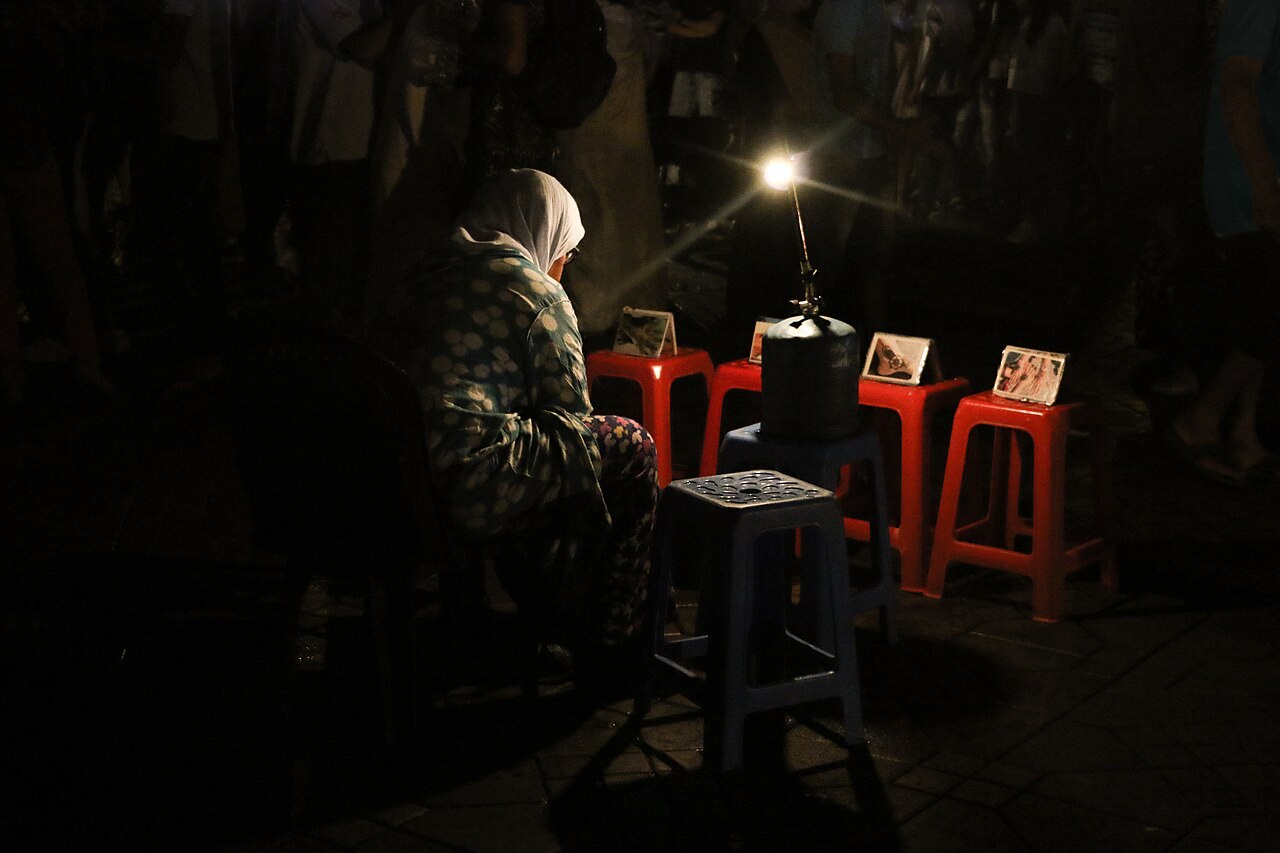
Lead photograph: a henna artist’s workspace in Morocco, dated September 2017. Jadelui / Wikimedia Commons, CC BY-SA 4.0. Commons gives 6 September; embedded camera metadata gives 7 September. A Commons-provided 1280-pixel version was used because the full-resolution download did not complete. Resized/recompressed; template crops and adapted displays remain under the same licence. The town is unspecified. Archive context, not a current site visit or a participant in the cited research.
