

Olive-oil residue can become a material for a sodium-ion battery’s negative electrode. A 2025 study by researchers at Moroccan universities demonstrated that possibility in laboratory coin cells. Its result is a useful step in materials research, not a finished Moroccan battery or evidence of commercial production.
The distinction matters for ambitions to make batteries using locally developed materials. At the November 2026 sodium-battery conference in Benguerir, Mohammed VI Polytechnic University researcher Mouad Dahbi described the university’s work to Morocco World News as laboratory-scale proof of concept. The olive-residue experiment shows what that stage can establish, and what remains to be tested.
From an agricultural residue to an electrode
The RSC Advances paper by Imad Alouiz and colleagues brings together researchers from Sidi Mohamed Ben Abdellah University’s Multidisciplinary Faculty of Taza and Mohammed VI Polytechnic University, or UM6P, in Benguerir. It investigates olive pomace, the residue left by olive-oil extraction, as a starting material for hard carbon.
Hard carbon is a disordered form of carbon studied for the negative electrode, commonly called the anode, in sodium-ion batteries. The electrode must take up sodium during charging and release it again during discharge. A 2022 review in Chemical Engineering Journal explains why the precursor and the way it is processed matter: the resulting carbon’s structure, pores and surface chemistry affect its performance.
The Moroccan study did not simply put olive waste into a battery. The researchers treated the pomace with phosphoric acid, neutralised excess acid and heated the material under argon. They compared carbonisation temperatures of 750°C, 1,000°C and 1,250°C, holding each at its final temperature for an hour. They also prepared a sample at 1,250°C without the chemical-activation step.
That comparison makes the processing part of the story. The value under investigation is an engineered electrode material, not the untreated residue. The experiment therefore offers no basis for assuming that a cheap starting material automatically produces a cheap battery.

What the small cell actually measured
The tests used coin-shaped laboratory half-cells. On one side was an electrode containing the prepared carbon, conductive carbon black and a binder. On the other was sodium metal, used as the counter and reference electrode. This arrangement tests the candidate material without demonstrating the performance of a complete practical battery using a matching positive electrode.
At a test current of 25 milliamps per gram, the chemically activated sample prepared at 1,250°C delivered a reversible specific capacity of 248 milliamp-hours per gram after 100 cycles. The corresponding figures were 161 for the 1,000°C sample and 94 for the 750°C sample. Under those experimental conditions, the hotter treatment produced the strongest result of the three.
These are charge-storage measurements per gram of the tested material. They are not the watt-hours per kilogram of a complete cell, the energy in an electric-car pack, or a prediction of driving range. Nor does a 100-cycle laboratory test establish a commercial product’s service life.
The first cycle also exposes a constraint. The paper’s main results give the hottest treated sample an initial discharge capacity of 403 and a charge capacity of 272 milliamp-hours per gram, recovering about two-thirds of the initial charge. This coulombic efficiency concerns how much charge is recovered during a cycle. It is different from capacity retention, which compares capacity across cycles.
The distinction is worth making because the abstract labels a later 99.9% figure as capacity retention, while the main results identify it as coulombic efficiency. The figure should not be read as proof that the electrode lost only 0.1% of its capacity over 100 cycles. The paper itself leaves testing in a full cell for future research.
A research route, not a production claim
Olive pomace is one route within a wider body of work. A 2017 paper involving Dahbi and researchers in Japan and Morocco reported sodium storage in hard carbon made from argan shells, also tested in half-cells. That is a different use from the oil-making knowledge discussed in Sada Journal’s account of Morocco’s argan tradition. Neither study establishes an industrial outlet for those residues.
The wider market also resists a simple substitution story. The International Energy Agency’s Global EV Outlook 2026 describes sodium-ion batteries entering a scale-up phase, but still facing lower energy density and less-developed supply chains than lithium-ion technologies. It identifies hard-carbon supply as poorly developed and largely concentrated in China. Sodium’s availability does not remove the work of making consistent battery-grade components.
Storage has a place in the discussion of Morocco’s generating capacity and electricity output, but this experiment does not establish that olive-derived cells are ready for the grid. It reports no commercial production cost or life-cycle assessment. Its high-temperature processing and chemical treatment would need to be included in any such assessment.
The useful finding is narrower and more concrete: a Moroccan research collaboration made olive-pomace carbon store and release sodium, and showed that changing its preparation changed its measured performance. Full-cell testing, production consistency, cost and environmental accounting are the next questions, not results that can be supplied by the word “waste”.
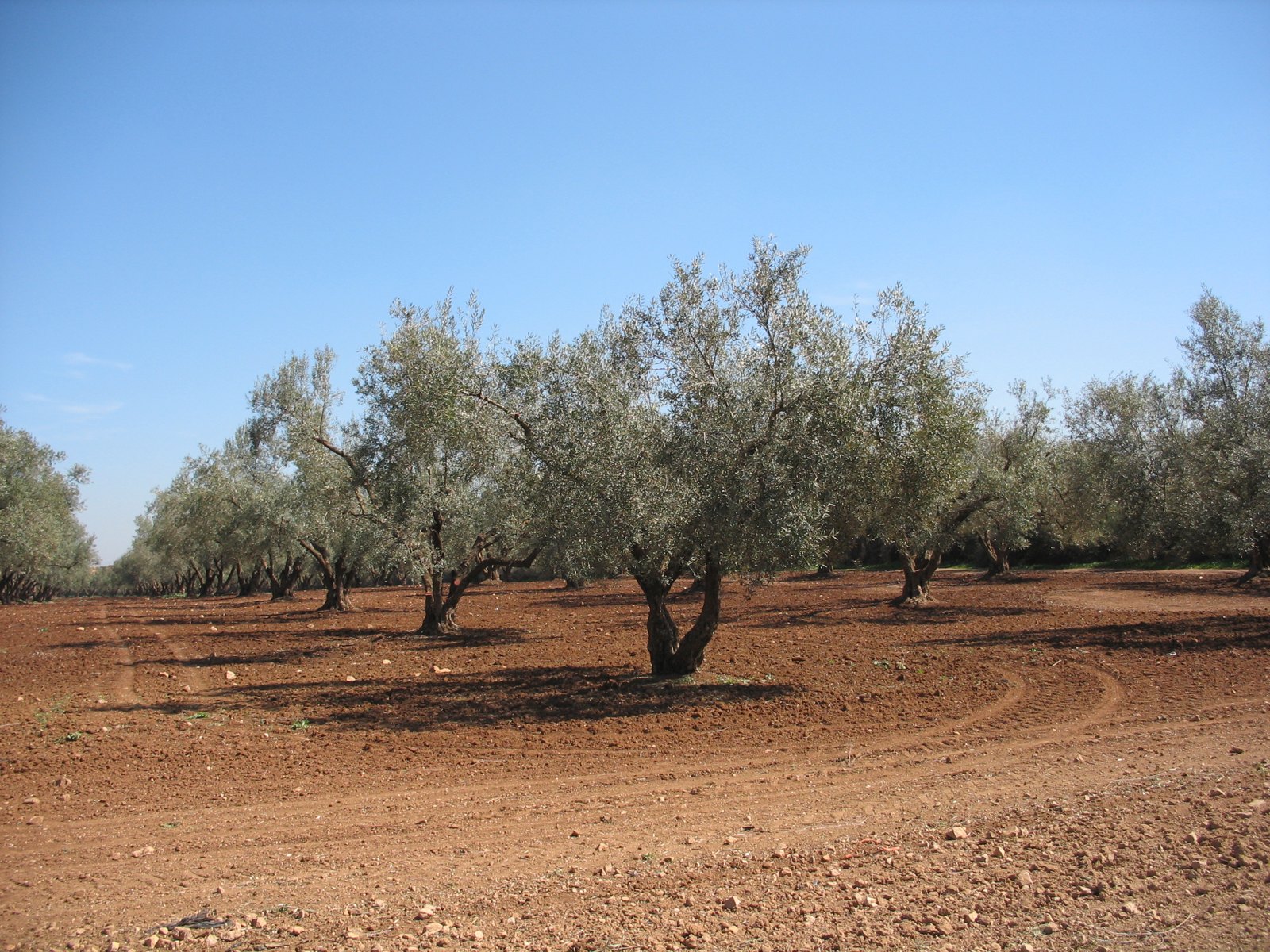
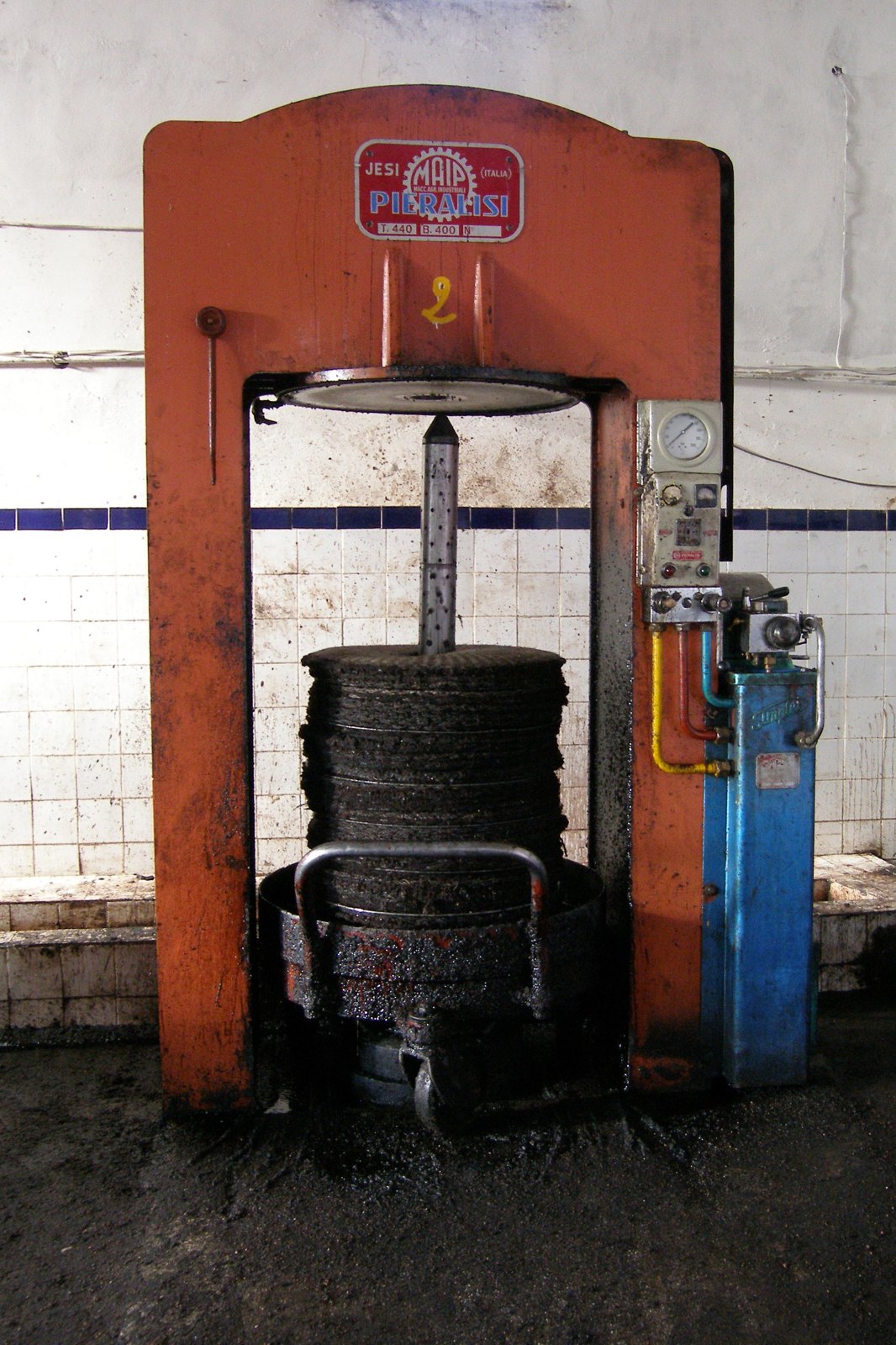
Source note: This is an explanation of published research and attributed reporting, not a laboratory visit or an independent replication. The 2025 olive-pomace paper was read in full; the 2017 argan-shell paper is used only for findings stated in its accessible abstract. The photographs illustrate Morocco’s olive-growing and oil-processing context, not the researchers’ samples or equipment.
Lead photograph: Experimental olive orchard in the Meknès region, photographed on 8 March 2008. Archive context; not identified as the source of the study’s pomace. Photo: Ramagri, Wikimedia Commons, CC BY-SA 4.0. Resized and recompressed; photograph and display crops under the same licence.
