

Taliouine’s saffron does not become a spice simply because a flower has been picked. Its red stigmas must be separated, dried and protected during storage. Those steps change the material itself: a harvest from the same place can produce different results depending on how it is handled.
For readers encountering this crop in south-western Morocco, the useful story runs from the flower to the finished thread. It includes skilled hand work, changes in aroma and colour, and laboratory methods that answer questions a photograph or a place name cannot.
The small part of the flower that matters
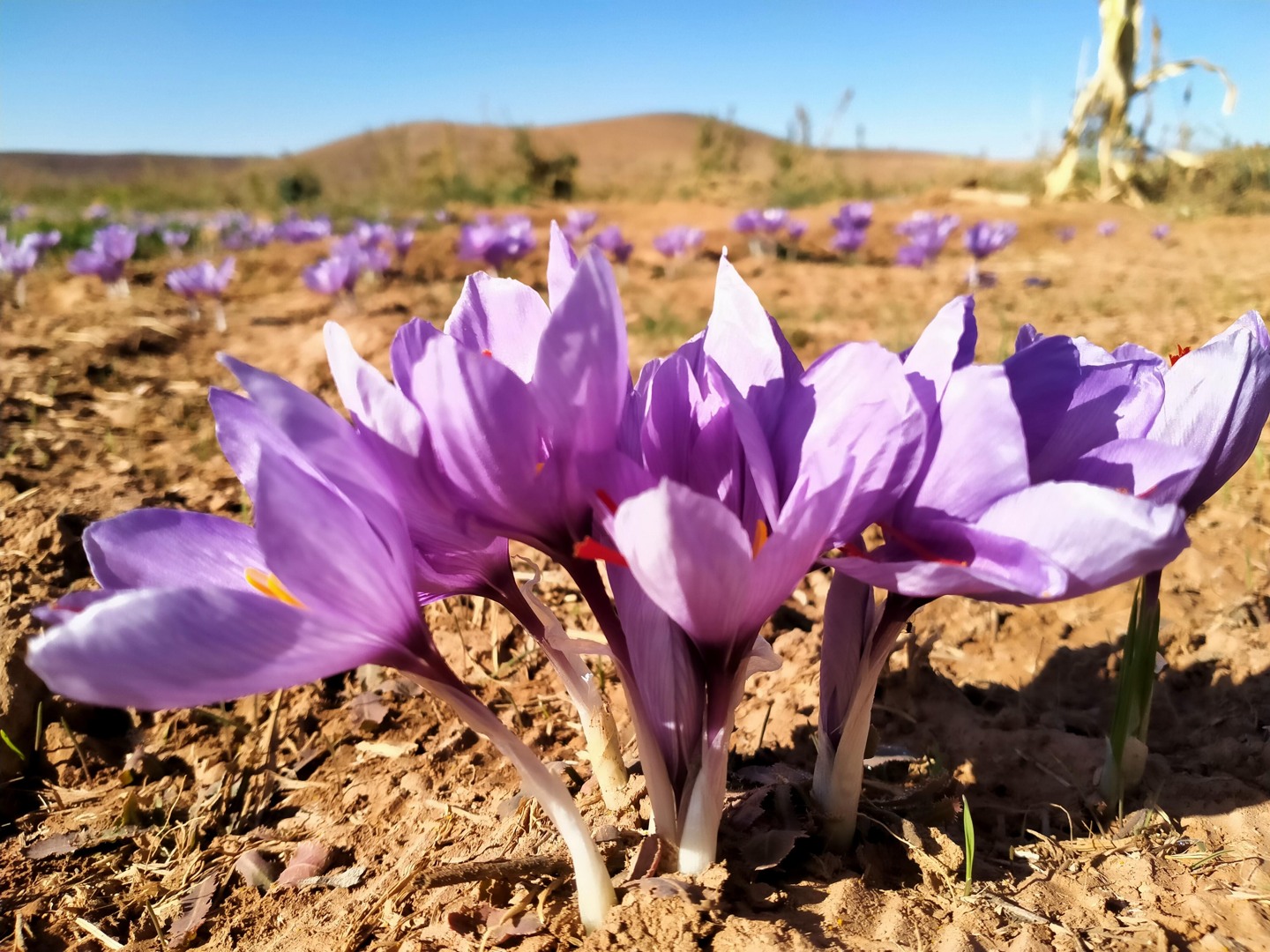
Saffron comes from the dried stigmas of Crocus sativus. The stigma is part of the flower’s female reproductive structure. Each flower has three, as the International Organization for Standardization explains in its 2010 account of saffron testing. The purple petals are not the spice.
The Slow Food Foundation’s account of Taliouine describes families gathering flowers at dawn, while the petals remain closed, then separating the stigmas in a cool room. Its photographs and account date to 2014. They document a production practice, not the size or condition of this year’s harvest.
Picking and separation are therefore distinct jobs. A basket of flowers is an intermediate product. What reaches the kitchen has passed through further decisions about which parts to retain and how to remove water without losing the qualities wanted from the spice.
That attention to stages also helps explain the work behind Moroccan couscous: the familiar food is the visible result of a sequence, rather than a raw material taken straight from a field.
Drying changes more than the weight
A 2017 experiment on Taliouine saffron followed fresh material harvested at Askaoun in November 2016. Researchers separated the stigmas by hand and compared shade drying, sun drying and oven treatments at five temperatures, from 30 to 90 degrees Celsius.
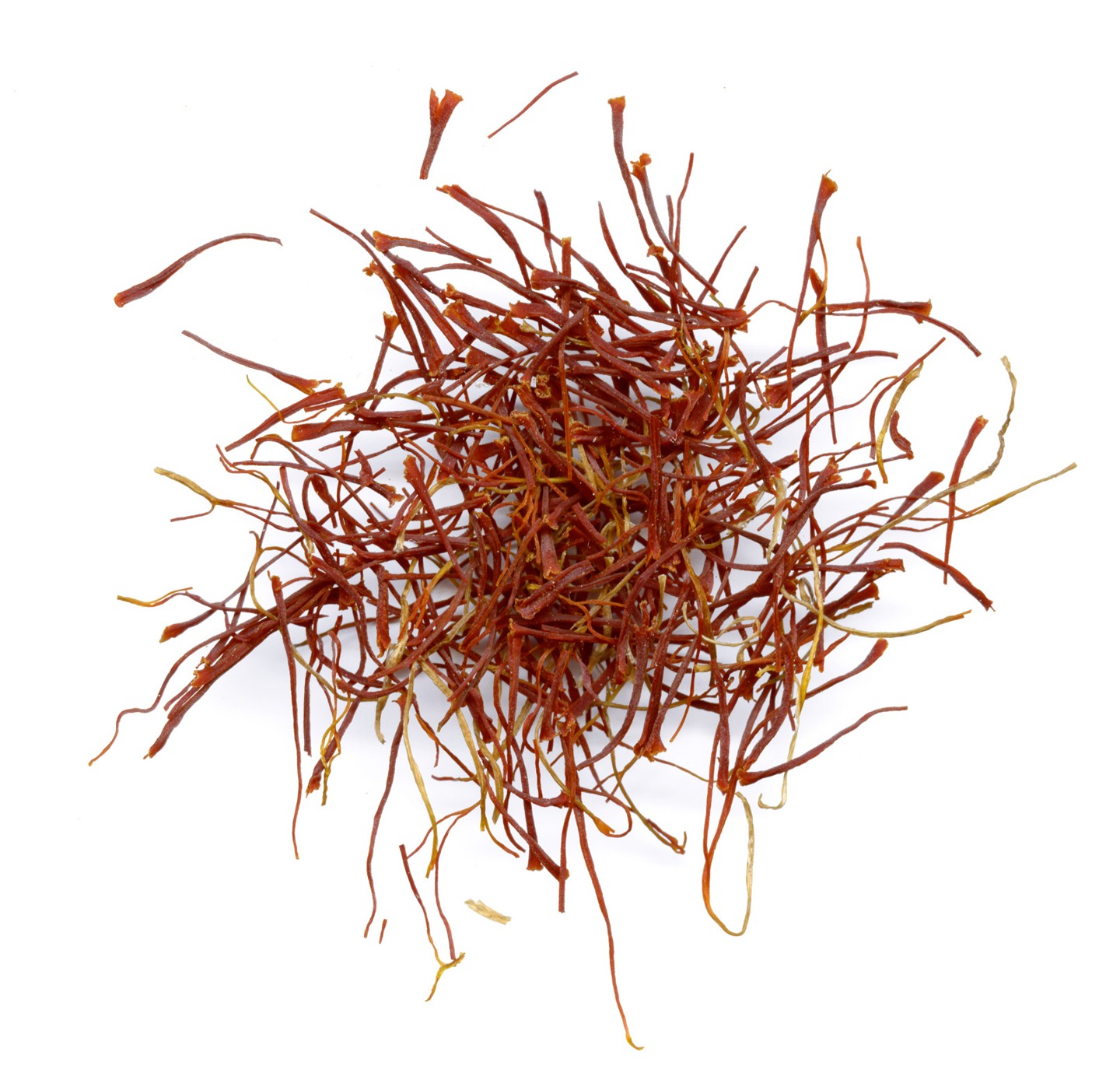
The study examined compounds associated with different qualities: crocins with colouring strength, picrocrocin with taste, and safranal with aroma. Safranal develops through chemical and enzymatic changes involving picrocrocin during processing and storage. Drying is therefore a transformation, not merely a way to make a flower part lighter.
Within that experiment, the oven treatment at 60 degrees Celsius gave the highest safranal result measured by gas chromatography and favourable results for the other two quality indicators. At the higher oven temperatures, the crocin and picrocrocin measurements fell from their 60-degree values.
This does not establish one universal drying recipe for farms or home kitchens. The samples, equipment, treatment times and laboratory handling belong to that experiment. Its broader lesson is that more heat does not automatically mean a better finished spice, and removing water can change several desirable characteristics in different ways.

Smell, colour and a laboratory result answer different questions
A 2024 study by Amine Khoulati and Abdelhadi Abousalim combined producer surveys with analysis of samples from Taliouine and newer Moroccan growing areas. Farmers’ assessments emphasized different combinations of stigma length, aroma, colour and flavour. The laboratory work examined physical characteristics, moisture and chemical indicators.
That is a small, specific study, not a certificate for every product from a region. Its discussion also shows why a growing location cannot explain every difference: drying practices complicate comparisons between samples from different altitudes. Observed associations are not a controlled experiment isolating the effect of altitude.
The 2017 researchers found a further measurement problem. A light-absorption reading used as an aroma indicator is not interchangeable with a direct safranal determination by gas chromatography, which separates compounds before measurement. Method and units matter. A larger number obtained by one method cannot simply be treated as a better version of a number obtained by another.
ISO’s 2014 explanation of saffron quality describes checks on flavour, aroma, colour, foreign matter and moisture. Those are different questions from whether a seller has an appealing display. This article does not test or certify any seller, brand or batch.
A dated study is not the current specification
The research papers used the standards available to their authors. Readers should not mistake those references for a statement of today’s specification: ISO now lists ISO 3632-1:2025 as the published specification for dried saffron in filament, cut-filament and powder forms. Its 2011 predecessor is withdrawn. The current catalogue entry was checked; the paid standard’s full requirements were not reviewed.
The same discipline applies to origin and craft. As with the knowledge behind argan oil, understanding the process makes a finished product easier to read without turning a regional reputation into proof about every item sold under its name.
Taliouine’s saffron is a useful example because the essential work is both small-scale and consequential. Separating a stigma, choosing a drying treatment and protecting the result are not details added after the harvest. They are part of making the spice.
Sources and method: This is a source-based explanation of processing and quality, not a field visit, current harvest report, buying guide or product test. Historical studies retain their dates and limits. No current price, output, farmer-income, geographical-indication compliance or health claim is made.Material claims were checked against the linked sources.
Lead archive photograph: saffron flowers at Taliouine, 26 October 2021. Wikierik72 / Wikimedia Commons, CC BY-SA 4.0. Resized; photograph remains under that license. No generative changes. Not a photograph of the current harvest.
