
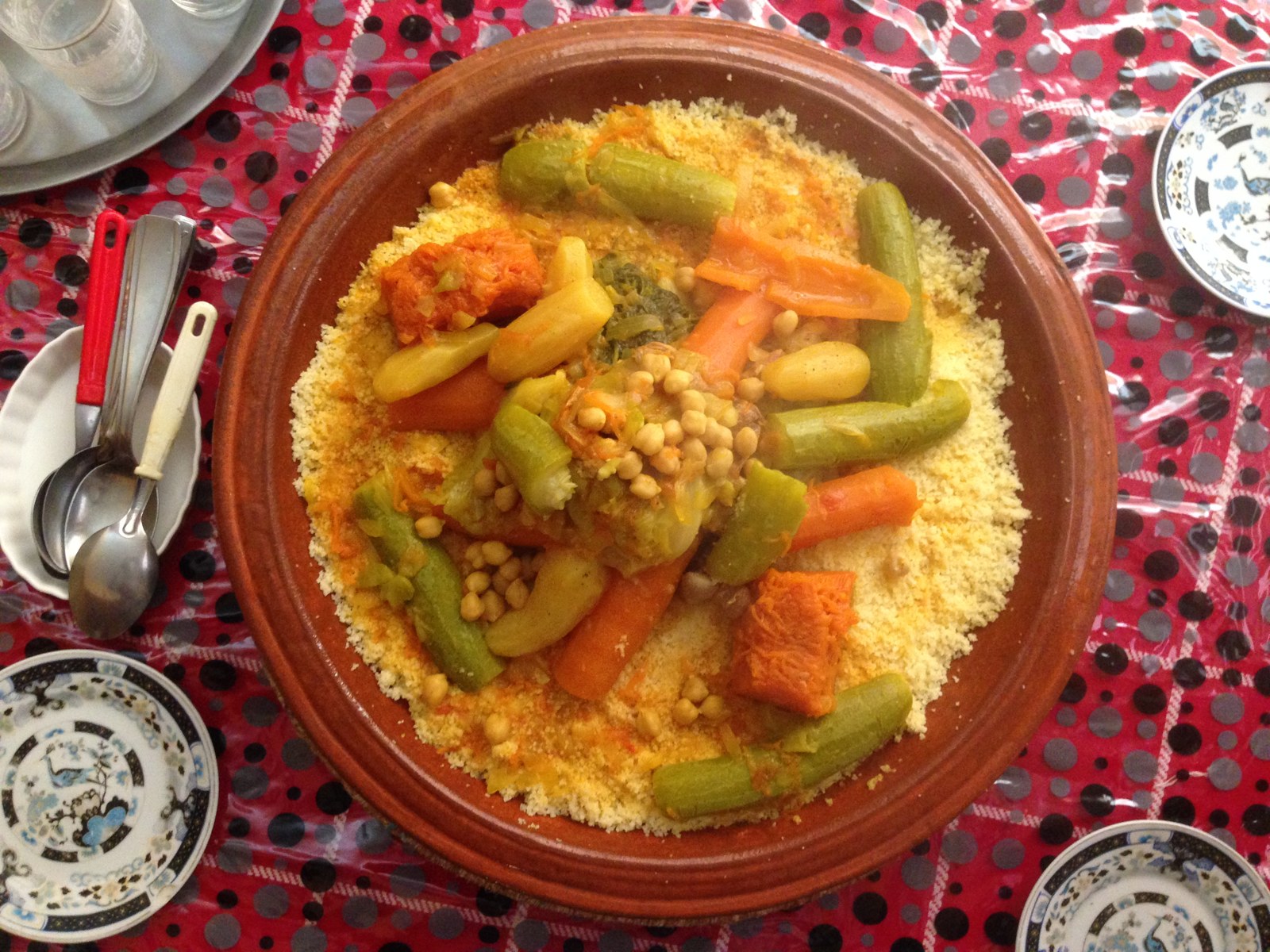

A platter of couscous arrives looking complete: a mound of small grains, vegetables arranged across it and broth ready to be added. Yet the dish begins well before the toppings. Someone has had to turn cereal into semolina, shape the grains and manage the steam. Other people have made the tools and passed on the gestures.
For visitors to Morocco, this is a useful way to read a familiar menu word. Couscous names a food, but it also opens onto a system of work and a way of gathering around a meal. Neither can be reduced to a single restaurant recipe.
Featured archive photograph: Moroccan couscous, 28 February 2014. Iasalarzai / Wikimedia Commons, CC BY-SA 4.0. Resized; not a meal photographed for this article.

The grains are made, not simply harvested
UNESCO’s description of couscous knowledge and practices starts with growing cereal. The seeds are ground into semolina, which is rolled by hand and steamed as part of the preparation. The little units on the plate are therefore shaped food, rather than intact kernels taken straight from a plant.
Rolling and cooking are different tasks. Rolling forms the grains; steaming cooks them. Seeing the two as separate stages helps explain why a cook can buy prepared couscous grains while still carrying out demanding work at the stove.
A National Geographic report from Fez, published in May 2024, documented chef Nezha Bouayadi rolling semolina with water and flour before steaming it. That is an account of one cook’s work, not proof that every household makes couscous from scratch. The report also described the use of bought grains in the city.
Why the pot has two levels
A couscoussier is a stacked cooking vessel: a lower pot holds liquid or stew, and a perforated upper basket holds the couscous. Steam moves upwards through the grains. The arrangement keeps them above the liquid rather than submerged in it.
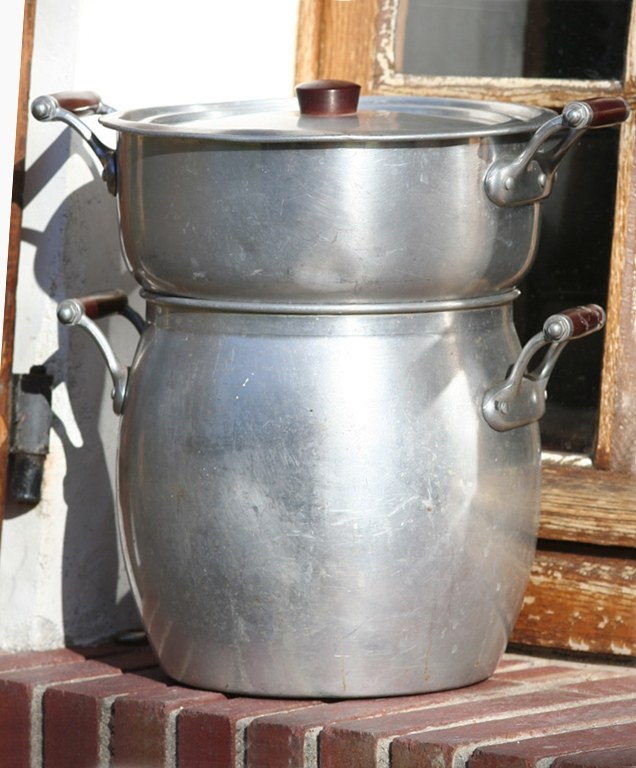

Cooking writer Christine Benlafquih’s guide to the couscoussier explains that separation. It also describes the work of keeping steam moving through the basket rather than escaping at the joint. The vessel makes the grain and the broth parts of one cooking arrangement, even while keeping them apart.
This is an explanation of the method, not a universal recipe. The amount of liquid, accompaniments and sequence of preparation depend on what is being cooked. A packet’s instructions and a household’s steaming routine should not be treated as interchangeable descriptions of the same task.
A shared inscription, not an ownership certificate
In 2020, UNESCO inscribed the knowledge, know-how and practices surrounding couscous on its Representative List of the Intangible Cultural Heritage of Humanity. The nomination was submitted jointly by Algeria, Mauritania, Morocco and Tunisia.
The committee’s decision concerns preparation, tools, transmission and social life. It is not a declaration that one country exclusively owns couscous, or that one set of toppings is the authorised version. Morocco’s traditions sit within that explicitly shared recognition.
UNESCO describes vegetables and meats varying with region, season and occasion. It also identifies knowledge passed through observation and imitation, alongside more formal teaching outside the home. Farmers, millers, potters and makers of wooden utensils belong in the picture, as do the people who cook and serve.
What to notice at the table
For a first encounter, ask what accompanies the couscous and how it was prepared, rather than searching for one definitive national plate. Notice the grain separately from the broth and vegetables. The answers can tell you about a particular kitchen without turning it into a rule for the whole country.
Our guide to the Fes medina as a working city offers the same starting point: look beyond the finished display. Our account of the knowledge behind argan oil follows another Moroccan food product back through the skills that make it possible.
Couscous also brings that work to a social conclusion. UNESCO links the meal to sharing, solidarity and togetherness. The platter is the visible result. The knowledge that gets it to the table is part of what the heritage recognition asks people to preserve.