

Opinion / Economic Analysis. This is analysis, not straight news. Documented facts, official statements, disputed claims, interpretation and forecasts are labeled separately throughout. All figures are dated; where sources conflict, we say so rather than choosing silently.
In the first week of November, Economy and Finance Minister Fouzi Lekjaa gave parliament three kinds of numbers about the 2030 World Cup. On November 3, he tabled a package of tax exemptions for FIFA and its partners and presented simulations projecting 840,000 jobs from tournament-linked investment. The same day, he rejected claims that World Cup preparations will swell public debt, arguing that the railways and airports doing the building have their own balance sheets. On November 4, he said something more striking: the total cost of the Grand Stade Hassan II, the tournament’s centerpiece, cannot be determined precisely until its last contract is awarded.
Morocco is three and a half years from co-hosting the world’s most-watched sporting event, and the question “who pays for it” currently has three answers in circulation: not the state budget, say the minister; state funds and tax revenues, said Aziz Akhannouch, the head of government until September 29, during the September campaign; and whatever the contracts eventually total, say the procurement records. Each answer is defensible. None is complete. This article lays them side by side.
One stadium, three price tags
Start with the Grand Stade Hassan II at Benslimane, northeast of Casablanca, designed for 115,000 spectators. Its cost has been presented through three distinct figures, each attached to a different document and date.
The first is about 5 billion dirhams, the estimate announced when the project was presented and still displayed, as of early October 2026, on the official investment presentation of the Casablanca-Settat regional investment center, according to Afrik Foot’s reporting on October 1.
The second is 6.685 billion dirhams. That is the figure in the government’s own 2027 Finance Bill annex, the regional investment breakdown published by the finance ministry, which lists “Construction du stade Hassan II” at a cost of 6,685 million dirhams with 889 million in payment appropriations for 2027. We downloaded and read the document; the number is on the Casablanca-Settat page, with the capacity noted at 115,000.
The third is 13.6 billion dirhams. That is a count by the magazine Jeune Afrique, relayed by Afrik Foot on October 1 and by Belpresse on October 24, of the value of contracts already awarded or launched around the stadium: the structural works, roof and facades, technical equipment and associated lots. It is a gross contract tally, not a budget line, and it may include works beyond the stadium structure itself. But it comes with an uncomfortable detail: the contract for the roughly 115,000 seats, estimated at 277.5 million dirhams, found no taker, after both received bids were rejected.
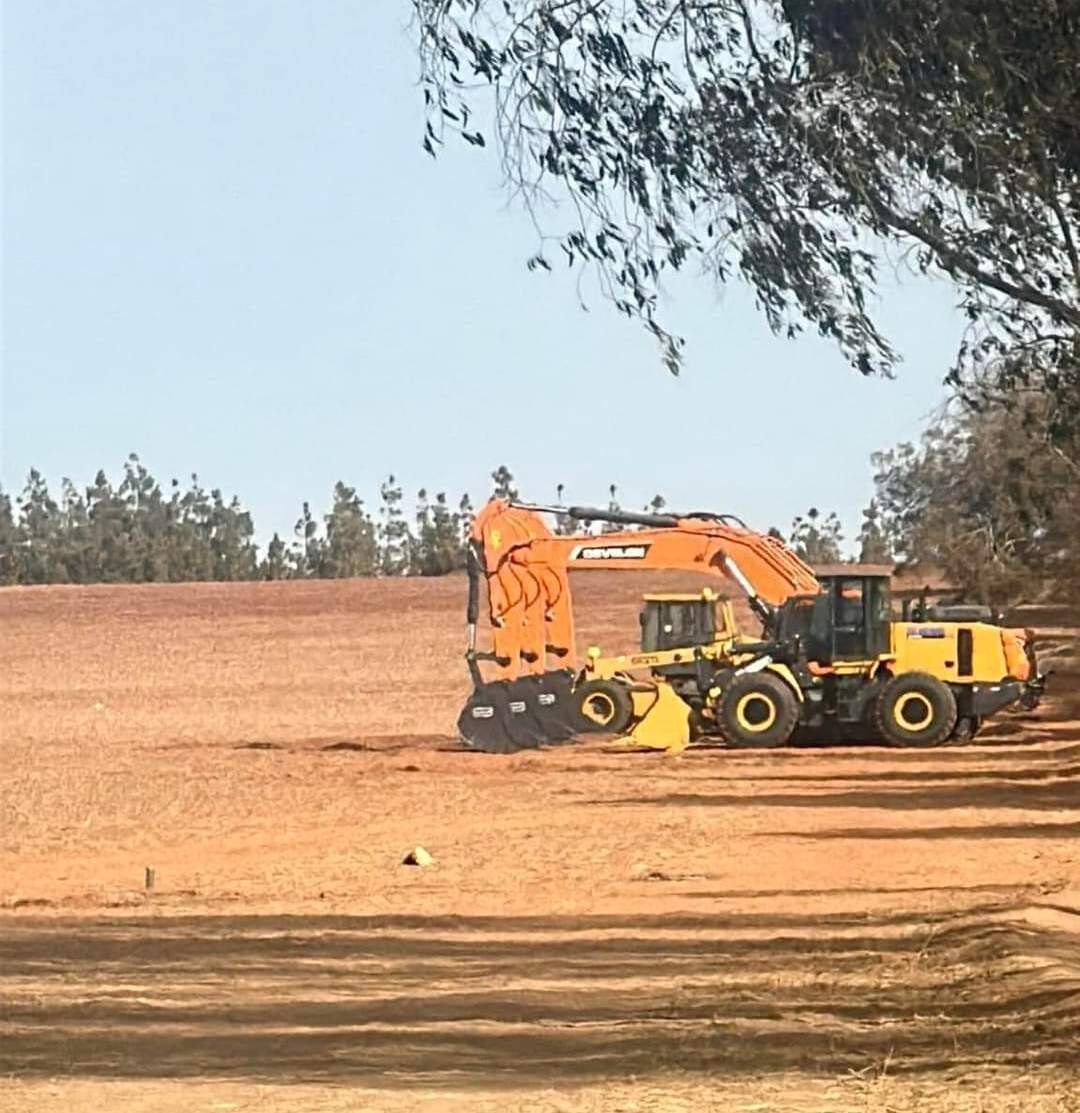
Then there is the fourth answer, the minister’s: no final number exists yet. Lekjaa told reporters on November 4 that the stadium’s total cost will only be determinable with precision after the last contract is awarded, as CSport reported. That is procedurally honest. It also means that every figure cited here, including the one in his own ministry’s budget annex, is provisional.
These figures are not three rival prices for the same bill. The 5 billion was an early presentation estimate for the project; the 6.685 billion is the budget annex’s total cost line for the stadium’s construction; the 13.6 billion counts contracts awarded or launched around the stadium, including lots that may sit outside the structure itself. They measure different scopes at different dates, and none is directly comparable to another. Two honest things can be said. The state’s own documents carry two dated official figures, about 5 billion at presentation and 6.685 billion in the 2027 annex – nominally a third apart, though whether the two cover identical scope is not documented, so this is not demonstrated escalation of the same bill. And the minister describes even his own ministry’s figure as not yet final.
A stadium whose cost figures span a 5-billion-dirham initial official estimate, a 6.685-billion budget-annex cost and a 13.6-billion press count of awarded or launched contracts, with the seat contract unfilled and the final number officially unknowable for now, is not a scandal by itself. Megaproject costs move. It is, however, a transparency problem with a simple fix, which we come to below.
What “not in the budget” actually means
The minister’s financing doctrine, stated at the Finance Committee on October 30, 2025, is that the cost of building stadiums “does not fall under the state’s general budget.” He was precise about the mechanism: World Cup works are routed through public entities, and he put the World Cup envelope in that year’s draft budget at about 3 billion dirhams, including 1.6 billion for the national railway office ONCF to upgrade transport links.
The architecture behind the doctrine is documented. In October 2023, the government signed a financing agreement with the Caisse de Depot et de Gestion, the state deposit fund, mobilizing about 9.5 billion dirhams to upgrade six stadiums and build a new one. In August 2025, a decree granted SONARGES, the state national company for sports infrastructure, the concession to modernize, maintain, operate and build stadiums in five cities, including the future Grand Stade, as Medias24 reported on August 13, 2025. The map is still moving: on October 22, 2026, Medias24 reported that the Casablanca commune had begun procedures to terminate its management conventions with SONARGES in favor of a new regional company, Casa Region Sport, part of a shift toward city-level sport companies in the host cities. The stadiums, in other words, are built by state-owned entities financed through banking consortia and their own resources, not through budget line items voted as ordinary spending.
Here is the complication, and it is in the government’s own documents. The 2027 Finance Bill’s regional investment annex lists the six World Cup stadiums under SONARGES with 1.977 billion dirhams in payment appropriations for 2027: 494 million for Tangier, 550 million for Rabat’s Prince Moulay Abdellah complex, 14 million for Fez, 15 million for Marrakech, 15 million for Agadir and 889 million for the Hassan II stadium. We checked the arithmetic against the document; the six lines sum to exactly the 1.977 billion that Le360 reported on October 26. The annex also prices the full six-stadium program at about 23.8 billion dirhams in total cost. The two numbers measure different things. The 1.977 billion is the 2027 tranche – the payment credits the annex programs for 2027 – while the 23.8 billion is the annex’s stated total cost of the six projects over their full build-out. What the annex does not show is how much of that total has already been spent or financed in prior years; the program’s remaining bill cannot be computed from this document alone.
So are the stadiums in the budget or not? Technically, the minister is right: these are public-enterprise investment appropriations, carried in the annex that tracks state companies’ projects, financed through the entities rather than by general-budget spending. But payment credits published in a finance-bill annex are still programmed public investment, even where no legal commitment is yet established – the annex itself presents these tables as the enterprises’ own budgets – and the entities holding the debt are owned by the state. The former head of government, Aziz Akhannouch, made the blunter version of this point at a campaign rally on September 10, 2026: the Benslimane stadium, he said, “is being financed with state funds and tax revenues,” and its location was chosen by the king. Akhannouch was campaigning against Lekjaa’s party at the time, and his party lost the September 23 election. His sentence is nonetheless on the record, and it is not wrong.
The honest formulation is narrower than both men’s: the stadiums are off the general budget’s books, not off the public’s balance sheet.
The enterprises’ balance sheets
On November 3, Lekjaa extended the argument to the big infrastructure programs, and this is where the arithmetic gets genuinely interesting. “Is the National Railway Office going to invest 104 billion dirhams, and then someone takes that figure and adds it to public debt?” he asked, as 7News reported. ONCF’s investment program, he said, runs on its own economic model, budget and turnover, with the government’s contribution limited to 1.2 billion dirhams. On airports, he said critics take 50 billion dirhams of investment that belongs to the airports office ONDA’s business plan, add it to public debt, “then start calculating and saying these projects will increase debt by 300, 400 or 500 billion dirhams.” The state’s contribution to the Casablanca Mohammed V airport project, he noted, took the form of land transferred into ONDA’s assets. The 2027 budget annex lists the new terminal zone there at 15 billion dirhams, tripling capacity toward 35 million passengers.
The minister’s accounting is correct in law. ONCF and ONDA debt is not Treasury debt, and adding their investment programs to the public debt stock is a category error. Precedent supports him: the Tangier-Kenitra high-speed line was financed the same way and the state did not carry its full cost as budget debt.
The scale of what sits outside the central budget is quantified in the IMF’s March 2026 review of Morocco. The Fund puts the 2024-2030 connectivity and tourism investment push at about 190 billion dirhams, 11.9 percent of 2024 GDP – railways 6.0 points of GDP, airports 2.4, stadiums 2.2, roads 0.9 – and attributes the bulk of the financing outside the central budget: 7.4 points of GDP carried by state-owned enterprises through their own borrowing and funds, 3.2 points by local governments, and only 1.4 points inside the central government budget, a share its model assumes is accommodated by reducing other spending. The model does not say which spending gives way, and no such choice has been published. What can be said is conditional, not observed: if the on-budget share is financed by compression elsewhere, some existing priority loses – which one, and whether social programs are among the candidates, is a risk to monitor, not a fact to assert.
The Fund’s caution tracks the minister’s legal point and then extends it. Because the higher debt will not appear in central government statistics, the review calls close monitoring and reporting of SOE and local-government debt “critical”. Its model assumes that after 2030, user fees on the new infrastructure cover debt service and maintenance; if they do not, it warns, the result is “significant fiscal pressures and the materialization of contingent liabilities”. The program’s obligations, in other words, continue after the tournament – the Fund’s second phase is nothing but operating the assets and servicing their debt.
But the qualifier matters as much as the rule. These are wholly state-owned enterprises. Their lenders lend against an implicit state backstop; their revenue models assume traffic that materializes only if the economy performs; and when a Moroccan public enterprise’s accounts strain, the adjustment historically arrives at the Treasury’s door. That door is not hypothetical: direct state support to public enterprises reached 61.2 billion dirhams in 2024, nearly three-quarters of it to entities with no commercial activity, and the finance ministry’s public-enterprise report published with the 2026 budget projected 84.3 billion dirhams for 2025, 61 percent of it disbursed by the end of September. A refusal to count 104 billion as public debt is fair. A refusal to publish what the state stands behind, if that is what is happening, would not be.
The tax expenditure nobody has priced
The same November 3 session tabled the World Cup’s quietest cost: the exemptions. As Hespress reported in detail, and as Diplomatique analyzed on October 24, the 2027 Finance Bill proposes a special tax and customs regime for FIFA, the tournament’s organizing bodies, participating associations, broadcasters and designated partners: relief from corporate income tax and the social solidarity contribution on qualifying profits, from withholding taxes on certain revenues, from VAT – including on match tickets sold by FIFA or its authorized bodies – and from registration duties and customs duties on imported equipment. The calendar runs well past the tournament: the main exemptions would take effect between January 2027 and January 2029 depending on the beneficiary and expire between December 2031 and December 2032, in some cases more than two years after the final. Diplomatique’s reading of the draft provisions adds the finer grain: income-tax exemptions for employees and personnel seconded to the foreign organizations concerned, match officials included, within a window running from 60 days before the first match to 60 days after the final, with Moroccan tax residents excluded; and equipment imported duty-free could later be re-exported, or transferred inside Morocco to sports or social institutions, without the duties being clawed back. A separate, permanent exemption covers the tournament’s social legacy fund. Per Diplomatique’s account of the bill’s explanatory memorandum, the measures implement the tax commitments Morocco made to FIFA as host; we did not inspect the memorandum itself, and that account is attributed accordingly. If the exemptions do legislate commitments already contracted, parliament’s practical room for maneuver is scope and duration, not existence. In exchange, under FIFA’s standard host arrangements, Morocco and its co-hosts finance infrastructure and training while FIFA covers tournament operations and collects the ticketing and broadcasting revenue.
Two things are worth saying plainly. First, exemptions of this kind are a standard FIFA requirement of every host; Morocco is not being singled out. Second, a tax exemption is public money all the same: it is revenue the state would otherwise collect, and the standard of transparency that applies to spending should apply to it. On the price of all this, the draft itself is silent: its provisions, as Diplomatique noted on October 24, “do not provide an overall estimate of the tax revenues the state could forgo”, and no official costing has been published alongside or since the bill, in the materials we reviewed. Until the government produces one, any number in circulation is speculation, and this article cites none. Parliament should get the real one before it votes.
The other side of the ledger
The government’s case is not only defensive, and fairness requires stating it in its strongest form. Lekjaa’s simulations, presented to parliament on November 3, project a cumulative 21.2 percent increase in investment between 2023 and 2030, an additional 1.65 percentage points of annual GDP growth, and more than 840,000 jobs, 52 percent of them in construction. The tourism targets attached to the tournament are 26 million visitors by 2030, receipts above 156 billion dirhams, and 150,000 additional tourism jobs. The tourism minister said in July that more than 190 billion dirhams are being mobilized for World Cup preparations overall. The magnitude is not only a government talking point: the IMF independently quantifies the same investment push at about 190 billion dirhams.
These are government simulations, published without a visible methodology, and they should be read as such. But the underlying logic is not exotic. Morocco had an infrastructure backlog in rail, airports and urban transport before any World Cup was awarded; the tournament’s fixed deadline is compressing delivery schedules, as Lekjaa argued in October 2025; and stadiums that host Raja, Wydad and the national team after 2030, as the minister promises Benslimane will from early 2028, are more defensible assets than the white elephants of past tournaments elsewhere. The legacy question is real, and so is at least part of the return.
The strongest version of the government’s position, then: capital investment with a deadline, financed off the general budget, leveraging assets the state already owns, buying growth and jobs. The strongest version of the critique: a cost that will not sit still, financed by entities whose risk returns to the state, sweetened by tax revenue nobody has counted, sold with simulations nobody can audit. Both versions fit the documented record. That is precisely the problem a transparent accounting would solve.
The politics around the arithmetic
The numbers carry an electoral aftertaste. Lekjaa is a political bureau member of the Authenticity and Modernity Party, which won the September 23 elections and now leads the government of Fatima Zahra El Mansouri, appointed on September 29 as Morocco’s first female head of government. His World Cup claims were attacked during the campaign by the outgoing head of government, whose party lost. Lekjaa also said at a September campaign event that Benslimane would host the 2030 final “whether some people like it or not”; FIFA responded on September 11 that the final’s venue remains undecided and will be decided “in due course,” and Spain’s federation president dismissed the claim as domestic electoral politics. The 2027 Finance Bill, the first budget of the new majority, is where campaign arithmetic meets appropriation.
And there is an image ledger. On November 9, animal welfare groups filed a complaint to FIFA alleging that Morocco culls up to 1,000 stray dogs a day as it cleans up its image for the tournament, El Espanol reported; the figure is the activists’ claim, following earlier Spanish reporting on the culls in March 2026 and September 2025. Asked about boycott calls over the issue in October 2025, Lekjaa dismissed “conspiracies linked to stray dogs and fabricated photos.” Whatever the true number, a government projecting 26 million visitors has a documented interest in the question, and “conspiracy” is not an answer to a FIFA complaint.
What would settle it
None of what follows requires new money, only publication. First, a consolidated World Cup financing table: every project, its carrier entity, its financing source, and the state’s cash, land and guarantee contributions, updated annually; the annex lines we cite show the data exists. Second, the state guarantee register for ONCF, ONDA, SONARGES and CDG borrowing tied to the tournament. Third, an official estimate of the revenue forgone through the FIFA exemptions, before the Finance Bill is voted. Fourth, when the last Grand Stade contract is awarded, the final tally the minister promised, against the 6.685 billion the ministry’s own annex currently shows. A government confident in its arithmetic should want these published. The same week the minister ruled out restoring fuel subsidies at a costed 50 to 70 billion dirhams a year, the case for showing the World Cup’s full worksheet only sharpened.
Forecasts (editorial judgments, dated, falsifiable)
These are editorial probability assessments based on the evidence available today, not the output of any statistical model. We publish them so readers can check us later, and we state the principal assumption behind each. First, 60 percent: the final contracted cost of the Grand Stade Hassan II’s construction – the same scope priced at 6.685 billion dirhams in the 2027 budget annex, not the wider tally of surrounding works – will exceed that annex line when the government confirms it after the last contract award. Assumptions: a major construction lot, the contract for the roughly 115,000 seats estimated at 277.5 million dirhams, remains unawarded after both received bids were rejected, and whether that lot is already counted inside the annex’s cost line is not documented; the minister himself says no final figure exists until the last contract is awarded, which makes the current official number provisional by his own account. An earlier version of this article published this forecast at 80 percent, on reasoning that leaned on figures whose scopes could not be compared; we have lowered it to what the remaining evidence supports. Checkable on the government’s confirmation or by December 31, 2028. Second, 70 percent: the FIFA tax-exemption package will be enacted in the 2027 Finance Law substantially as tabled. Assumptions: the exemptions implement commitments already made to FIFA, host regimes of this kind are rarely legislated away, and no significant party in the new majority has publicly objected to them, in the reporting we reviewed. Checkable at promulgation or by January 31, 2027. Third, 65 percent: FIFA will not have formally designated the 2030 final venue by June 30, 2027. Assumptions: FIFA said in September the decision will come “in due course”, and it has no institutional incentive to decide early between three co-hosts. The probabilities carry no false precision: they are editorial judgments stated so readers can hold us to them, and we will count ourselves wrong when we are.
The 2030 World Cup may yet be the accelerator the government promises; the infrastructure is real, the deadline disciplines, and the assets will outlive the tournament. What the public cannot currently see is the full price, the full risk, and the full cost of the exemptions, in one place. Off the budget is an accounting choice. On the hook is not.
Sources
1. Ministry of Economy and Finance, “Note sur la repartition regionale de l’investissement,” 2027 Finance Bill annex (stadium, airport and enterprise lines; read in full this session): https://www.finances.gov.ma/Publication/db/2027/Note-Repartition-Regionale-investissement_Fr.pdf
2. Hespress English, November 3, 2026 (FIFA tax exemptions, host arrangements, six cities, simulations, jobs): https://en.hespress.com/148510-morocco-proposes-sweeping-fifa-tax-exemptions-for-2030-world-cup.html
3. 7News, November 3, 2026 (debt rejection; ONCF 104bn with 1.2bn state; airports 50bn in ONDA plan; land contribution): https://en.7news.ma/morocco-2030-world-cup-public-debt/
4. CSport, November 4, 2026 (stadium cost determinable only after last contract; post-2030 use): https://csport.ma/stade-hassan-ii-de-benslimane/
5. Le360 English, October 26, 2026 (MAD 1.977 billion for six stadiums in the 2027 budget): https://en.le360.ma/sports/world-cup-2030-nearly-mad-2-billion-earmarked-for-moroccos-six-stadiums-in-2027-budget_Z3UADD43H5BULBY73X7Y556OXU/
6. Hespress English, October 30, 2025 (stadium costs “not in the state’s general budget”; 3bn envelope; “dog conspiracies”): https://en.hespress.com/124454-lekjaa-stadium-costs-not-in-state-budget-morocco-wont-be-swayed-by-dog-conspiracies.html
7. Hespress English, September 10, 2026 (Akhannouch: “state funds and tax revenues”; royal siting): https://en.hespress.com/145239-akhannouch-takes-aim-at-lekjaas-2030-world-cup-election-promises.html
8. Afrik Foot, October 1, 2026 (Jeune Afrique contract count 13.6bn; initial ~5bn; seat contract without awardee): https://www.afrik-foot.com/maroc-le-grand-stade-hassan-ii-va-couter-plus-de-27-fois-plus-cher-que-pr
9. Medias24, October 22, 2026 (Casablanca terminates SONARGES conventions in favor of Casa Region Sport): https://medias24.com/2026/10/22/casablanca-casa-region-sport-succedera-a-la-sonarges-resiliations-engagees-1782851/
10. Hespress English, October 20, 2023 (government-CDG agreement, 9.5bn for six stadiums plus a new one): https://en.hespress.com/73097-2025-afcon-2030-wc-govt-cdg-sign-agreement-to-upgrade-6-football-stadiums-build-new-one.html
11. Medias24, August 13, 2025 (SONARGES concession decree of August 7, 2025): https://medias24.com/2025/08/13/la-sonarges-obtient-la-concession-pour-moderniser-et-gerer-les-stades-de-cinq-villes/
12. Hespress English, October 29, 2026 (stadium ready early 2028; Raja, Wydad, national team): https://en.hespress.com/148221-moroccos-hassan-ii-stadium-expected-to-be-ready-by-early-2028.html
13. Hespress English, September 11, 2026 (FIFA: final venue undecided; Louzan response): https://en.hespress.com/145288-fifa-says-2030-world-cup-final-venue-remains-undecided-after-morocco-claim.html
14. La Nouvelle Tribune, July 23, 2026 (tourism minister: 190+ billion dirhams mobilized): https://lnt.ma/le-maroc-du-mondial-des-infrastructures-pensees-au-dela-de-2030/
15. El Espanol, November 9, 2026 (animal welfare groups’ FIFA complaint; up to 1,000 dogs a day, activists’ claim): https://www.elespanol.com/mundo/africa/20261109/animalistas-denuncian-fifa-marruecos-sacrifica-perros-callejeros-dia-mundial/1003744294073_0.html
16. Associated Press, September 29, 2026 (El Mansouri appointed head of government): https://apnews.com/article/morocco-prime-minister-mansouri-king-mohammed-8456b759e417876f008d8c49c2a729c3
17. The Daily Perspective, November 8, 2026 (the fuel-subsidy refusal and its costing): https://sadajournal.com/morocco-fuel-protest-diesel-arithmetic/
18. The Daily Perspective, November 7, 2026 (the 2027 budget’s broader arithmetic): https://sadajournal.com/morocco-2027-budget-new-majority-promises-arithmetic/
19. Diplomatique, October 24, 2026 (the exemption regime in detail; the draft provides no overall estimate of forgone revenue; explanatory-memorandum basis): https://diplomatique.ma/en/fifa-world-cup-2030-tax-exemptions-running-until-2032-but-what-will-they-cost-moroccos-treasury/
20. IMF, 2026 Article IV consultation with Morocco, March 2026 (190 billion dirhams, 11.9 percent of 2024 GDP, for 2024-2030 connectivity and tourism investment; SOE and local-government debt monitoring “critical”; contingent-liability warning): https://www.imf.org/en/publications/cr/issues/2026/03/30/morocco-2026-article-iv-consultation-and-review-under-the-flexible-credit-line-arrangement-575083
21. Ministry of Economy and Finance, “Rapport sur le secteur des Etablissements et Entreprises Publics,” synthesis published with the 2026 budget (state support to EEPs of 61.2 billion dirhams in 2024; 84.3 billion projected for 2025): https://www.finances.gov.ma/Publication/db/2026/DEPP_Synth%C3%A8se%20Rapport%20EEP_FR.pdf
Correction, November 9, 2026: an earlier version of this article described the 5-to-13.6-billion-dirham range as “official cost estimates”. The 5 billion is an initial official estimate and the 6.685 billion is the government’s budget-annex cost line; the 13.6 billion is a press count of awarded and launched contracts, not an official estimate. An earlier version also described Akhannouch ambiguously as the minister’s “predecessor as head of government”; the article now names him and dates his tenure. An earlier version also stated that roughly 21.8 billion dirhams of the six-stadium program’s cost remained to be financed and was “committed but not yet voted”. That subtracted one year’s programmed payment credits from the program’s total cost; the annex does not show how much has already been spent or financed in prior years, so the remaining bill cannot be computed from it, and it shows no commitment either way. The same version described the annex’s stadium payment credits as appropriations parliament is asked to vote; the annex presents these tables as the public enterprises’ own budgets. What the annex does show: 1.977 billion dirhams of stadium payment credits programmed for 2027, and a total cost of about 23.8 billion dirhams for the six projects. What it does not show: prior-year execution, the remaining bill, and how the balance will be financed. A forecast probability in this article was also revised, as the forecast section explains; no reported figure was changed.
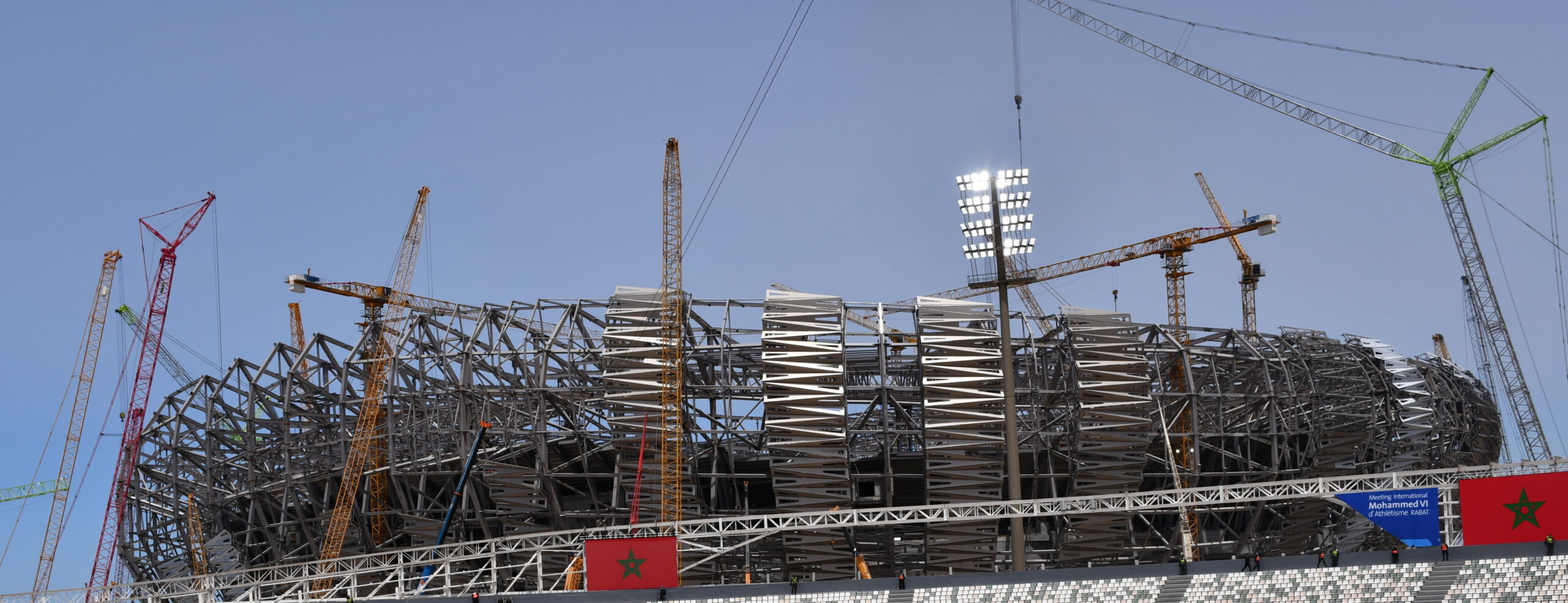
Featured image: Prince Moulay Abdellah Stadium, Rabat, rebuilt for the 2025 Africa Cup of Nations and the most expensive stadium upgrade line (6.738 billion dirhams) in the 2027 budget annex – an illustration of the works this article prices. Photo: Reda benkhadra, CC BY-SA 4.0, via Wikimedia Commons.