

The fossils from Jebel Irhoud made Morocco central to a much larger story. In 2017, researchers reported human remains associated with deposits dated to about 315,000 years ago, with a combination of familiar-looking faces and less familiar braincases. The finding helped challenge a simple account of our species appearing in one small part of Africa at one moment. It did not establish Morocco as the single birthplace of humanity.
That distinction is the lasting interest of this site in Youssoufia province, west of Marrakech. Its importance is not only that the remains are old. Jebel Irhoud shows how a date, an anatomical comparison and an evolutionary interpretation answer different questions.
The discovery was also a return
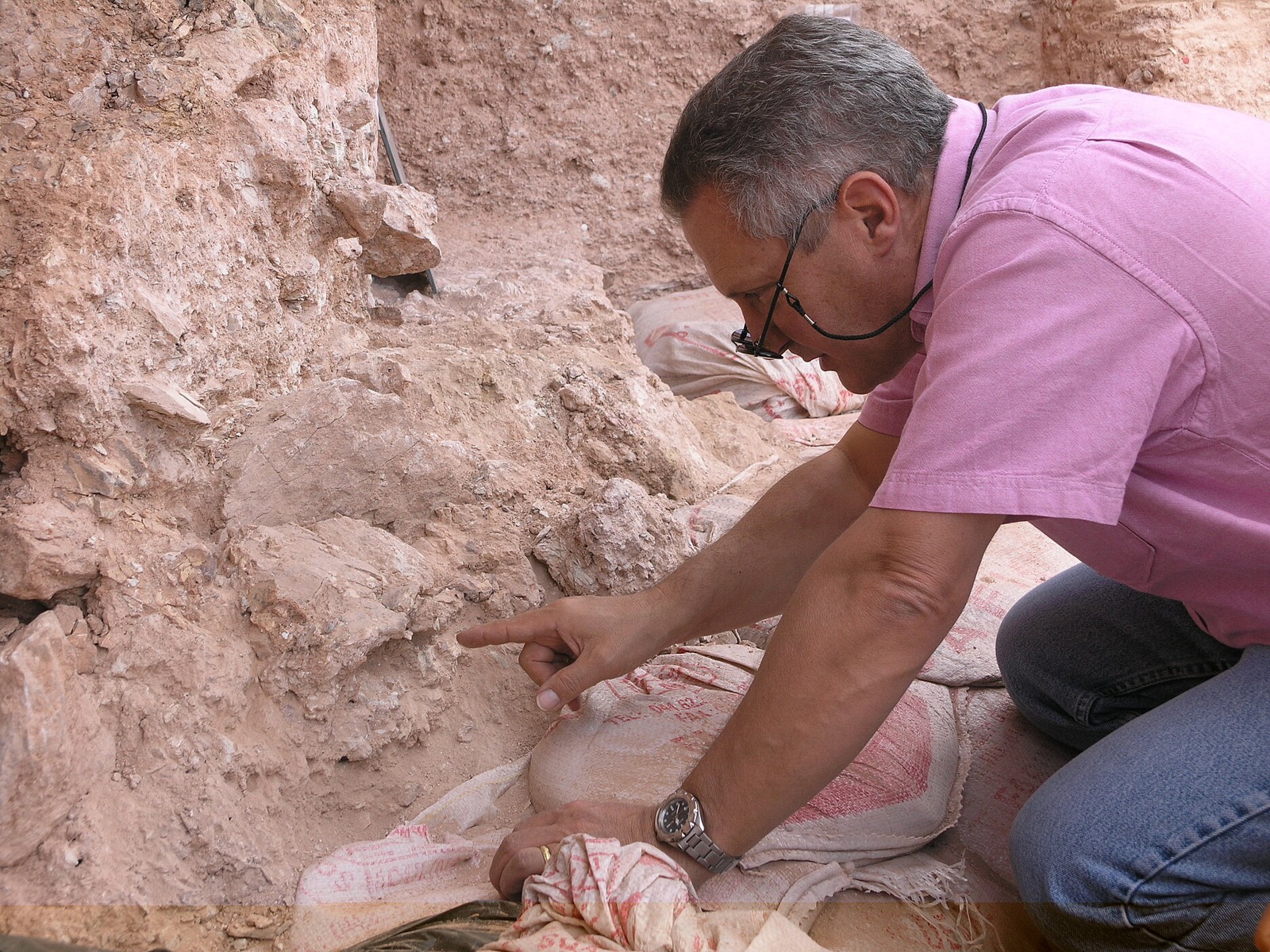
Jebel Irhoud was not an unknown place suddenly revealed in 2017. Human fossils had been found there in the 1960s. Their age and classification were debated and revised over the following decades. A renewed excavation project began in 2004, led by researchers from Morocco’s National Institute of Archaeology and Heritage, known as INSAP, and the Max Planck Institute for Evolutionary Anthropology in Germany.
The Max Planck account published in June 2017 describes new finds recovered in their archaeological setting. They brought the recorded human fossil material to 22 specimens representing at least five individuals. Specimens are pieces of evidence, not a count of 22 people.
The setting matters. A fossil separated from its original deposit is harder to connect securely to the objects and sediments around it. The new excavation allowed researchers to study human remains alongside stone tools and animal bones, and to investigate their age together.
What the 315,000-year figure measures
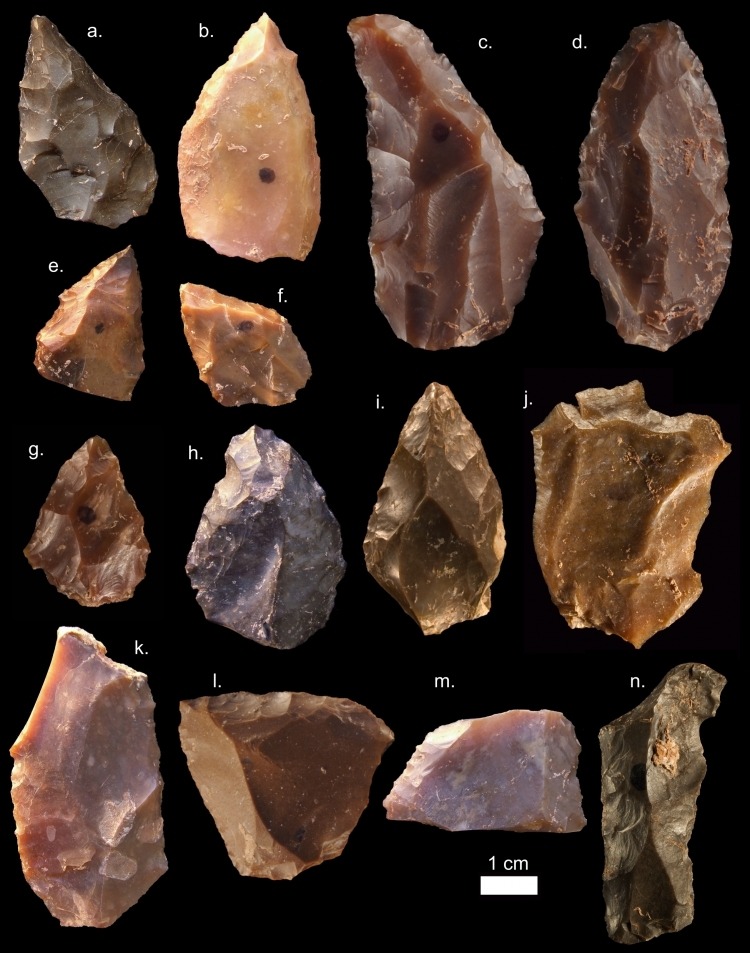
In the 2017 dating paper in Nature, Daniel Richter and colleagues reported a weighted average age of 315,000 years, with a stated uncertainty of 34,000 years. The principal method was thermoluminescence dating of flint artefacts that had been heated by fire and were directly associated with the newly excavated human remains.
The dated objects were tools, not the skulls themselves. The method compares a signal accumulated in the heated flint with measurements of surrounding radiation to estimate the time since heating. The research team’s documentation explains the work needed to measure that background radiation at the site.
The paper also reported a recalculated age of 286,000 years, with an uncertainty of 32,000 years, for a tooth from an earlier discovery, using a different combination of dating techniques. This supplied a separate chronological check. The two estimates are not competing exact birthdays.
The central lesson is about scale and uncertainty: the evidence placed these remains roughly 300,000 years in the past. It did not identify the year our species began.
A modern-looking face is not the whole skull
The companion paper led by Jean-Jacques Hublin and Abdelouahed Ben-Ncer identified a combination of traits. The face, jaw and teeth aligned the finds with early or recent Homo sapiens, the species to which living humans belong. The braincase retained a more elongated form, unlike the rounder shape characteristic of people today.
The authors interpreted this mixture as evidence of an early stage of the Homo sapiens lineage. Different anatomical features need not have acquired their present form at the same time. A fossil can therefore be important to the history of our species without looking identical to a modern skeleton.
Classification was not beyond debate. Scientific American’s reporting at the time recorded researchers questioning which traits should define membership of Homo sapiens. That was a dispute about how to interpret the anatomy, not evidence that the new dates should simply be ignored. Nor can the shape of a braincase, by itself, tell us exactly how an individual thought or spoke.
Why the story extends beyond Morocco
The 2017 research argued for an African history wider than a single eastern African centre. Jebel Irhoud brought North Africa into that discussion with unusually old, well-contextualised evidence. It did not show that every living person descends directly from the particular individuals found there.
A Smithsonian explanation published in 2023 describes a later genetic modelling study suggesting that at least two African populations interacted and interbred in the ancestry of our species. That work used genomes of living people to investigate deep population history. It was not DNA recovered from the Jebel Irhoud fossils.
These are different kinds of evidence, but both make a single, isolated origin story harder to sustain. The fossil record is incomplete, and the oldest remains found are not necessarily the first people who existed. A 2025 account from the Collège de France Foundation makes that point explicitly: the history leading to the Irhoud population likely began earlier than the surviving evidence there.
Read the evidence without flattening the past
Morocco’s archaeological record is not one continuous scene. The later urban world explored at Volubilis and the building traditions discussed at Ait-Ben-Haddou concern very different periods and questions. They should not be collapsed into the immense timescale of human evolution.
At Jebel Irhoud, the most useful questions are how a fossil was found, what dates it, which features it preserves and how far the interpretation can go. Morocco’s contribution to human-origins research does not need a claim of exclusive ancestry. Its value lies in evidence that changed the questions scientists could ask about Africa as a whole.
Sources and method: This is a source-based explanation of the 2017 findings and later published interpretations, not a report of a new discovery or a site visit. The original dating paper’s abstract and the morphology paper, including its published correction notice, were inspected. No ancient DNA from Jebel Irhoud is claimed. AI assisted research, translation, drafting and editorial review; factual claims were checked against the linked sources.
Lead photograph: Jean-Jacques Hublin examining finds at Jebel Irhoud. Archive image distributed with the 2017 research, not a photograph of current excavation work. Photo: Shannon McPherron, MPI EVA Leipzig, via Wikimedia Commons and the original research press kit, CC BY-SA 2.0. Resized; header display may crop the frame. No generative changes.
