

The withdrawal of the United Nations peacekeeping mission from Western Sahara could take around two months, and no UN mechanism will remain in place to monitor the territory’s ceasefire once the mission leaves, UN peacekeeping chief Jean-Pierre Lacroix said on Wednesday.
Speaking at a news conference at UN headquarters in New York, Lacroix said the mission, known as MINURSO, halted all operational activities when its mandate expired at midnight on October 31, and is now focused on withdrawing personnel, equipment and its field presence. The withdrawal will cover all mission positions, including those east of the sand berm, he said, cautioning that the two-month estimate was not definitive and would depend on logistical and operational conditions.
Asked who would monitor compliance with the ceasefire after the mission’s departure, Lacroix said no alternative verification mechanism was in place. The fate of equipment left behind has not been determined, he added, with the UN Department of Operational Support overseeing the process.
The mandate ended after the Security Council failed on October 30 to agree on the mission’s future. A US-drafted resolution to extend the mission for a year, under the name UN Mission in the Sahara, drew 11 votes in favor but was vetoed by Russia; a rival Russian text proposing a one-year extension of the existing mandate received three votes in favor, with 11 abstentions and the United States voting against.
UN Secretary-General Antonio Guterres said on Sunday that the mission’s departure “does not abrogate” the “inalienable right to self-determination” of the people of Western Sahara, and urged all concerned to exercise maximum restraint. The UN will keep working toward a political solution through the secretary-general’s personal envoy, Staffan de Mistura.
In Rabat, King Mohammed VI on Wednesday reaffirmed Morocco’s commitment to the ceasefire, describing it as a voluntary commitment that would not change with the end of the mission’s mandate, and instructed the Interior Ministry’s Office for Coordination with MINURSO to support the mission’s liquidation and withdrawal.
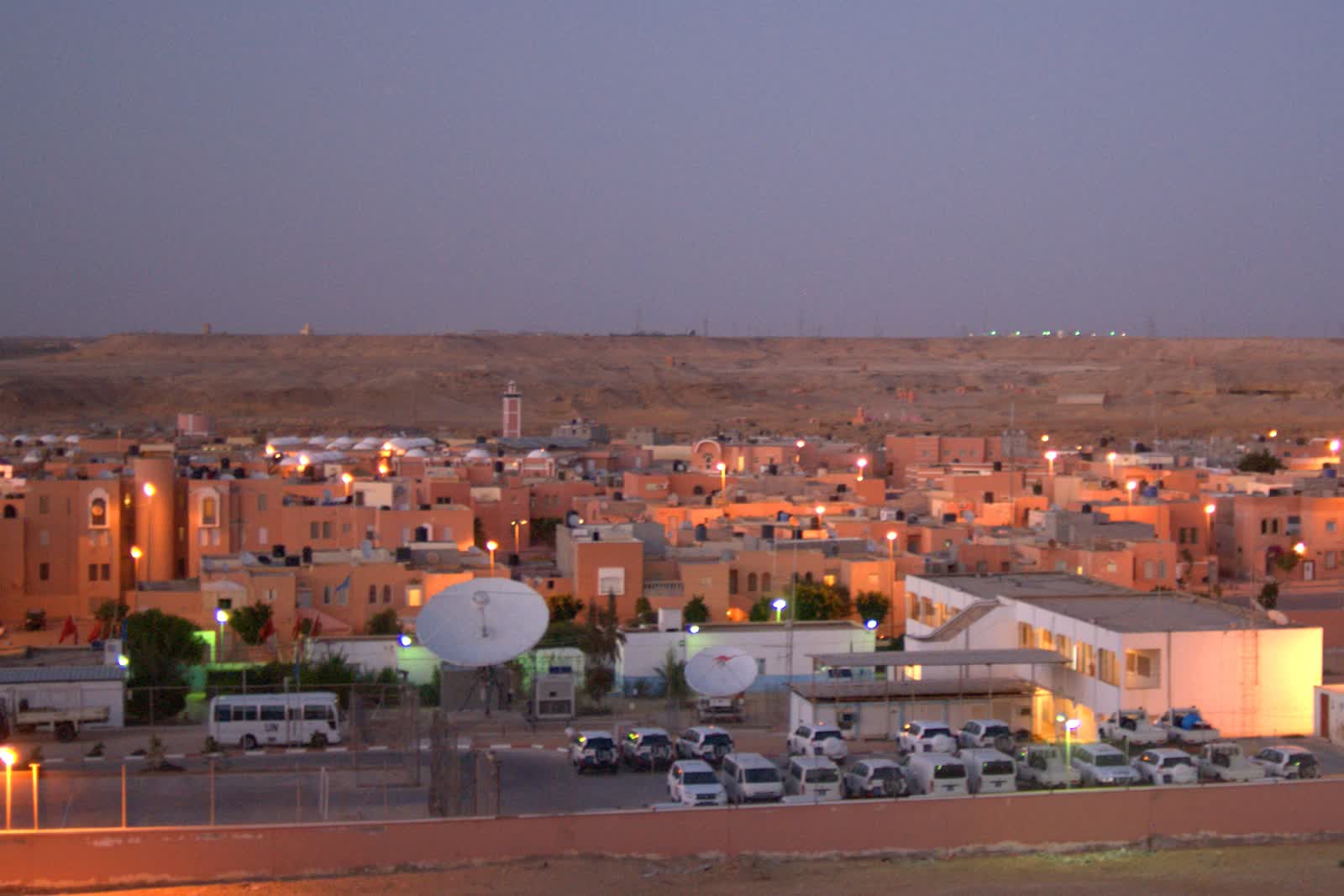
MINURSO was established in 1991 under Security Council resolution 690 to monitor the ceasefire and organize a referendum on the territory’s future. When its mandate ended, it was headquartered in Laayoune with nine team sites and around 200 personnel from more than 35 countries.
Photo: MINURSO headquarters in Laayoune, by cingularite via Wikimedia Commons, CC BY-SA 2.0.