
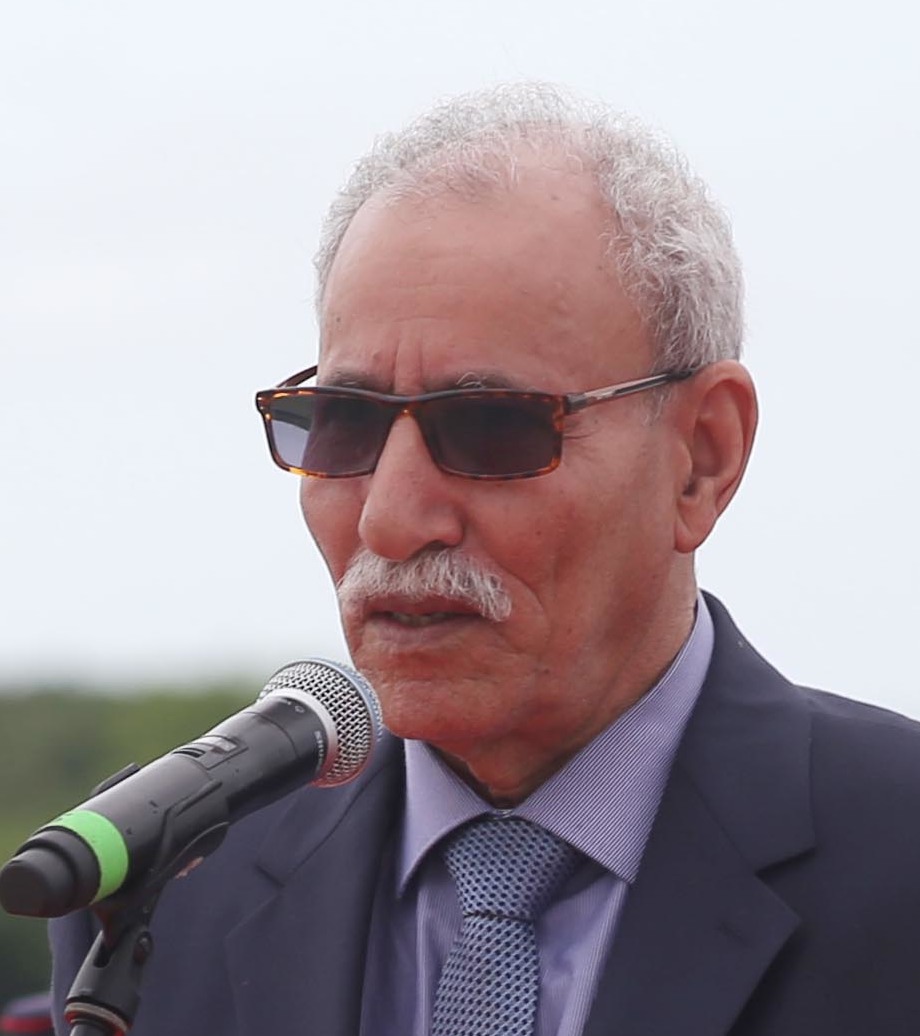

The Polisario Front’s news agency has not published one of its near-daily military communiqués since November 11, and the front’s representative in Algiers said Wednesday that it is ready to engage with any serious international effort to relaunch a political process on Western Sahara, while warning against what it described as Moroccan military escalation after the end of the UN mission there.
Executive summary
- Sahara Press Service (SPS), the Polisario Front’s news agency, last published a military communiqué on November 11, claiming its fighters had targeted Moroccan army positions in the Mahbes sector. The communiqués had appeared almost daily since the front renounced the 1991 ceasefire in November 2020. Yabiladi first noted the halt.
- Khatri Addouh, the front’s representative in Algeria, told a solidarity conference in Algiers on Wednesday that the Polisario and the self-declared Sahrawi government are ready to engage with “any serious international effort” to relaunch a political process, provided it is grounded in international law and guarantees the Sahrawi people’s self-determination, according to SPS.
- In the same speech, Addouh warned against “attempts at escalation on the ground” by Morocco, saying MINURSO’s withdrawal could roll back UN monitoring and raise the risk of tension.
- Sweden-based pro-independence activist Said Zeroual suggested the communiqué halt could be read as a positive response to U.S. de-escalation calls; U.S. ambassador Mike Waltz had urged the front in Rabat on Tuesday to recommit to the ceasefire, as Sada Journal reported.
- SPS published no communiqué claiming the shelling exchange near the sand berm that Mauritanian prospectors reported for the night of November 14-15; that account remains officially unconfirmed by any party, as Sada Journal reported.
A halt in daily war claims
SPS’s last military communiqué, dated November 11, claimed that Polisario fighters had targeted Moroccan forces in the Agad Argan area of the Mahbes sector, Yabiladi noted in first reporting the pause. Since the front announced in November 2020 that it would no longer abide by the 1991 ceasefire, SPS has published such claims of “concentrated shelling” and “heavy losses” inflicted on Moroccan forces almost daily; Morocco has routinely dismissed them as propaganda. Between November 12 and November 19, the agency carried political and diplomatic statements but no attack claims.
Zeroual, a Sweden-based separatist activist, wrote on Facebook that the halt could “be interpreted as a positive response to U.S. calls to de-escalate and enter negotiations that Washington may sponsor,” according to Yabiladi. That reading is his own; the front has not publicly explained the pause.
Notably, SPS issued no communiqué claiming the exchange of fire near the Moroccan sand berm on the night of November 14-15 that Mauritanian gold prospectors described to Sahara Media. Morocco, the Polisario Front and the United Nations have all declined to confirm that reported exchange.
The Algiers statement
Speaking at a solidarity conference organized by the Mechaal Echahid association with the daily El Moudjahid, Addouh, the Polisario Front’s representative in Algeria, said the front and the self-declared Sahrawi Arab Democratic Republic’s government were ready “to engage with any serious international effort to relaunch a political process” leading to “a just and definitive settlement,” provided it “is based on international law and the resolutions of international legality and guarantees the Sahrawi people the exercise of their right to self-determination,” SPS reported.
The same speech carried the front’s warning side. Addouh said “attempts at escalation on the ground by the Makhzen regime, particularly on the military level, threaten peace and stability and complicate international efforts,” and cautioned against using the receding UN presence to impose a fait accompli. Algeria’s TSA news site described the appearance as a double message of dialogue and military warning addressed to Rabat.
Post-MINURSO recalibration
The shift follows two weeks of fast-moving diplomacy. The UN Security Council failed to renew MINURSO’s mandate on October 31, and the mission began withdrawing on November 16, leaving no monitor on the ceasefire line, as Sada Journal reported. The front declared a “general mobilization” on November 10, then softened its rhetoric within days, conditioning any military action on Moroccan forces crossing the berm, as Sada Journal reported.
In Rabat on Tuesday, Waltz called on all parties to “refrain from provocations and escalation,” thanked Morocco for what he called its continued restraint and urged the Polisario to return to the ceasefire, saying President Donald Trump considers “the status quo unacceptable,” as Sada Journal reported. Morocco’s Royal Cabinet said on October 30 the kingdom “remains firmly committed to the ceasefire, while fully safeguarding its territorial integrity,” as Sada Journal reported. Moroccan officials have not publicly commented on the communiqué halt or on Addouh’s statement.
What to watch
- Whether SPS resumes its daily military communiqués, or extends the halt beyond the two-week mark.
- Any Moroccan official response to Addouh’s readiness statement or to the reported November 14-15 exchange.
- Whether Washington converts its de-escalation call into a concrete process, as Zeroual’s reading anticipates.
- The completion of MINURSO’s withdrawal, expected by January 31, and any UN-brokered contact between the parties in the interim.
Editorial method: Addouh’s statements are reported from Sahara Press Service, the Polisario Front’s own agency; its terminology (“Makhzen regime,” “occupied territories”) reflects the front’s position and is quoted as such. The communiqué halt is an observation of SPS’s publication record, first reported by Yabiladi and verified by Sada Journal against the agency’s archive; the front has not explained it, and interpretations are attributed to their authors. The November 14-15 shelling reports remain unverified. Quotations from French- and Arabic-language sources are translated. Editorial responsibility remains with Sada Journal.