
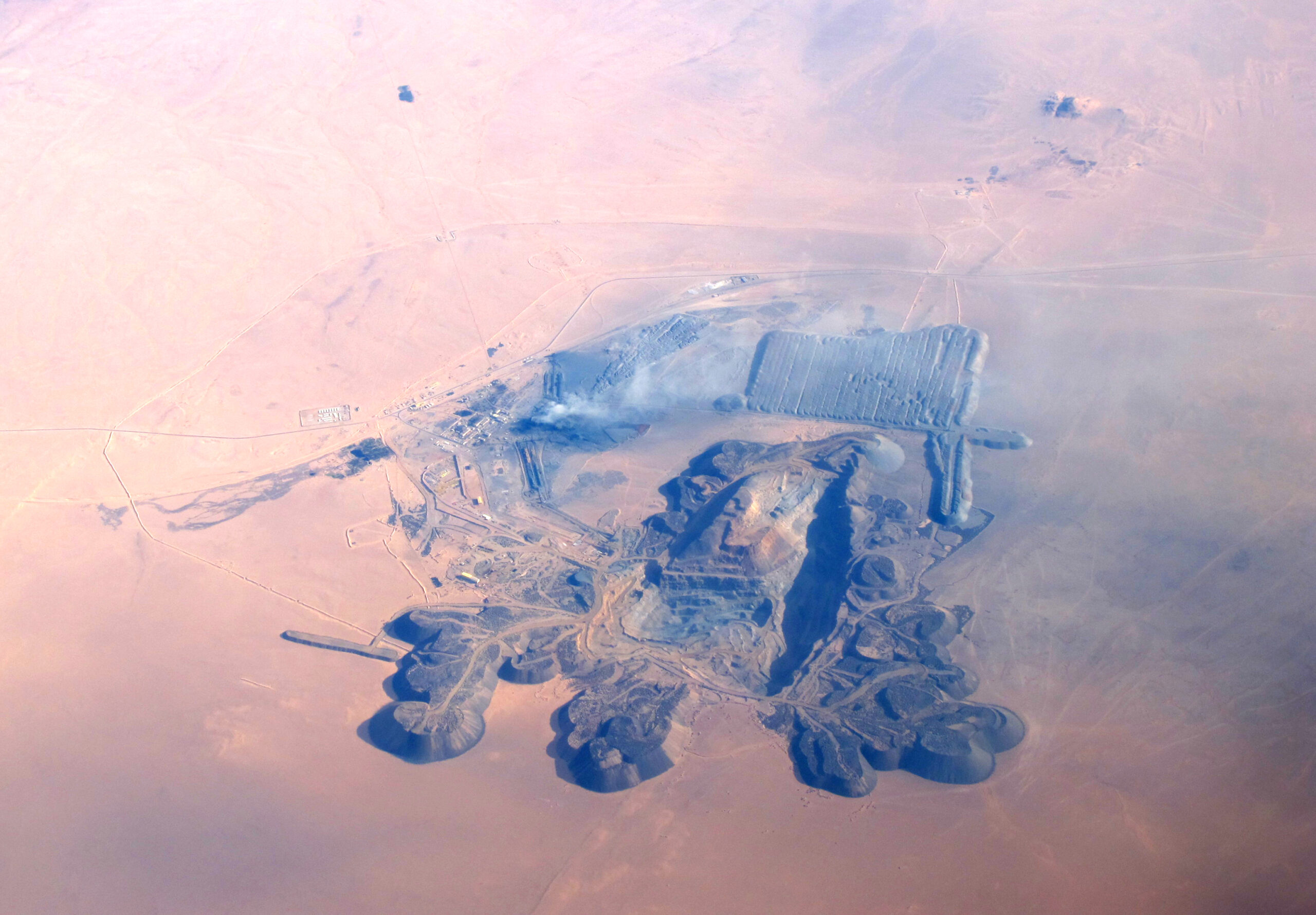

Mauritania has ordered artisanal gold miners to evacuate all sites within 10 kilometres of its northern border with Western Sahara within a maximum of two weeks, the state news agency AMI reported, in a border-security decision that follows unconfirmed reports of an exchange of fire near Morocco’s sand berm last weekend.
Executive summary
- The governor (wali) of the northern Tiris Zemmour region, Idrissa Demba Koréra, issued the decision on Tuesday during a field tour of mining camps, accompanied by the director general of the state mining agency Maaden Mauritania, Mohamed Yahya Ould Ahmed Ghadhi, according to AMI.
- The order covers every private mine within a 10-kilometre strip inside Mauritanian territory. AMI said it aims to strengthen border security, let the armed forces protect national territory, and protect prospectors by moving them away from border zones.
- The decision follows reports by Mauritanian prospectors, carried by the Nouakchott-based outlet Sahara Media, of an exchange of shelling near the sand berm on the night of November 14-15. The reported exchange has not been confirmed by Morocco, the Polisario Front or the United Nations.
- Mauritanian media report the army reinforced its deployment in the Gleibat El Foula sector this week, and Spanish outlet Atalayar reports Nouakchott’s concern that miners’ convoys could be mistaken for Polisario patrols by Moroccan drones.
- Mining unions in Tiris Zemmour publicly rejected the order on Thursday evening and called protest sit-ins, saying previous evacuations ended with their former sites licensed to companies.
The evacuation order
The wali announced the decision during a two-day tour of prospecting sites that included the El Malhatt workings in the Fderick district and the Tanafoudh mine series and “mine 42” in the Bir Moghrein district, where he met prospectors directly, AMI reported. He called on miners to comply with the decision, respect the country’s territorial domain and follow the instructions of the competent authorities.
Maaden Mauritania will offer alternative prospecting zones to miners who comply and evacuate, the agency said. A number of prospectors told the visiting delegation they were ready to comply, while asking for the two-week deadline to be extended, according to the same report.
Sahara Media, which first reported the order, said it applies to sites within 10 kilometres of the border and described the decision as intended to strengthen border security and protect the miners.
Prospectors push back
Mining union representatives in Tiris Zemmour on Thursday evening publicly rejected the evacuation order and called for simultaneous protest sit-ins at prospecting sites, the Mauritanian outlets Mourassiloun and Mushahide reported.
Saleh Ould Soueidat, president of the region’s Artisanal Mining Rescue Union, told a press conference in Zouérat that the prospectors view the decision as injustice and exclusion. He said prospectors had complied with similar requests in the past, only to see the ministry concerned later license the vacated areas to companies and influential figures, and said they would not accept a repeat. He appealed to Mauritania’s president to intervene, while stressing the prospectors’ commitment to the country’s security and their readiness to defend it. The unions also protested that Maaden Mauritania’s director began his field tour in Zouérat without notifying them.
Reported shelling near the berm
The evacuation follows reports of an armed exchange near the Moroccan sand berm on the night of Saturday to Sunday. Prospectors told Sahara Media that around 15 shells fell west of exploration sites without causing casualties. According to their account, Polisario Front units targeted positions known as Tarf Abdo and Tarf Menine near the berm, and Moroccan forces responded by bombarding Gleibat al-Foul and Oum Arouissine, east of the barrier.
The reported exchange has not been officially confirmed by Morocco, the Polisario Front or the United Nations. The pan-Arab daily Asharq Al-Awsat carried the accounts as unconfirmed reports, two weeks after the UN Security Council failed to renew the mandate of the MINURSO mission and as its withdrawal from the territory began.
In Rabat on Tuesday, the U.S. ambassador to the United Nations, Mike Waltz, called on all parties to “refrain from provocations and escalation,” thanking Morocco for what he described as its continued restraint and calling on the Polisario Front to return to and fully respect the ceasefire, AFP reported, as Sada Journal reported. Waltz’s call came days after the reported shelling; he did not refer to it directly.
A militarized frontier
The Mauritanian army reinforced its presence in the Gleibat El Foula sector this week, Yabiladi and Atalayar reported, a day after what Yabiladi described as Moroccan military operations against Polisario elements in the same area. Moroccan authorities have not publicly commented on operations east of the berm, which Rabat considers a buffer and military exclusion zone.
Atalayar reported that the evacuation is intended in part to prevent Mauritanian prospectors from being mistaken for Polisario patrols by Moroccan drones. Northern Mauritania’s artisanal gold rush has pushed thousands of miners into remote desert areas close to the poorly demarcated frontier, and Atalayar notes that Mauritanian miners have previously been hit by projectiles or drone strikes while moving along routes also used by armed units. In June, a Mauritanian miners’ coalition denied reports that citizens had been targeted in a Moroccan drone strike, Hespress reported.
Mauritania has maintained active neutrality in the Western Sahara dispute while keeping security cooperation channels with Rabat open. The reported incidents would be among the first armed exchanges in the area since MINURSO began withdrawing from the territory this week, a departure that removes the international monitoring presence that had observed the ceasefire line, as Sada Journal reported. Without that presence, accounts of clashes rely on the parties and on local witnesses and become harder to verify independently.
What to watch
- Whether Mauritanian authorities enforce the evacuation once the two-week deadline expires, and how they respond to the unions’ rejection of the order and their call for protest sit-ins.
- Any official comment from Rabat, the Polisario Front or the United Nations on the reported November 14-15 exchange.
- Whether the Maaden agency’s promised alternative prospecting zones materialize.
- Further Mauritanian military movements along the Tiris Zemmour border strip.
Editorial method: The evacuation order is reported from the Mauritanian state news agency AMI’s account of the wali’s decision and tour. The November 14-15 shelling is reported solely as the account of Mauritanian prospectors carried by Sahara Media; Sada Journal could not independently verify it, and no party has officially confirmed it. Troop movements near Gleibat El Foula and the drone-mistake rationale are attributed to Yabiladi and Atalayar respectively. The unions’ reaction is reported from the Mauritanian outlets Mourassiloun and Mushahide. Quotations from French-, Spanish- and Arabic-language reports are translated. Editorial responsibility remains with Sada Journal.