

Opinion / Economic Analysis. Facts, reported positions, interpretation and forecast are distinguished below.
Morocco’s dispute over “Made in Europe” is about the next factory decision, not a border closing to all Moroccan cars. The European Commission’s Industrial Accelerator Act proposal would tie selected public purchases and support schemes to production origin. Moroccan businesses fear that those incentives could pull future automotive investment north even while existing supply chains continue to operate.
- The Commission presented its proposal on March 4, 2026. It concerns specified uses of public money, not a general prohibition on importing Moroccan vehicles.
- In November, Morocco’s employers’ federation sought equivalent treatment or a permanent exemption. Its trade figures are stakeholder estimates, not a measurement of investment already lost.
- The economic question is whether integration into European supply chains will also bring eligibility for European industrial support. Those are different forms of access.
A proposed preference, not a general import ban
Documented proposal. The Commission’s March explanatory memorandum describes origin and low-carbon requirements for selected products in public procurement and public support schemes. It also covers industrial permitting and conditions on certain foreign investments. The Commission’s March 19 explanation identifies automotive production, energy-intensive materials and net-zero technologies among the sectors concerned.
The distinction matters. Access to a market, preferential treatment in a public tender and eligibility for a purchase subsidy are not interchangeable. Losing the latter two does not mean a vehicle cannot be sold. It can, however, change the relative return on building the next model inside or outside the preferred production area. That is the investment mechanism at issue, rather than a demonstrated collapse in current exports.
March design, not a claim about the final law. Reuters’ March 4 explainer reported that electric vehicles bought through public procurement would have to be assembled in the Union, with 70% of components excluding the battery Europe-made, six months after the law took effect. It also described conditional routes for foreign partners, distinguishing procurement commitments from trade agreements relevant to other public spending. These are descriptions of the March proposal. They should not be read as the final terms Morocco will face.
The Commission’s memorandum itself cautions against reducing procurement access to a single country list. International commitments vary with the contracting authority, the goods or services and the relevant coverage schedules. That makes a blanket claim that a trade agreement guarantees eligibility, or that its absence forecloses every route, too simple.
A narrower political map, on one think tank’s account
Attributed analysis. An Institut Jacques Delors commentary published October 27 describes a Franco-German agreement on October 15: Germany accepted a narrower definition of eligible European production, extending beyond the EU to the United Kingdom and Norway, in exchange for French acceptance of flexibility on the 2035 vehicle-emissions target. The commentary says Morocco and Turkey were left out of that bargain.
That is the institute’s account of a negotiating position, not an adopted EU eligibility schedule. No original Franco-German agreement establishing those exact terms was inspected for this article. Nor does agreement between two governments settle a law that must pass the EU’s legislative process. The European Parliament’s proposal summary identifies the Parliament and Council as co-legislators on equal footing. November Moroccan reporting continues to describe the legislation as under negotiation.
This leaves a real dispute without justifying a premature verdict. Rabat is responding to an exclusion risk and to reported negotiating choices. It is not responding to a final law that bans its cars.
What Moroccan businesses are asking for
Stakeholder position. Hespress reported on November 13 that CGEM president Mehdi Tazi was seeking equivalent treatment for Moroccan manufacturers or a permanent exemption. Tazi put the industry at approximately 260 component and equipment manufacturers, more than half European-owned, and said more than 80% of Moroccan vehicle exports went to the EU.
He also put bilateral automotive trade in 2025 at EUR 22 billion: EUR 12 billion in Moroccan exports and EUR 10 billion in imports. These figures describe the CGEM president’s account of bilateral automotive trade. They are not the same measure as worldwide sector exports, local value added or profit, and they do not establish how much trade would lose eligibility under the eventual rules. Their value here is to indicate the exposure claimed by the business federation, not to calculate a loss.
Ministerial position. Industry and Commerce Minister Ryad Mezzour called excluding Morocco an “aggressive act” in the visible introduction to TelQuel’s November 13 interview. The interview was not readable in full through the access used for this article.
Maghreb Emergent’s November 15 account of that interview reports that Mezzour warned Morocco could reconsider industrial alliances and rejected an arrangement preserving only existing activities. It also reports his claim that some investment decisions had already shifted across the Mediterranean. The account provides no company names, project count or amounts for that claim and says he announced no concrete retaliatory measure or alternative partner. It also records his acknowledgment that investment momentum remained positive and that the proposed rules would not affect all Moroccan-produced vehicles alike.
Those limits are important. A minister’s warning about investment diversion is evidence of the government’s concern. Without named projects and comparable investment data, it is not a measured estimate of damage.
The next model matters more than the existing shipment
Interpretation. Morocco’s strongest argument is industrial rather than geographical. On the CGEM account, many of the businesses exposed to the preference are European-owned suppliers. A rule favoring production inside a boundary can therefore benefit a European factory while disadvantaging another part of the same corporate supply chain. Nationality of ownership does not determine origin of production.
That is also why an arrangement protecting existing activity could be insufficient for Rabat. If protection does not travel with a replacement model or a new component line, current production can continue while future commitments move elsewhere. This is a mechanism to watch, not a finding that it has happened across the industry.
There is a competing case. The Commission explicitly seeks to strengthen European industrial capacity and supply-chain resilience. A preference that treated every existing overseas supplier as domestic could weaken the incentive to invest inside the Union. Excluding Morocco need not be evidence of hostility to Morocco specifically. The policy tension is between retaining production within a preferred area and supporting lower-cost supply chains that cross its boundary.
For Moroccan policymakers, the useful response is therefore more precise than a threat to change allies. They need rules specifying which vehicles, components, support schemes and future investments receive equivalent treatment. A declaration of friendship cannot settle those categories. Neither can the CGEM’s total trade figure be treated as the value immediately at risk.
The same distinction between a policy instrument and its economic reach runs through this desk’s analysis of Morocco’s tomato export-permit restrictions. Here the instrument is different: eligibility for public demand can influence investment without closing the wider market.
What would settle the argument
The next useful evidence is legal text and named investment decisions. Does the negotiated legislation offer Morocco an equivalence route, and for which schemes? Does it protect future models as well as existing production? Can a company identify a project redirected because of the preference, rather than because of costs, demand or another policy?
Until those answers exist, neither an investment catastrophe nor a successful exemption is an established result. The defensible conclusion is narrower: supply-chain integration and industrial-policy membership are different things, and Morocco is trying to prevent that difference from deciding where the next investment lands.
Forecast
F29: 30% probability, assessed November 16, 2026; horizon September 30, 2027. By the horizon, the adopted Industrial Accelerator Act or an adopted implementing measure will explicitly grant Morocco eligibility or equivalent treatment for automotive made-in-EU requirements. This is an analytical judgment, not a statistical estimate. The case for inclusion is the interest of integrated suppliers and the CGEM’s lobbying; against it is the narrower political position reported by the Delors Institute. The primary evidence does not settle that negotiation.
Resolution rule. An adopted text in the Official Journal of the European Union, or an official Commission statement confirming an adopted measure, must explicitly name Morocco as eligible or equivalently treated for the relevant automotive requirements. Drafts and political assurances do not count. If no qualifying measure is adopted by September 30, 2027, the forecast resolves false. The original probability and criteria will remain recorded if later assessments change.
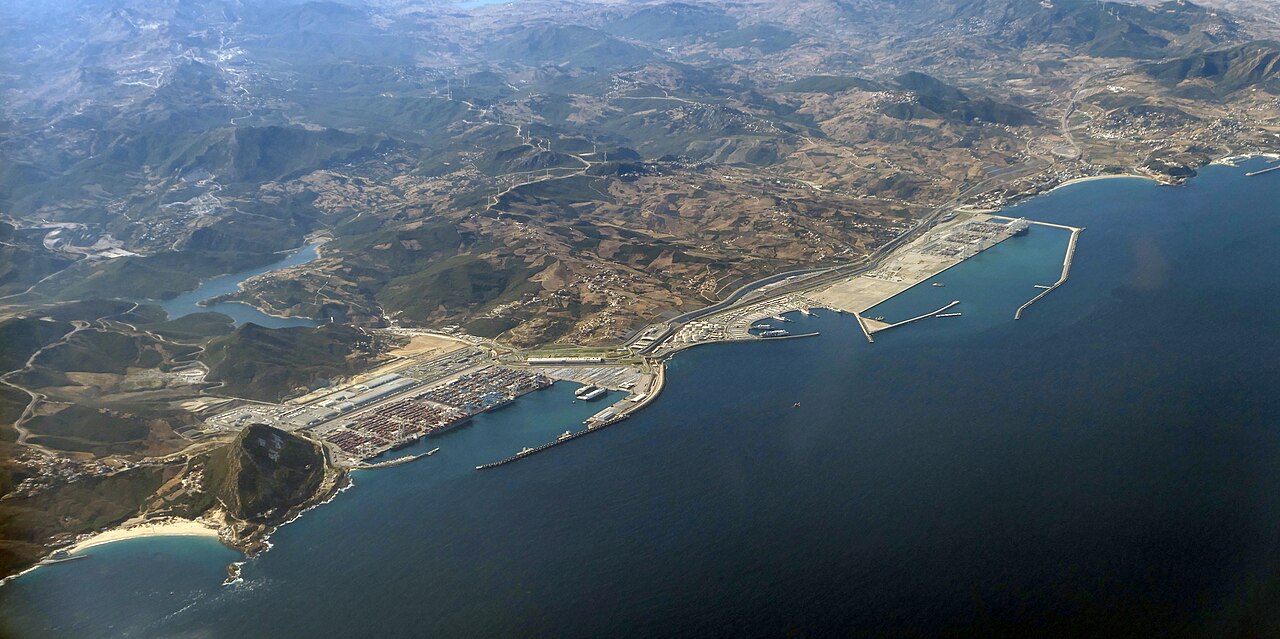
Image: aerial view of Tanger Med, photographed in 2019. An illustrative port image, not a photograph of automotive production or a current shipment. Photo: Adam Cli, Wikimedia Commons, CC BY-SA 4.0; resized for display.

Source limits: the Commission’s explanatory memorandum and institutional proposal summaries were read, alongside the linked reporting. The original Franco-German agreement was not inspected, and the TelQuel interview was only partly accessible. Claims about the bargain and investment diversion retain their source attribution. This article does not establish the final legislation’s country coverage or quantify investment losses.