
Fashion has a short attention span. An award for Yohji Yamamoto offers a welcome reason to slow down and look at the clothes.
The Japanese designer will receive the Outstanding Achievement Award at The Fashion Awards 2026, the British Fashion Council announced on October 28. The ceremony is scheduled for November 30 at London’s Royal Albert Hall. This is an announcement of a forthcoming honour, not a report from an award ceremony that has already happened.
What the award recognises
The council points to Yamamoto’s tailoring, his rethinking of womenswear and his lasting influence on other designers. Its emphasis is on a body of work rather than a single commercially successful collection.
That distinction matters. A seasonal fashion award can tell us who captured the moment. A career award asks whose ideas remain useful after the moment has passed. In Yamamoto’s case, the council is recognising a design practice built around experimentation, skilled construction and a willingness to question convention.
A career that travels beyond the runway
According to WWD’s reporting on the announcement, Yamamoto launched his label in Tokyo in 1972. His wider work includes costume design for film and opera, alongside the Y-3 collaboration launched with Adidas in 2003.
Those different settings give the announcement more weight than a familiar name on an awards list. Clothing has to behave differently on a stage, on a body in motion and in everyday life. Moving between them makes questions of cut, proportion and movement practical concerns, not merely a designer’s vocabulary.
For readers who do not follow every collection, that is a useful way into this story: look at what a garment allows its wearer to do, and how its shape changes as they move. It is a more revealing test than treating a runway image as a still-life object.
Why this recognition is timely
The most interesting part of the council’s announcement is its attention to craft. Fashion coverage often moves quickly from one appointment or collection to the next. Recognising a long career creates room for a different conversation, about ideas that survive repetition and clothes whose construction rewards a closer look.
That is an editorial reading of the award, not a prediction about the industry. A trophy does not change how clothes are made or sold. It can, however, direct attention towards work that deserves to be studied rather than simply consumed as another image.
When and where
The Fashion Awards 2026 will take place on November 30 at the Royal Albert Hall in London. The event also raises funds for the British Fashion Council’s work supporting designers and fashion businesses. Yamamoto’s honour is one part of that wider programme.
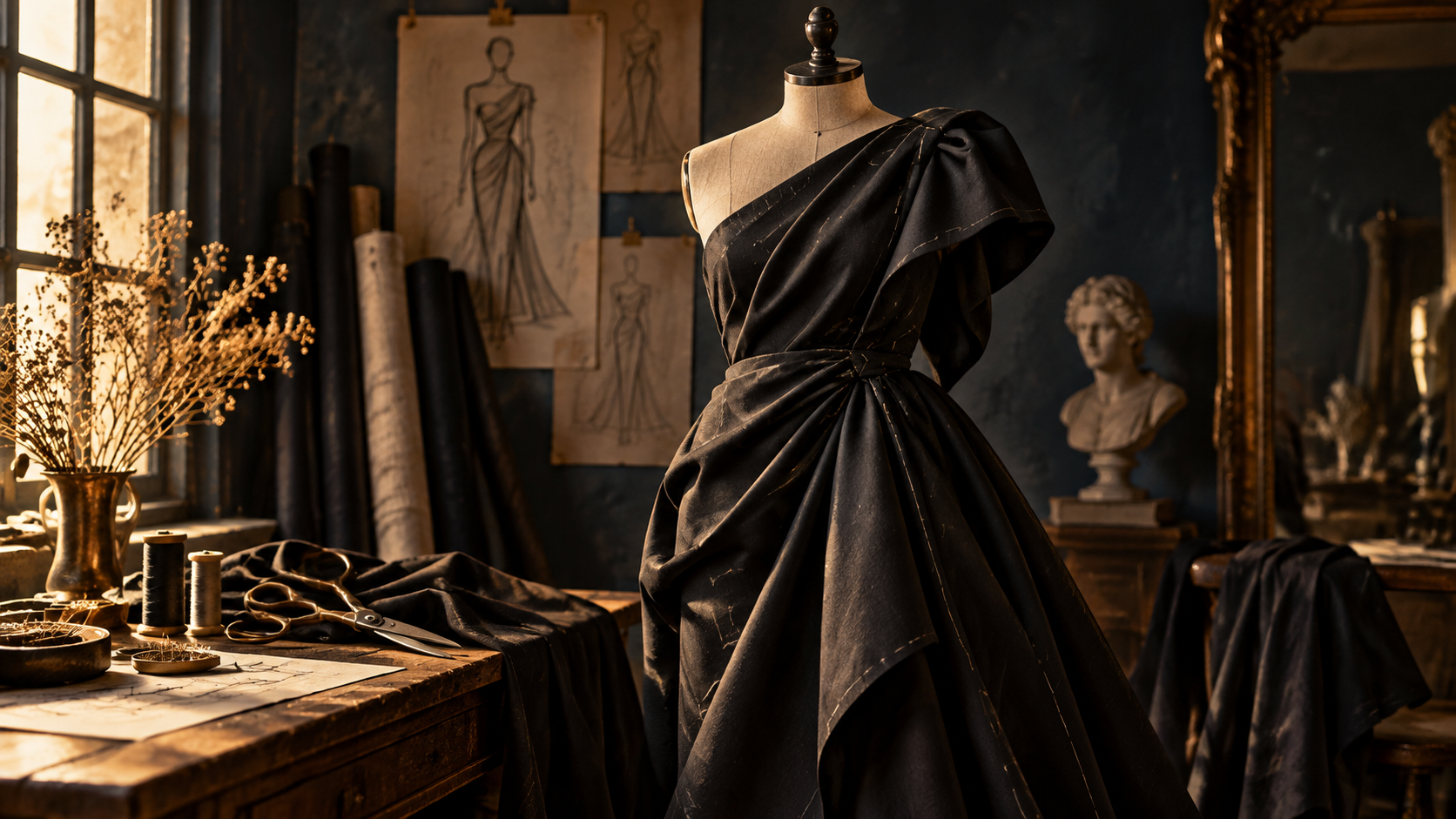
Featured artwork: original AI-generated editorial illustration of a tailoring studio. It does not depict a Yamamoto garment or an actual atelier.